How to Choose an Umbrella
How to choose an umbrella without getting lost in diameter, number of ribs, automatic opening, and promises of durability? I always start with a much simpler question: where will you actually use it? An umbrella that stays in a bag doesn't have the same requirements as one used every morning between home, the station, and the office.
My name is Capucine, I'm 28 years old, and I'm a writer at Umbrella Paris. After working on the product descriptions and collections in our catalog, I've gotten into the habit of comparing umbrellas by compromise rather than by accumulating features. My order of priority is generally as follows: closed format, coverage area, structure, weight, opening mechanism, and then comfort details. This guide follows exactly this logic.
In short: the criteria I would look at first
- For an umbrella always in the bag: prioritize a folding or compact format, with a closed size compatible with the bag used daily.
- For long walks in the rain: first consider the coverage area and grip comfort.
- For a regularly windy area: examine the construction of the ribs and their flexibility, not just their number.
- For frequent transport and entry/exit: automatic opening can provide real convenience.
- For traveling: weight and closed length often matter more than a very large open diameter.
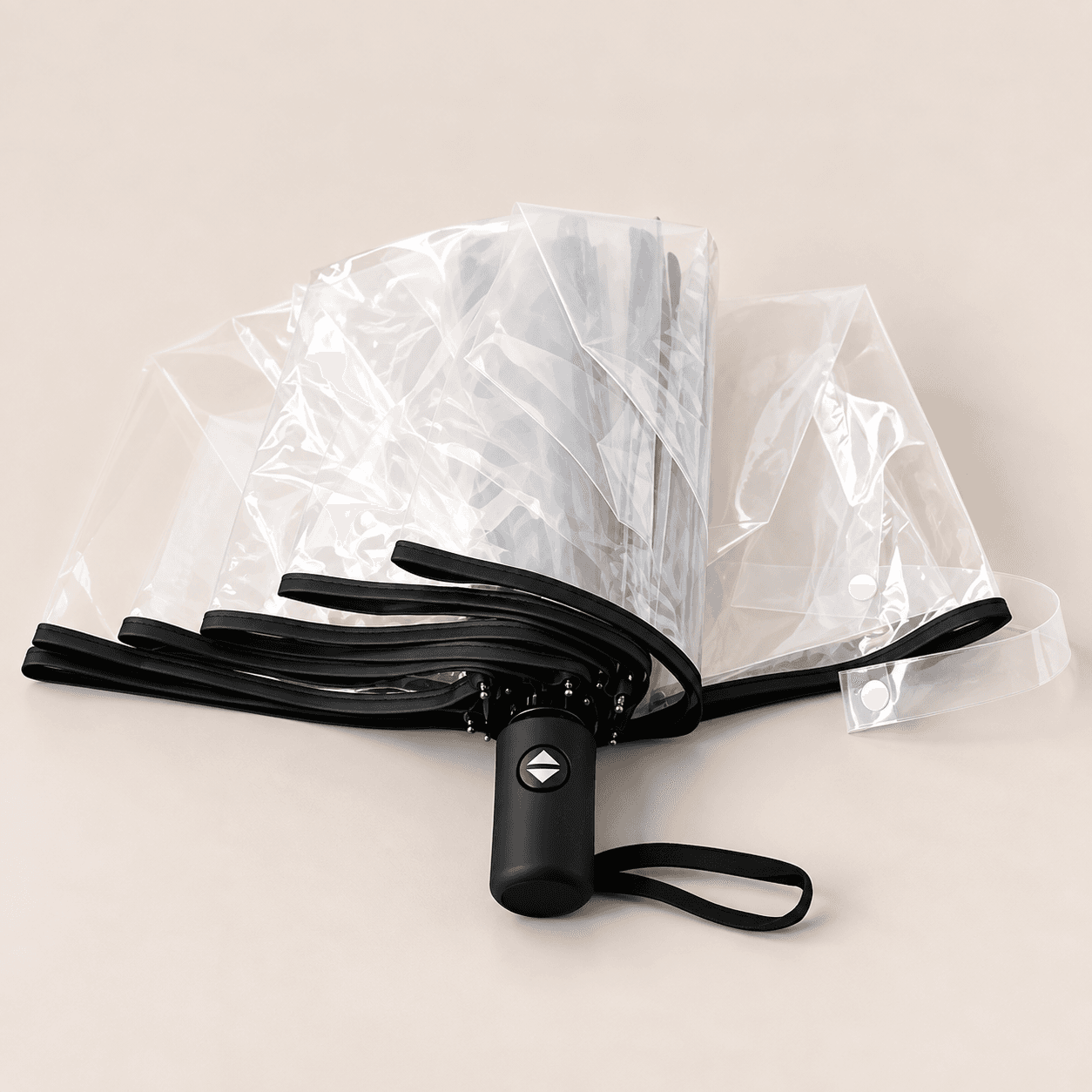
- For a transparent model: check the shape of the canopy and the desired visibility, especially on enveloping models.
The best choice is not the umbrella that ticks the most boxes. It's the one whose compromises match your daily life. A fantastic model forgotten at home is, technically, a very poor roof.
Start with usage, not the technical sheet
Before comparing two models, I consider the usage scenario. Is it a backup umbrella? A primary model? Will it spend its life in a tote bag, a backpack, a car, or an umbrella stand? This answer already eliminates many poor choices.
For short urban trips, I would gladly prioritize ease of transport. For twenty minutes of daily walking, I would accept more bulk in exchange for more comfortable coverage. And if the umbrella is to stay in a car or at the office, the closed length becomes much less important.
This is also why I'm wary of "best umbrella" rankings without context. An excellent cane umbrella can be cumbersome in the subway; a very practical mini model can be frustrating in heavy rain. The right criterion almost always depends on what you ask of it.
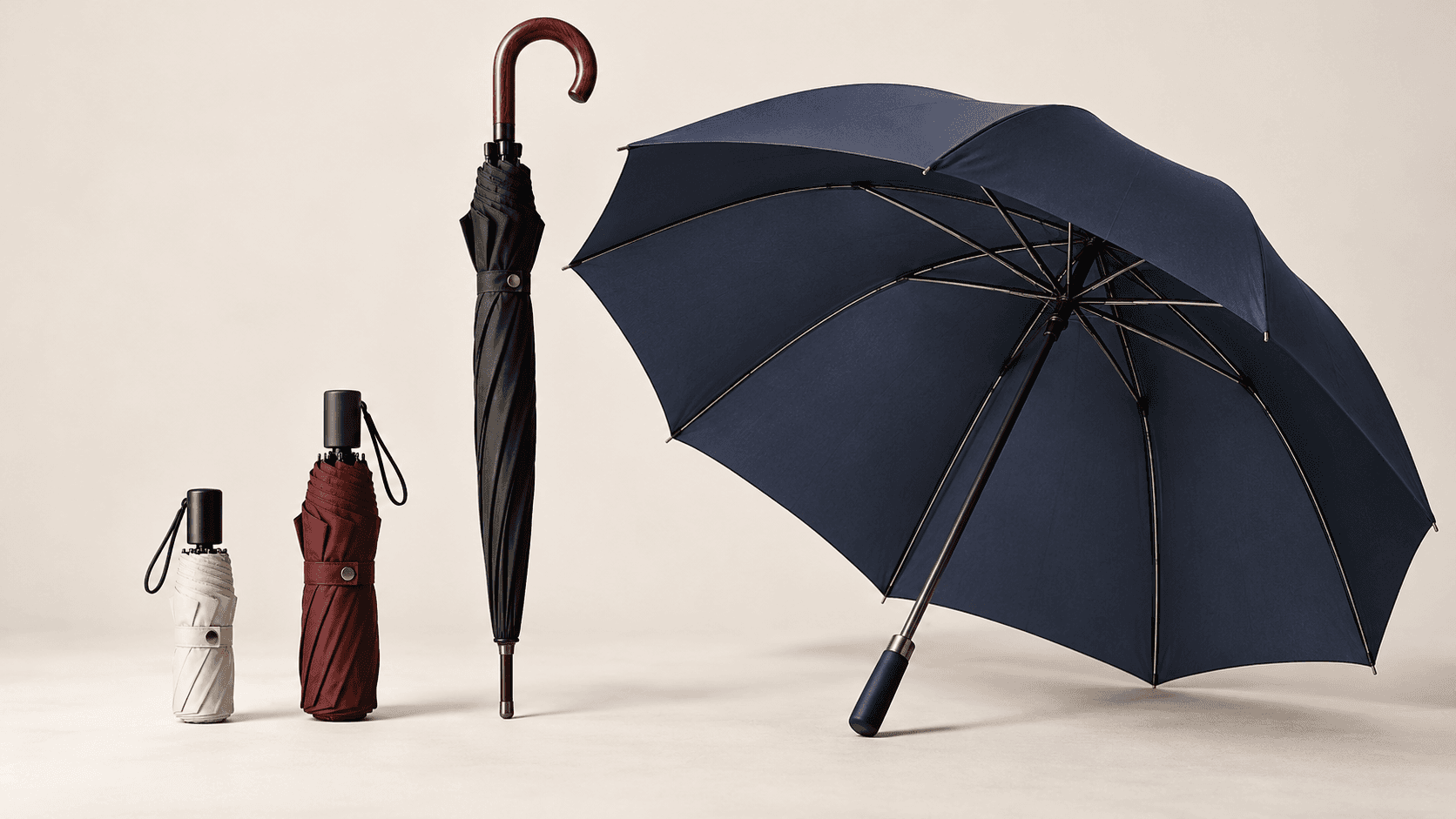
Folding Umbrella or Cane Umbrella: The First Real Choice
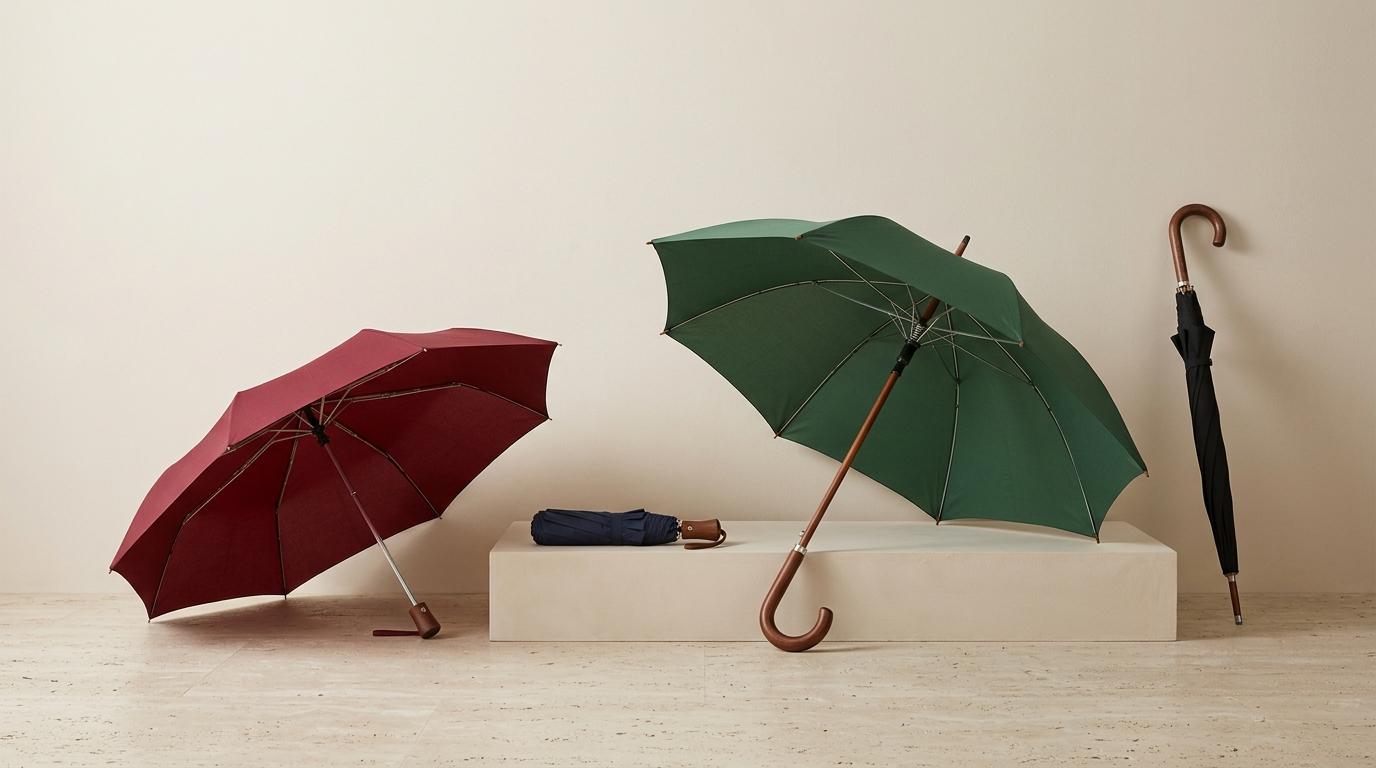
If you're hesitating between the two, ask yourself a very concrete question: do you need to be able to store the umbrella after the rain? If yes, the folding umbrella has an obvious advantage. If not, a cane umbrella avoids the additional joints needed for folding and often offers a very simple grip.
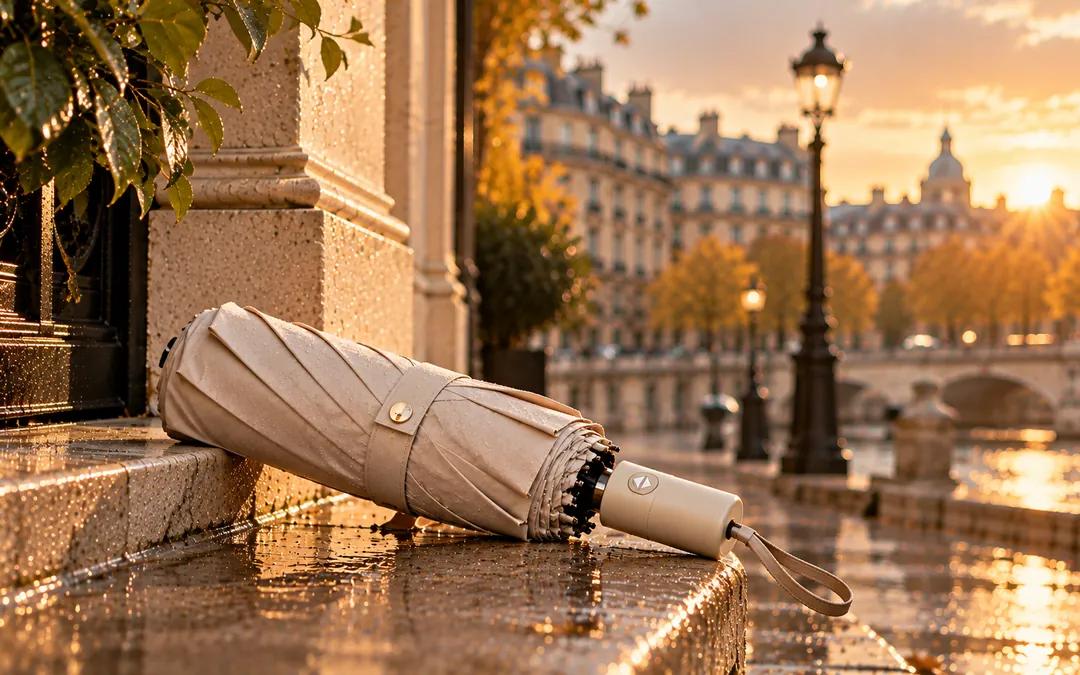
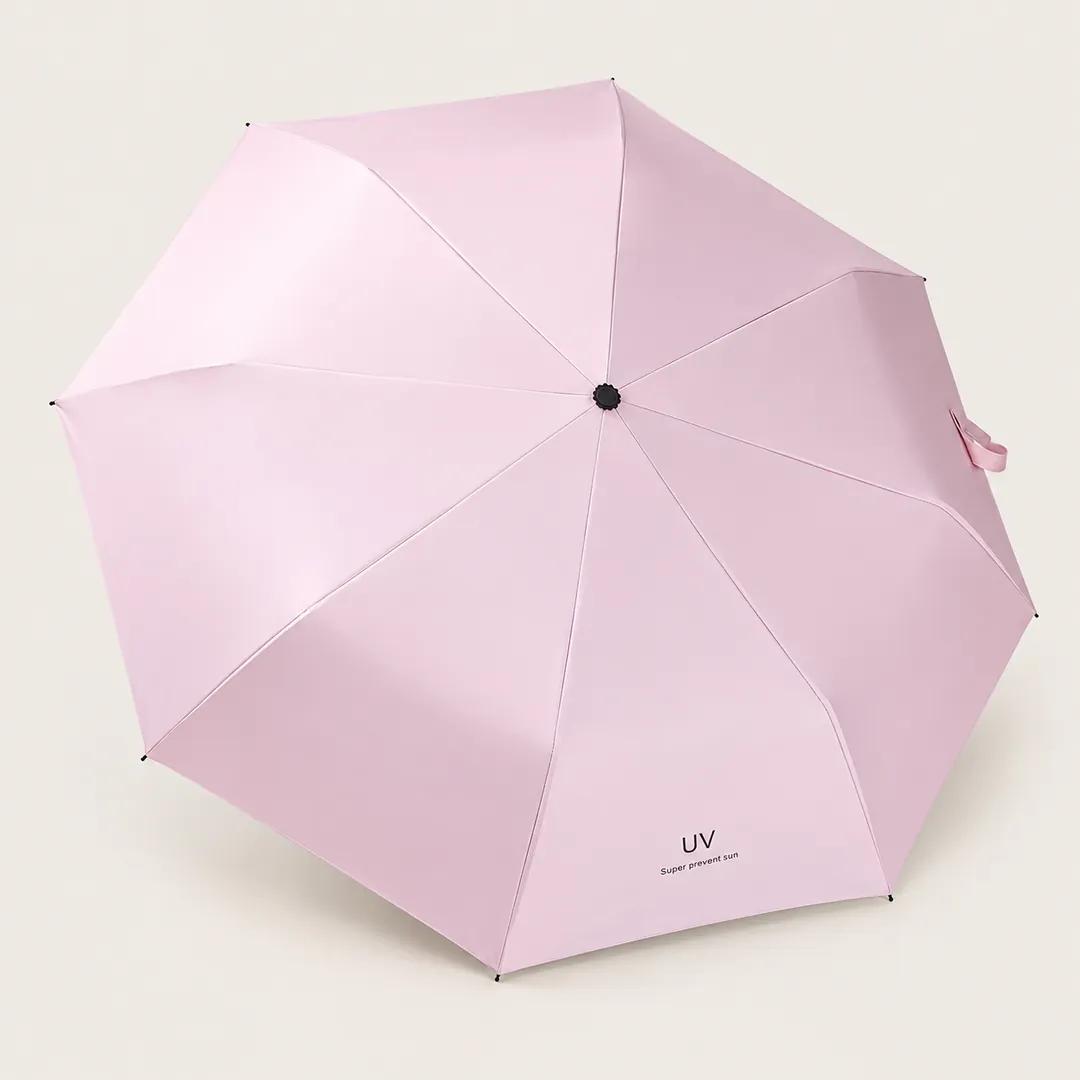
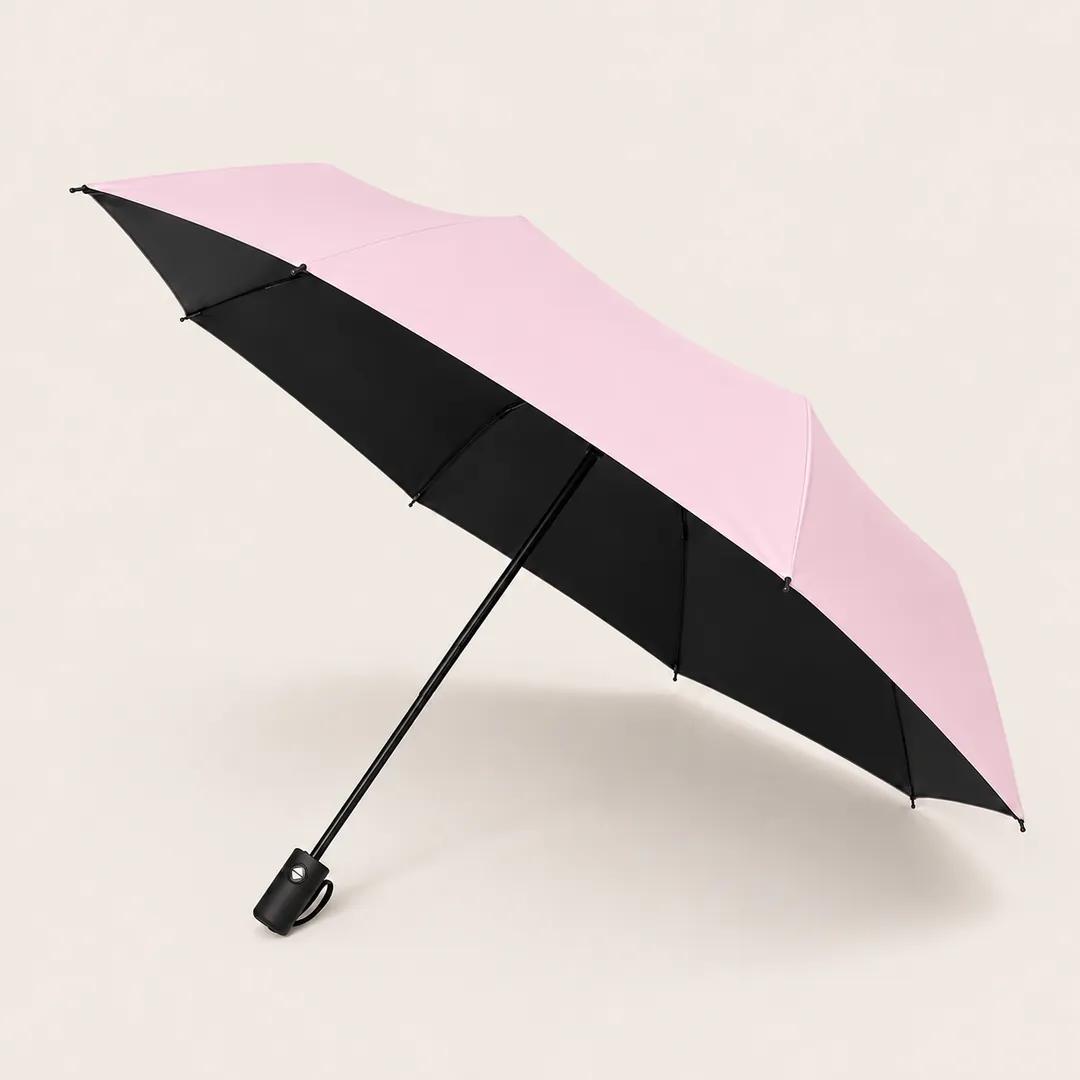
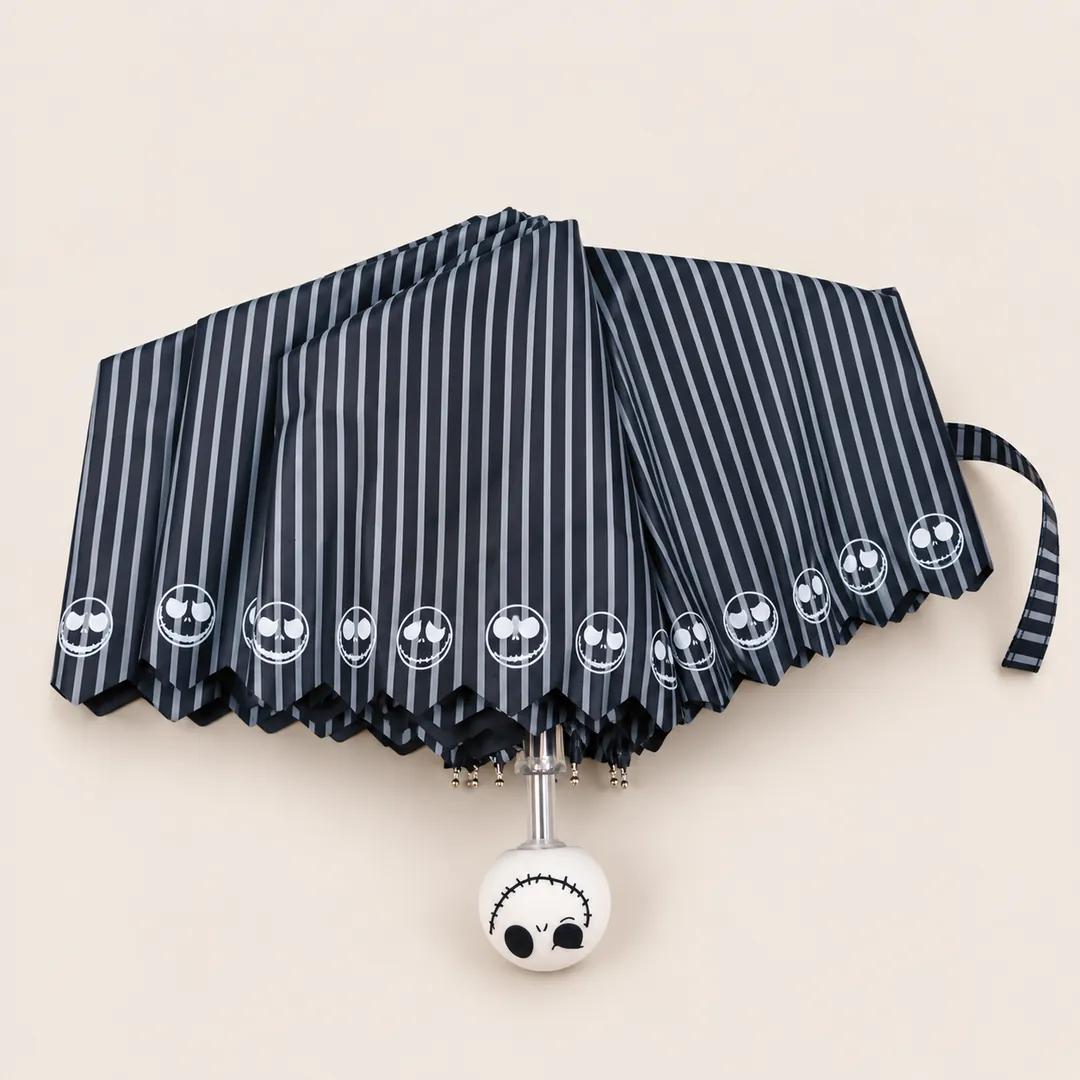
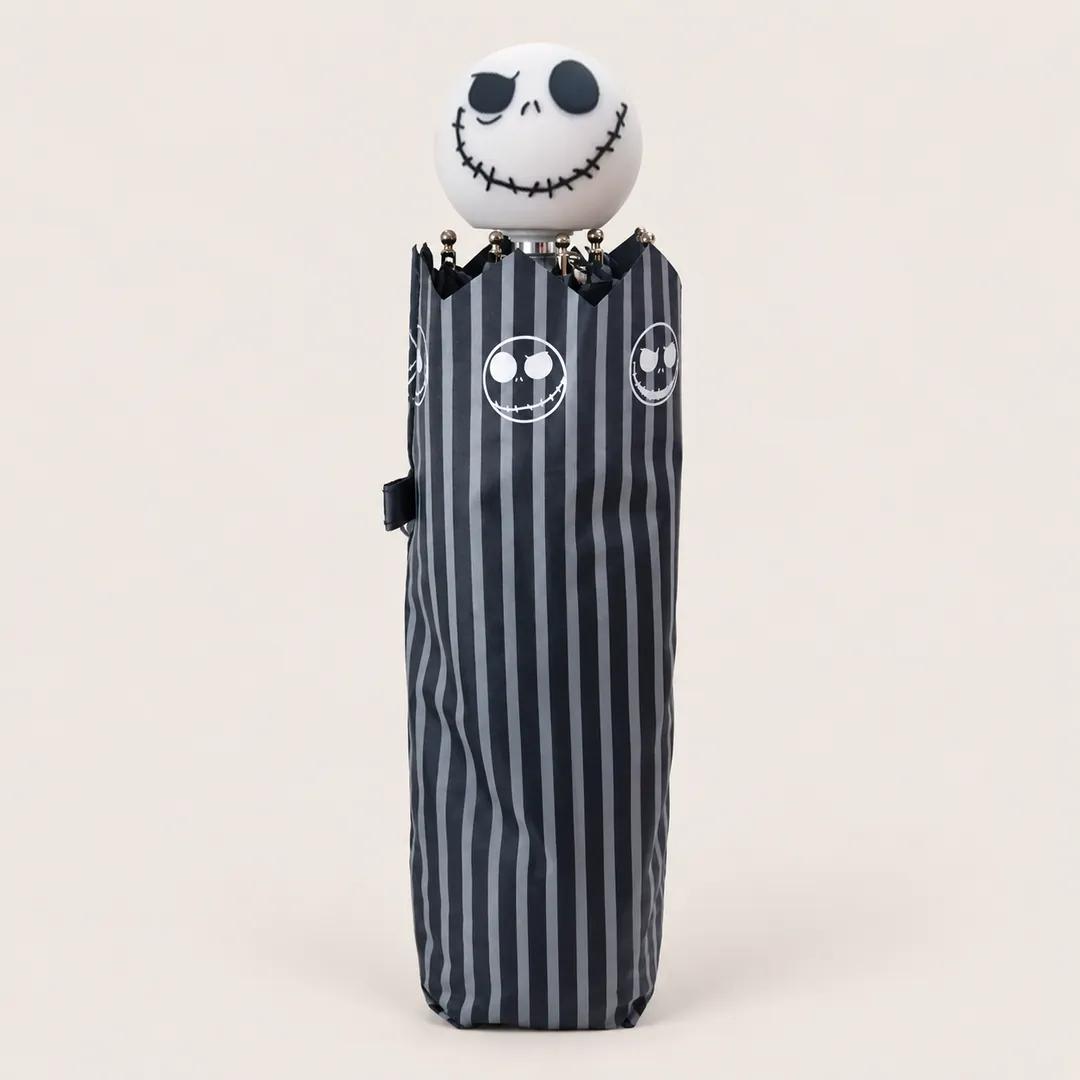
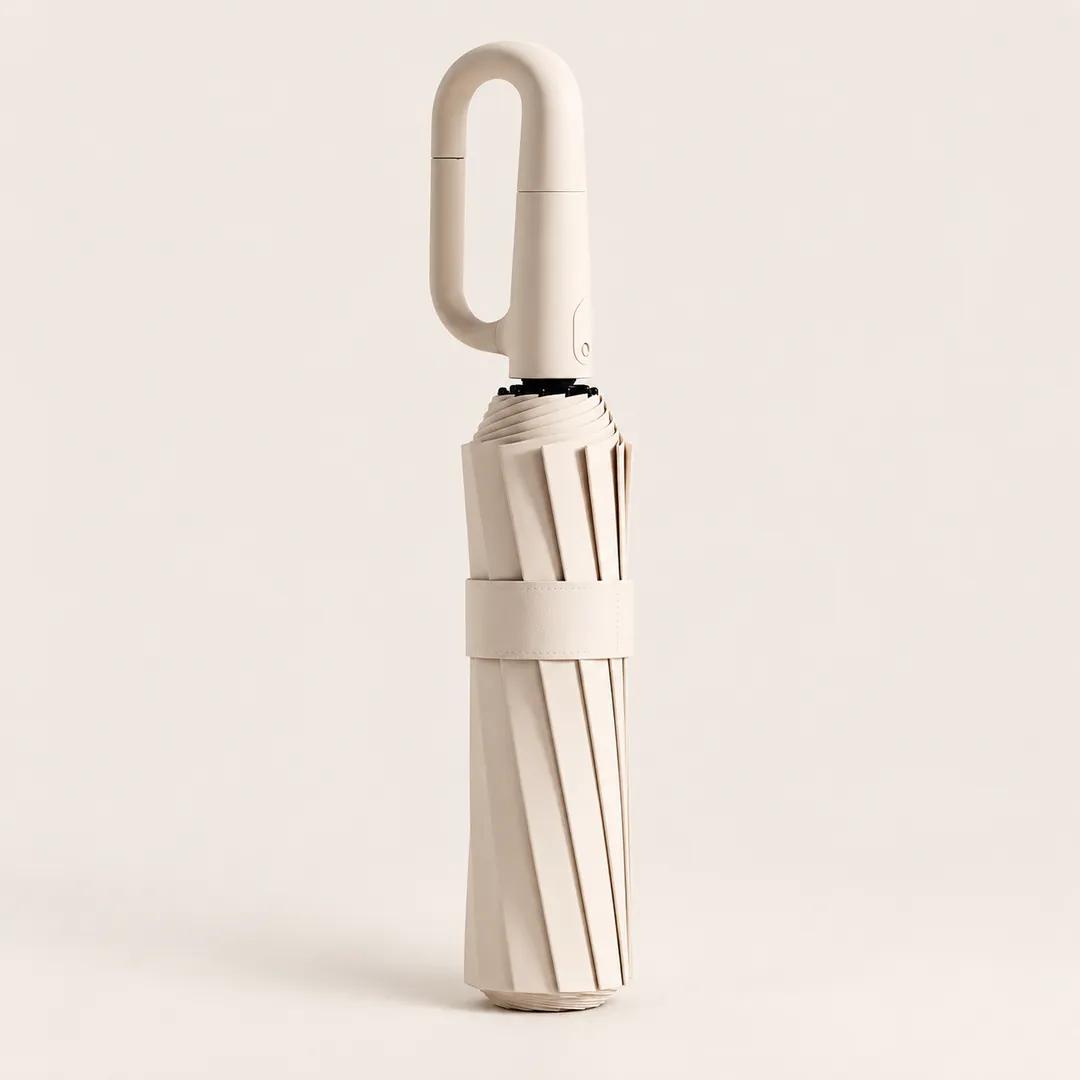
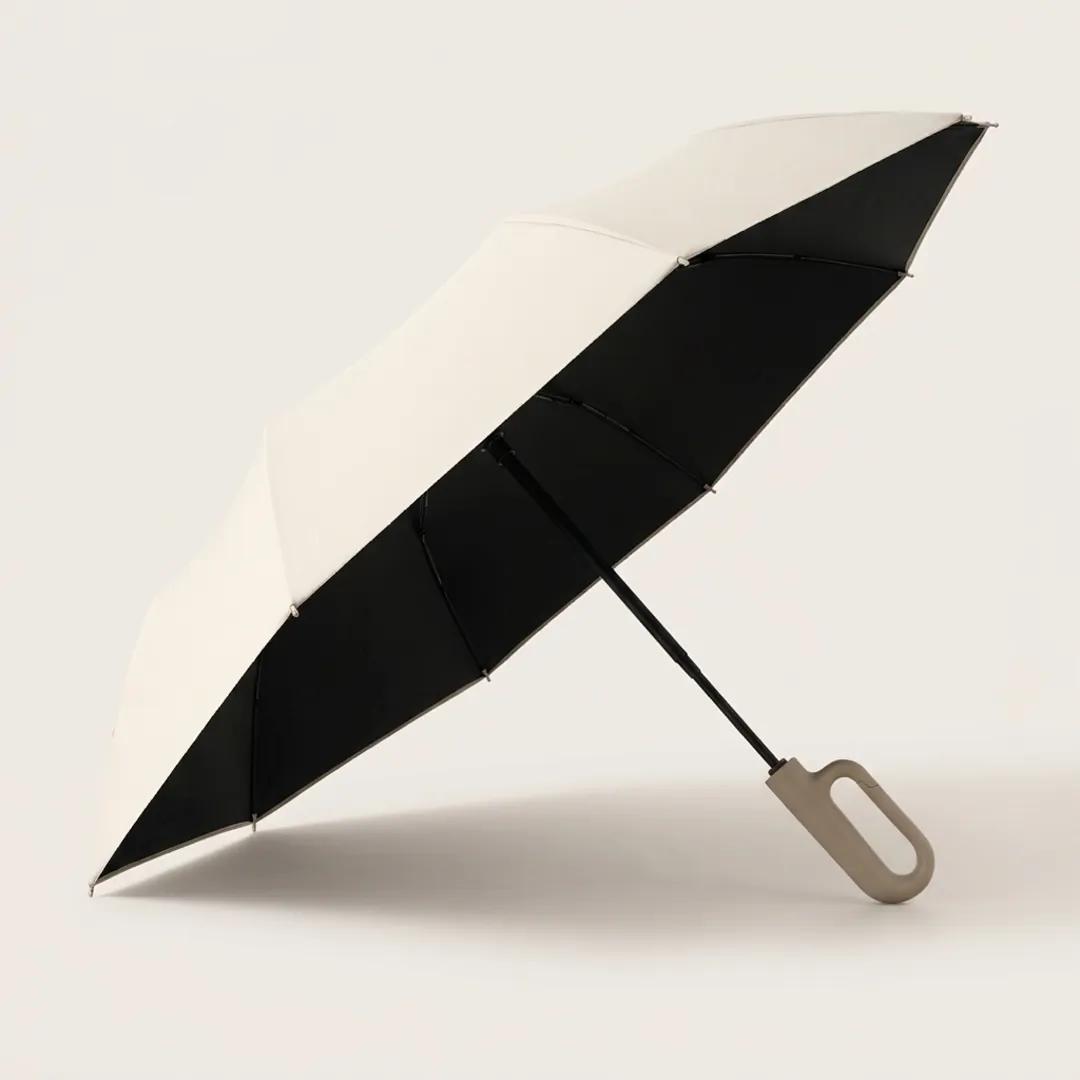
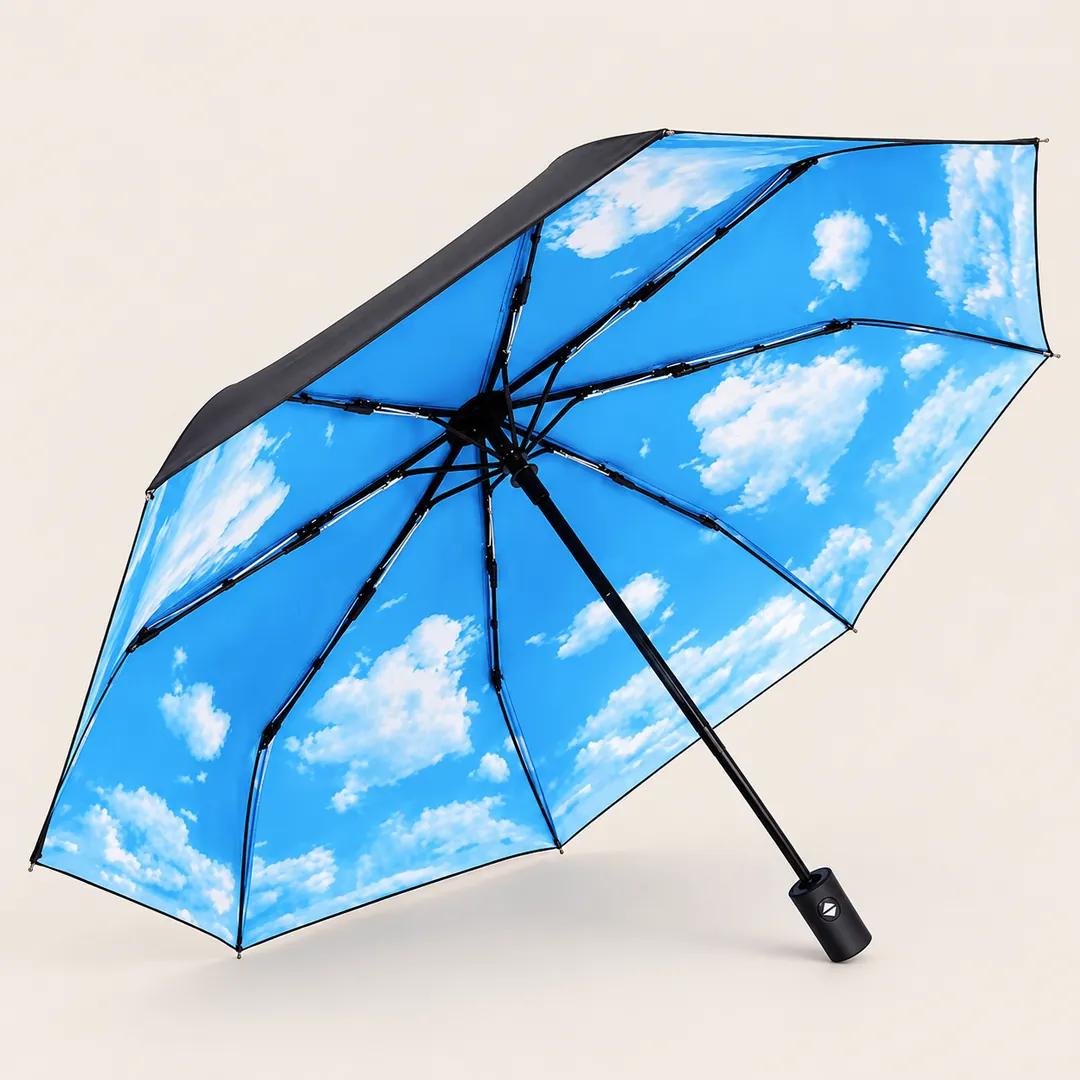
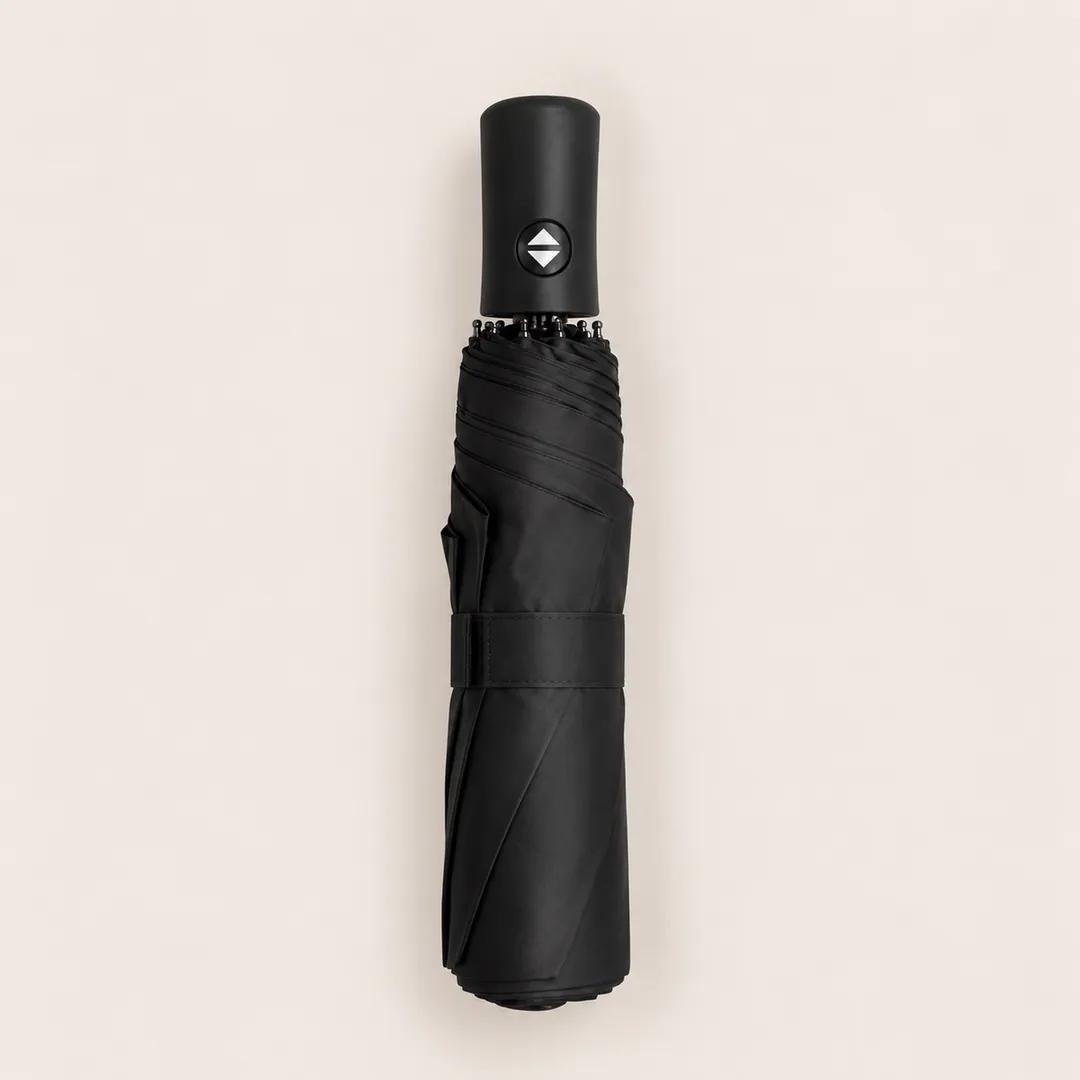
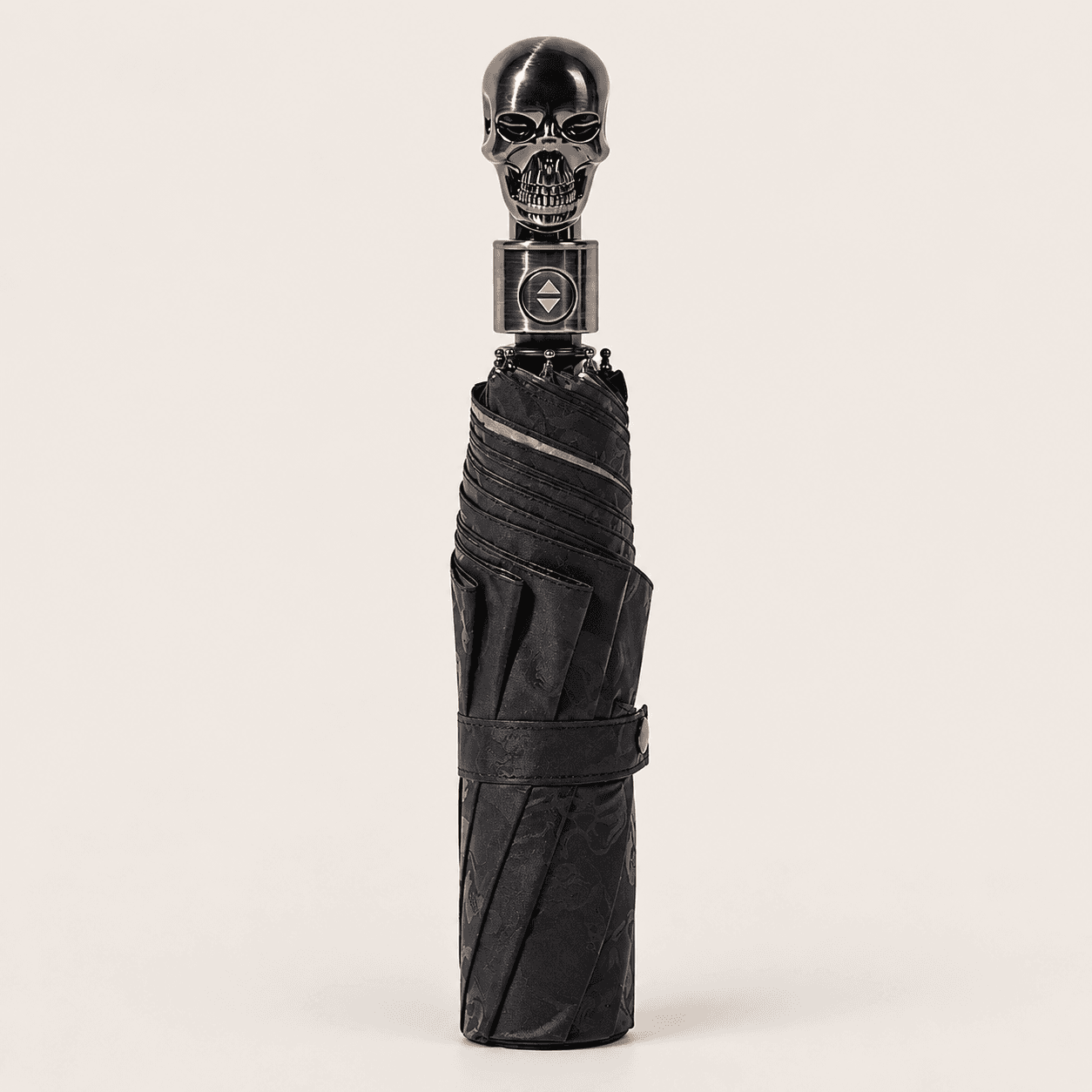
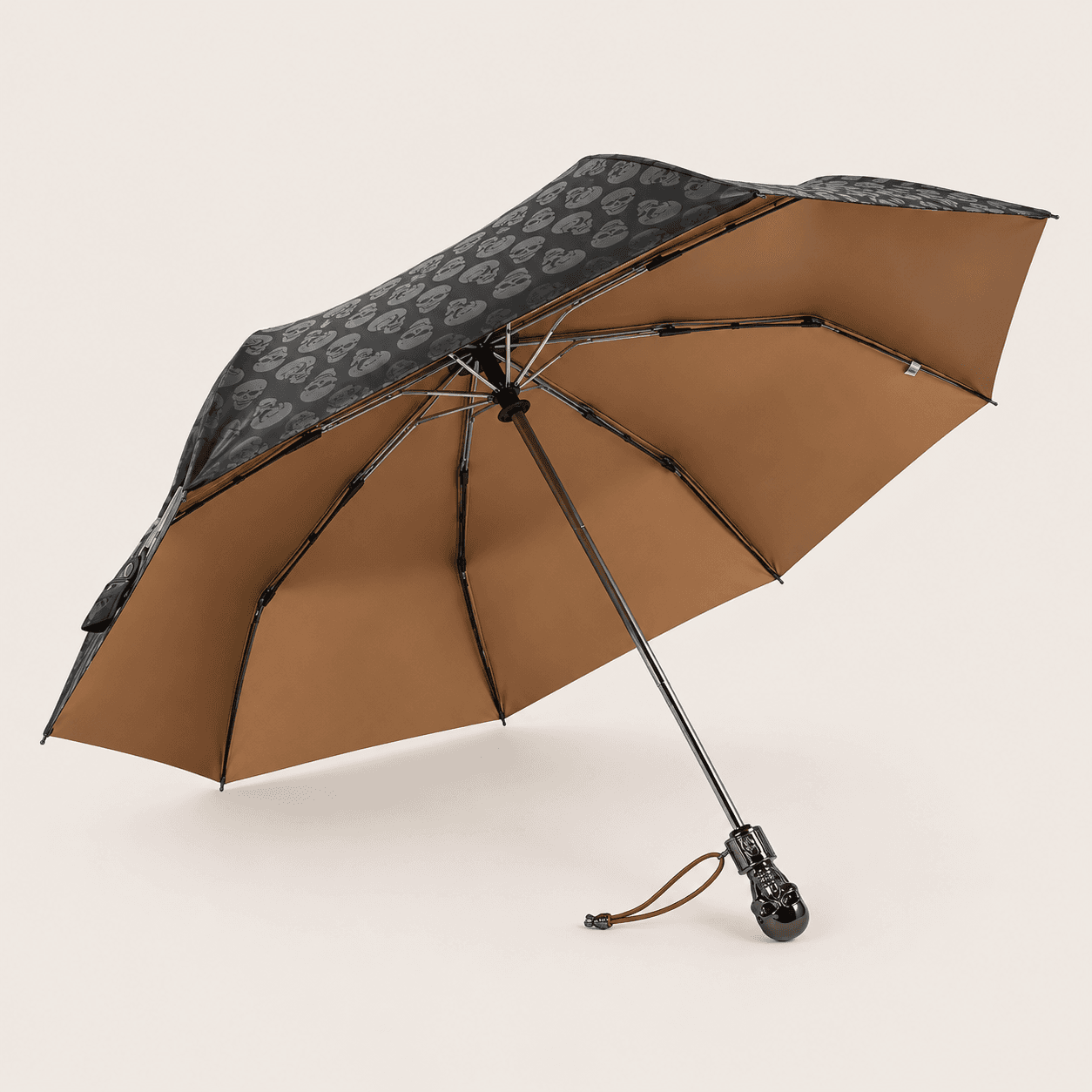
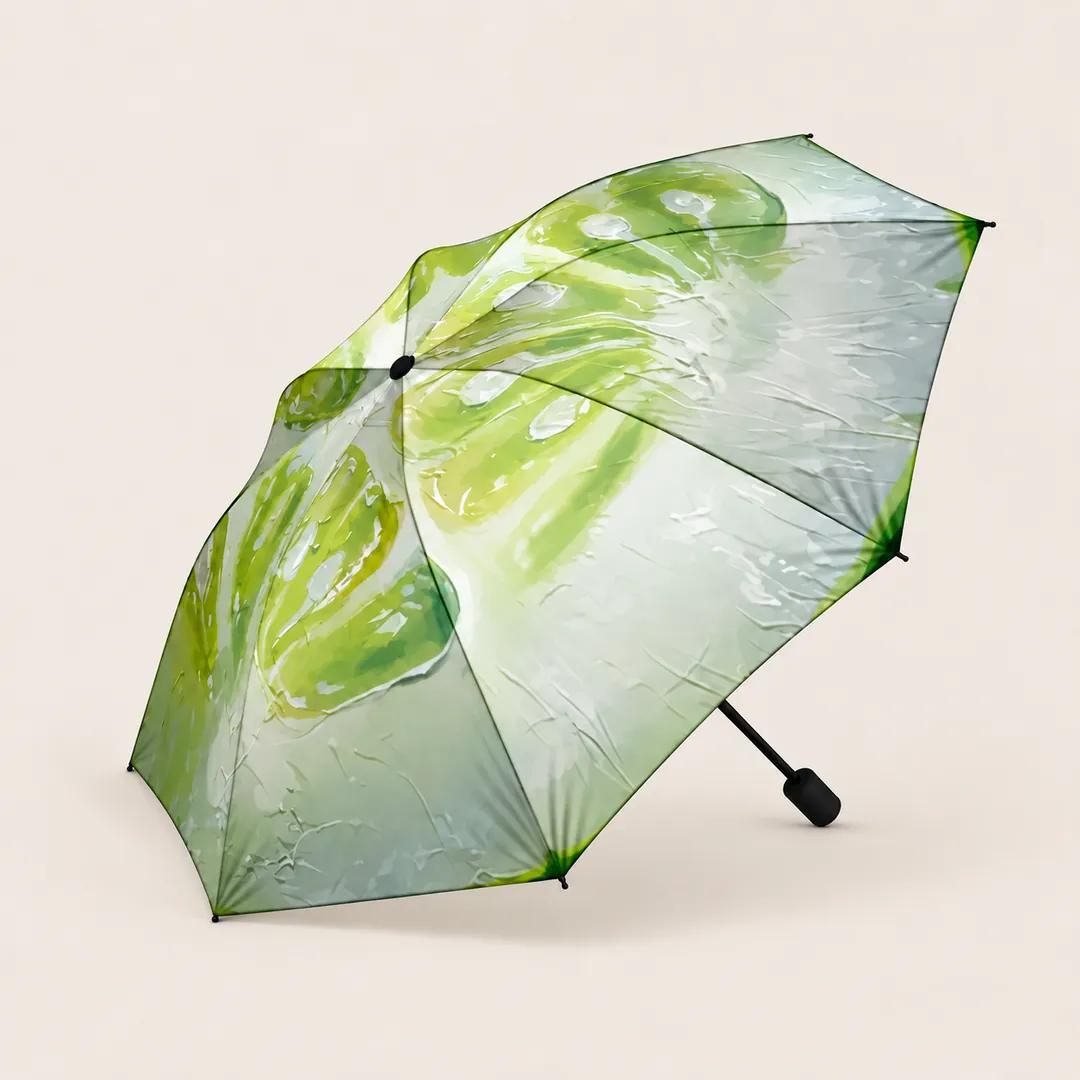
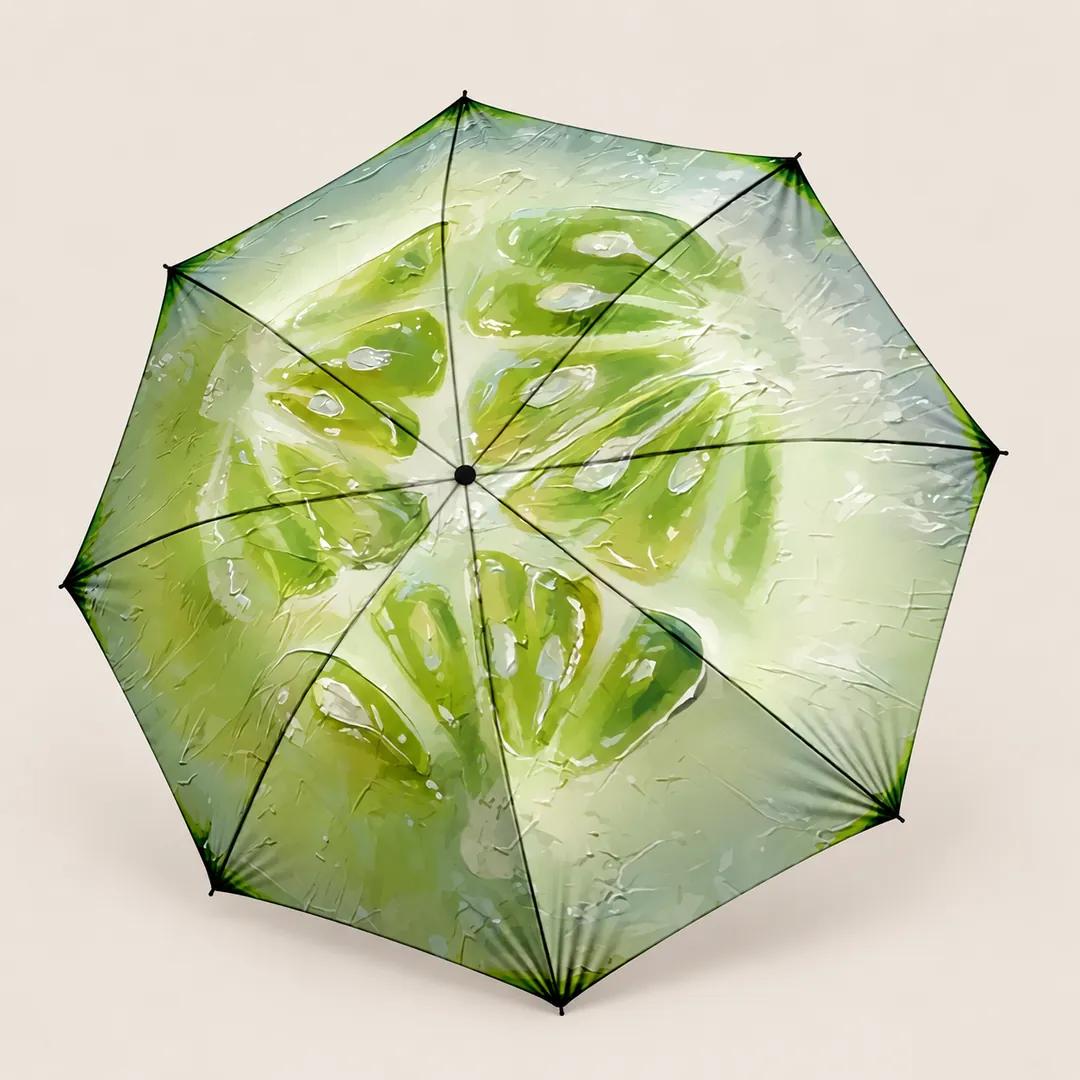
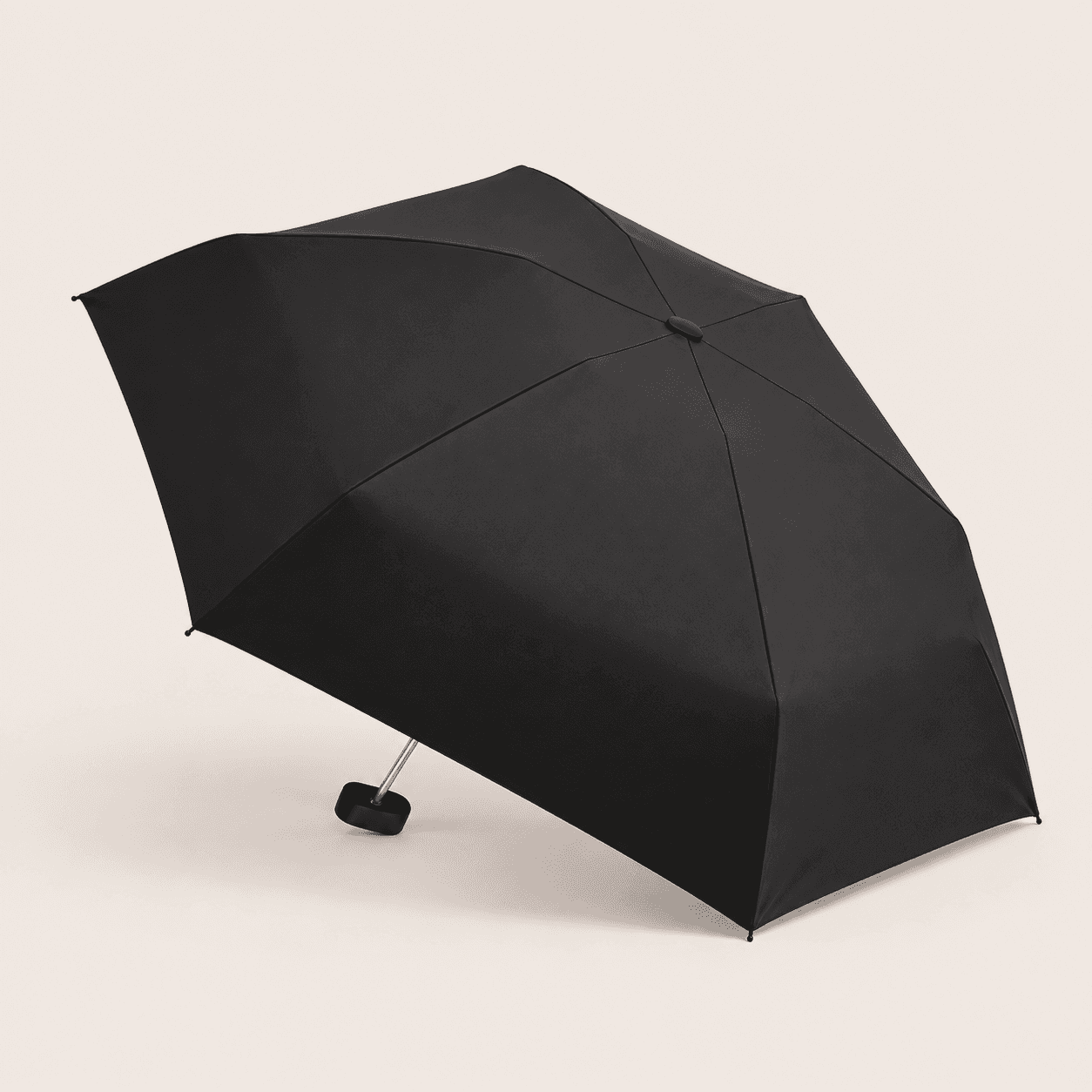
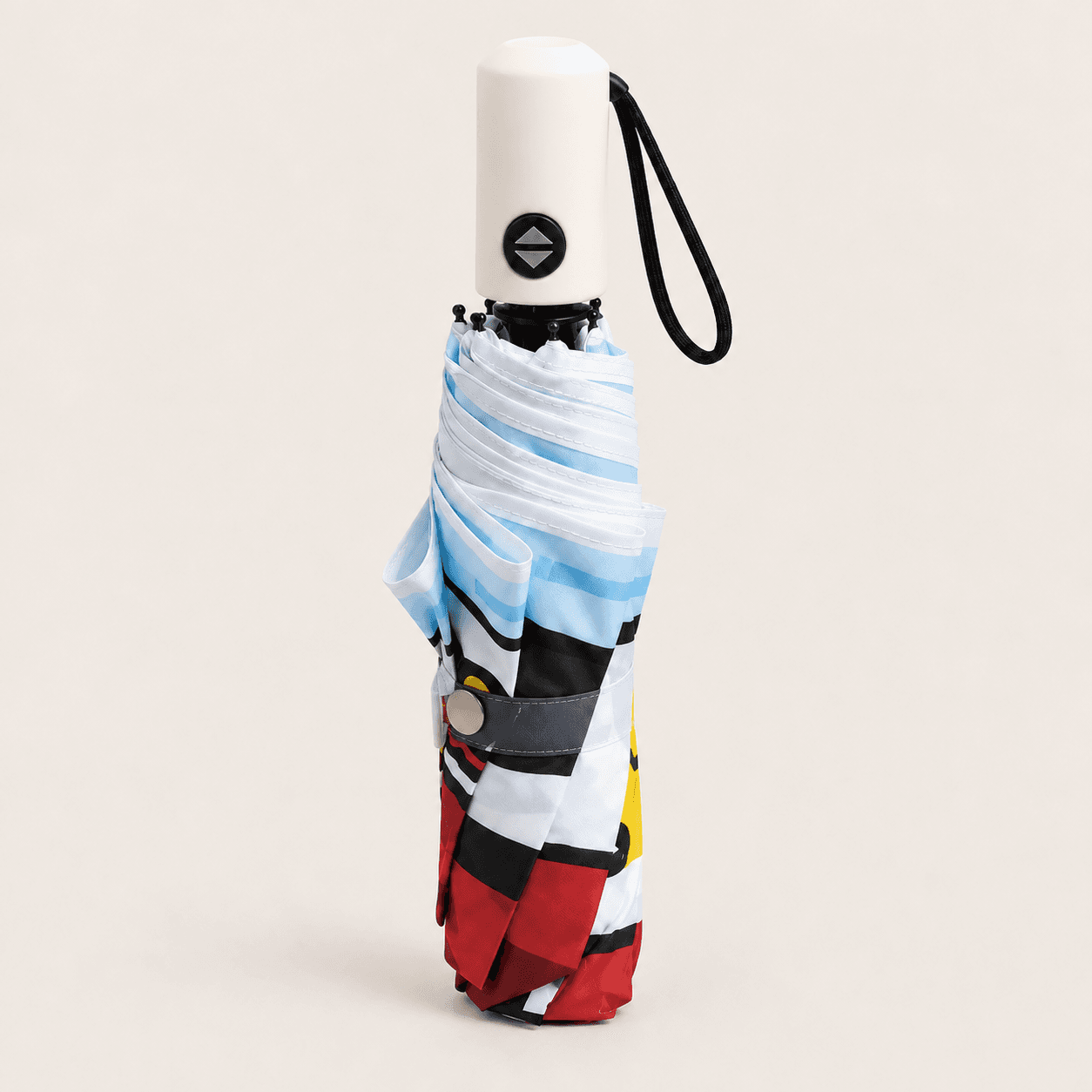
In our catalog, I find it particularly interesting to see that "folding" doesn't describe a single use: there are automatic, transparent, mini, or more formal models. So I never stop at the word folding. I then look at the closed length, handle shape, mechanism, and coverage.
Folding Umbrellas
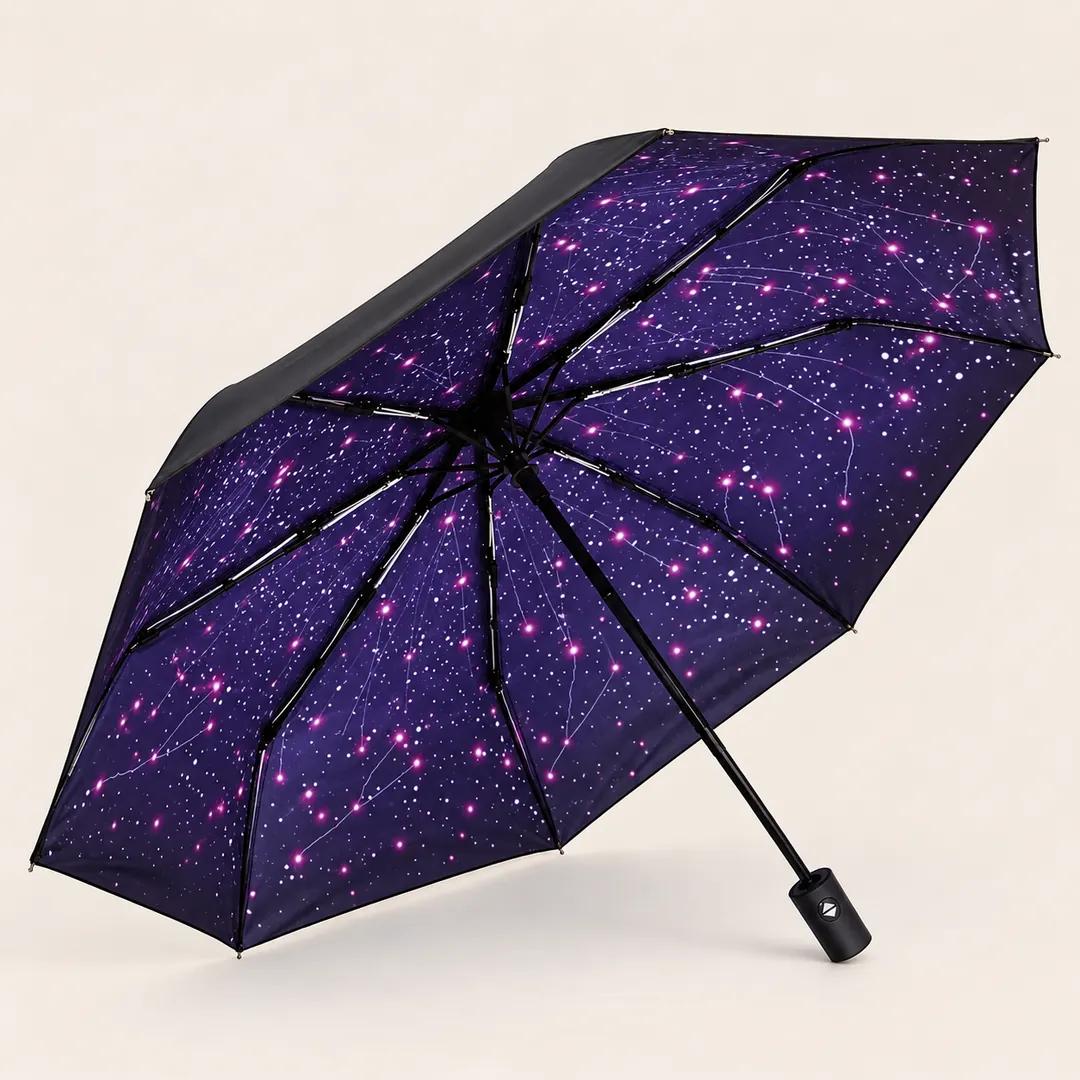
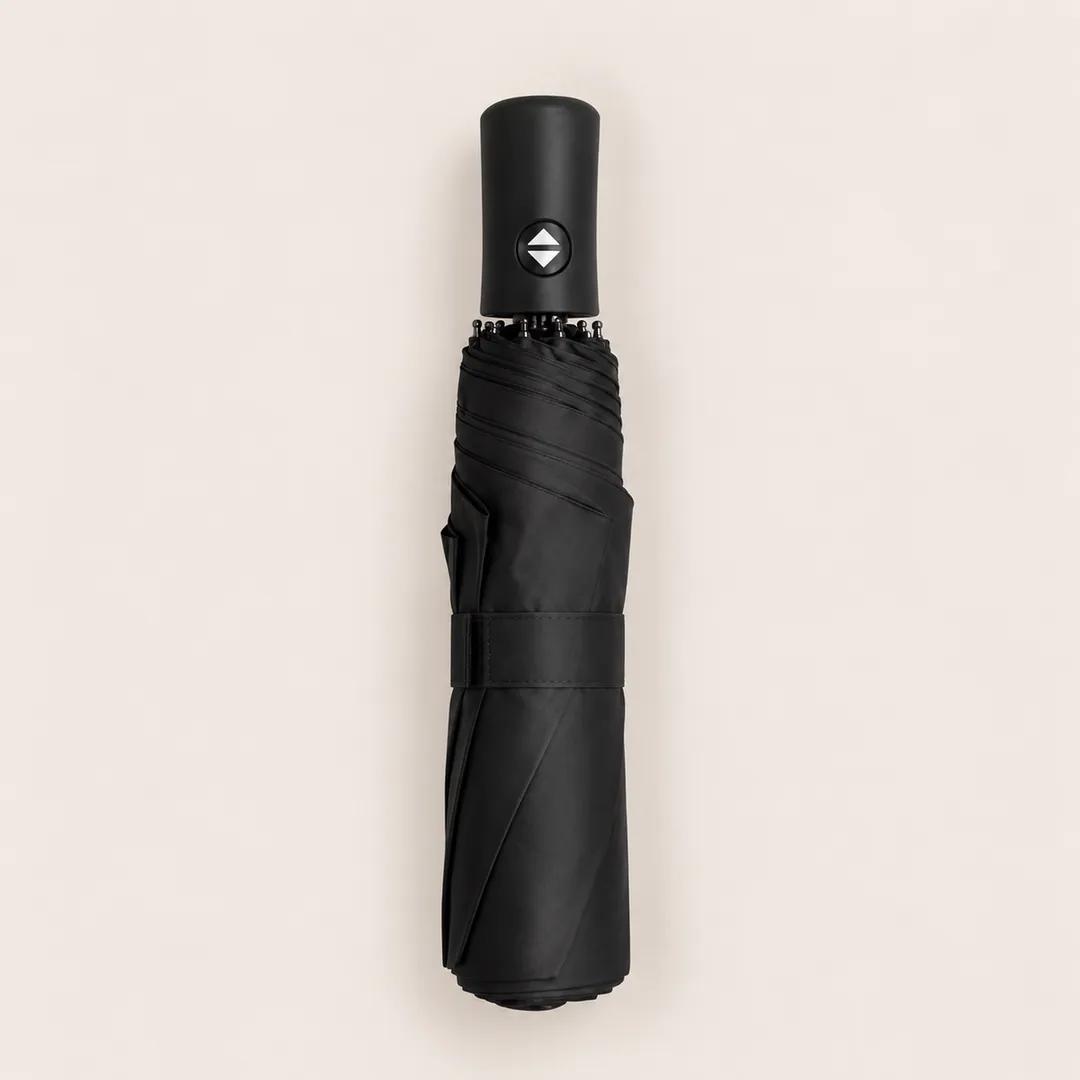
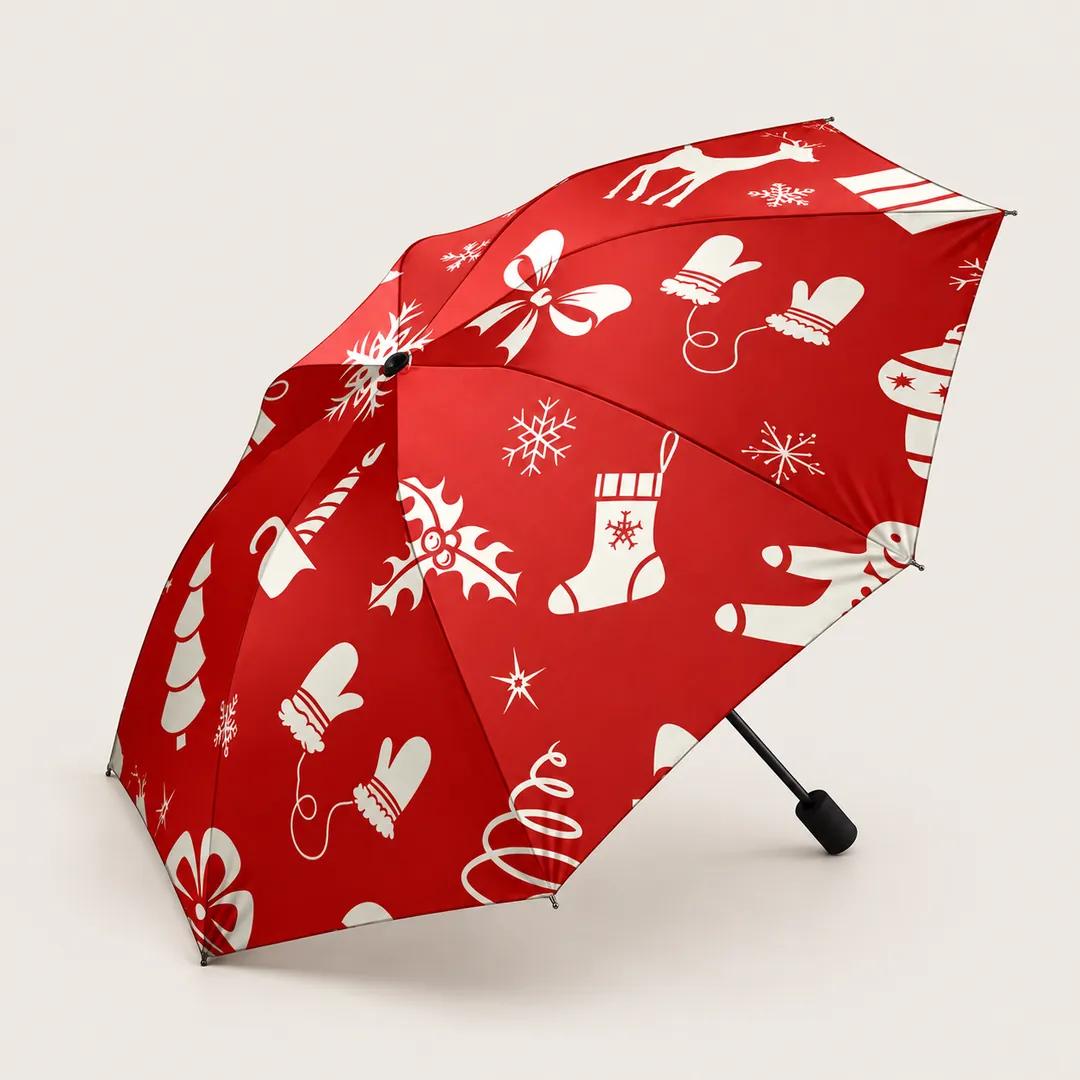
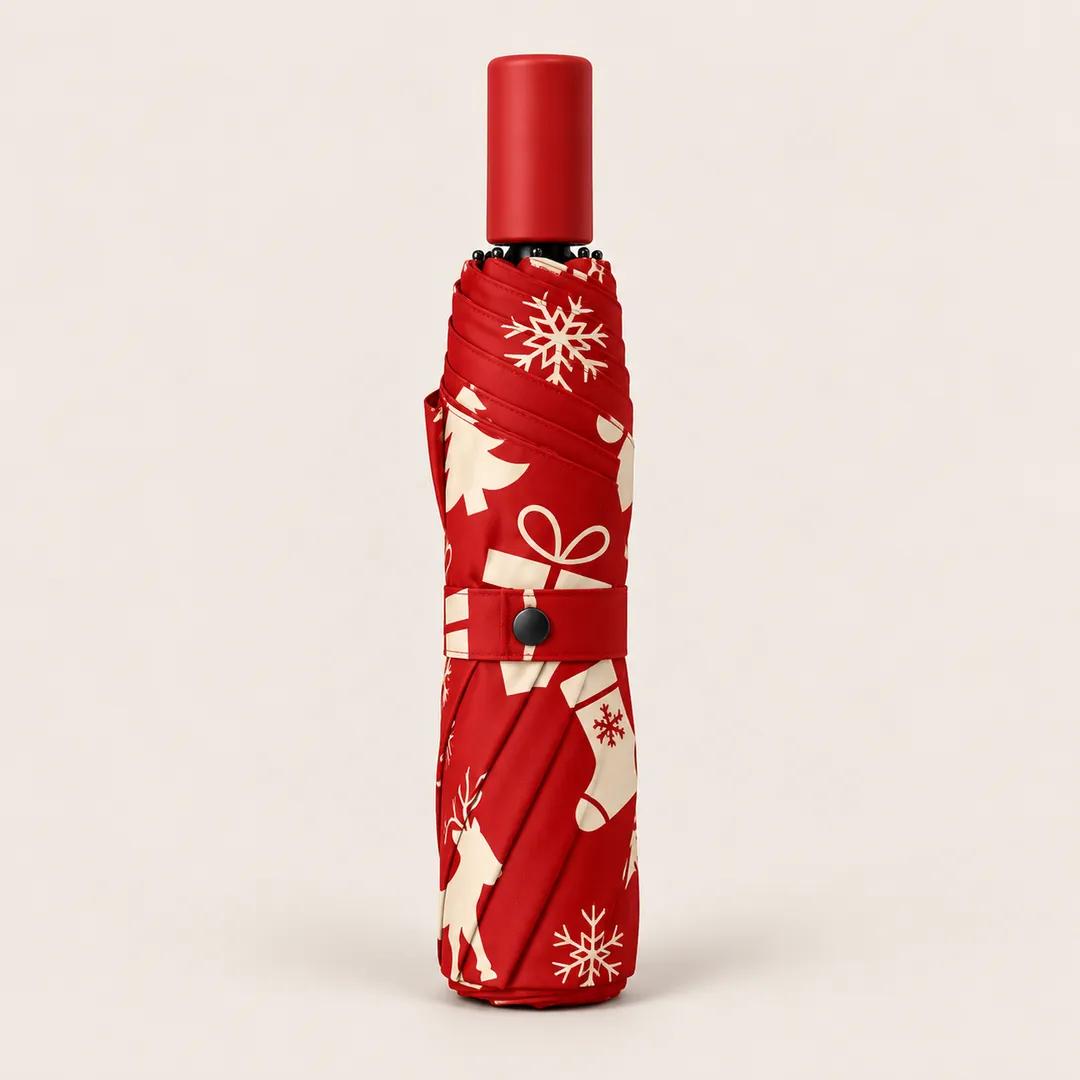
The Compromise I Prefer for Daily Use
Personally, for an umbrella I really want to have with me every day, I prefer to accept a few extra centimeters when closed rather than always choosing the smallest model. The ultra-compact format is only interesting if those saved centimeters truly change how you carry it. Otherwise, I give more weight to comfort of use and coverage.
Choosing the Right Size: Look at Both Open and Closed
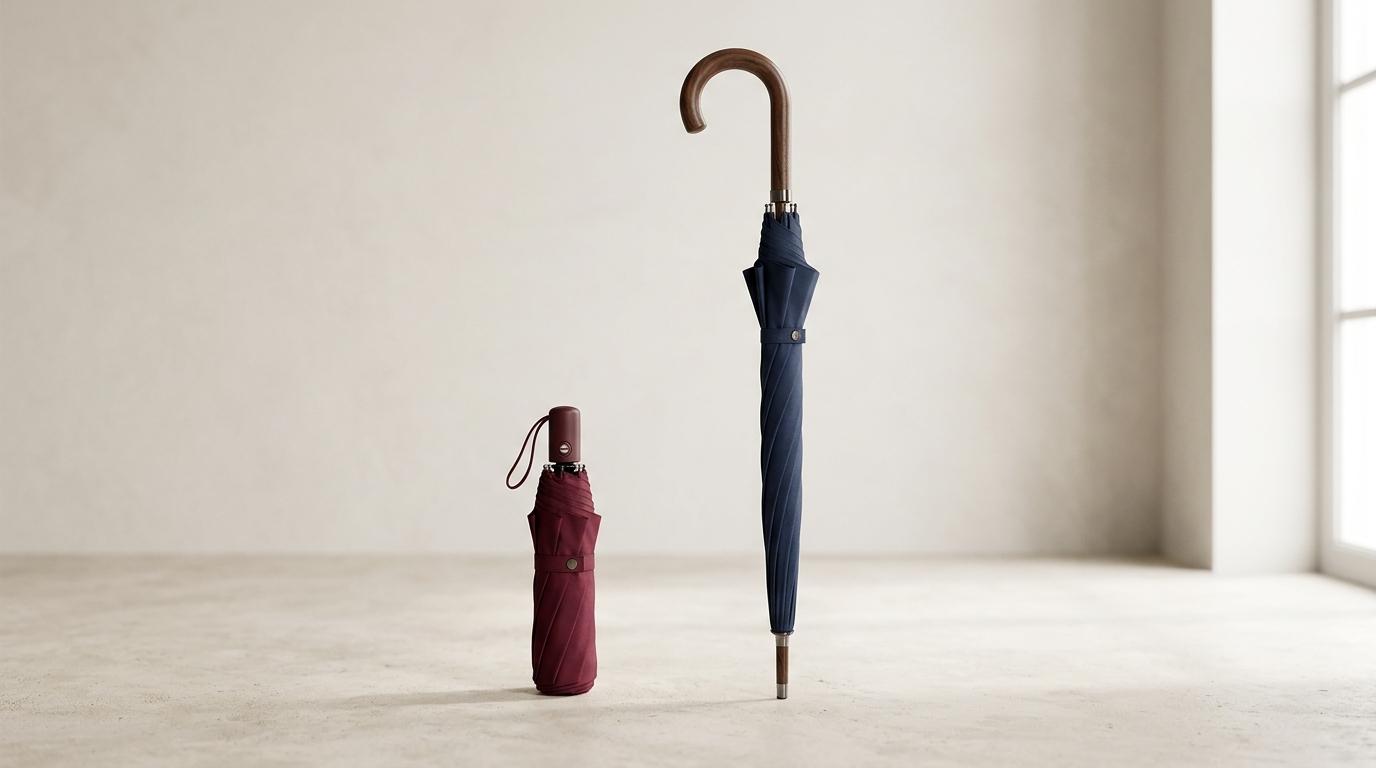
Two dimensions address two different issues. Closed size determines transport; open size determines protection. I therefore advise never judging an umbrella solely by the main photo: a product shot says very little about its actual bulk.
For one person, the goal isn't necessarily to get the largest possible diameter. A generous canopy better protects shoulders and a bag, but it takes up more space on a sidewalk and can be more cumbersome to handle. For walking two people, however, the surface quickly becomes a priority; that's where a selection of umbrellas for two people makes more sense.
What I concretely check on a product page, when a measurement is available, is the consistency between closed length and open dimension. I wouldn't invent a universal "ideal size": a small person with a compact bag and someone walking with a laptop or a large bag simply don't have the same need.
Wind: Don't Rely Solely on the Number of Ribs
This is probably the criterion I'm least convinced by marketing shortcuts. More ribs don't automatically mean a better umbrella. Their material, geometry, joints, and how the whole structure handles deformation also matter.
When I compare a model intended for harsher weather, I look at the structure as a whole. A construction capable of bending might be more relevant than a simply rigid structure. Fiberglass is notably used on some umbrellas for its flexibility, but the material's name alone isn't enough to predict the behavior of the entire product.
In other words, I would never choose a model just because a description lists eight, ten, or twelve ribs. A poorly designed rib remains poorly designed, even if it has many companions. If wind is your main concern, it's better to start directly with a selection of windproof umbrellas and then compare their construction.
What I would do in strong gusts
Even a well-constructed umbrella is still a large surface exposed to the air. If the gusts become really strong, I don't try to "win" against the wind: I reduce exposure, carefully orient the umbrella, and, if necessary, close it. It's not spectacular, but closing it remains an excellent windproof feature available on almost all models.
Weight and compactness: two similar but different criteria
An umbrella can be short when folded without being particularly light, and vice versa. So I always separate the two criteria. Lightness matters when carrying the umbrella for a long time; compactness matters when space is limited.
For a bag already loaded with a laptop, bottle, and charger, a few grams can end up making a difference. For a small satchel, it's more the closed length and thickness that become restrictive. My compromise: only pay the price for an extreme format if I really need it. An enticing description of weight doesn't make up for an umbrella that's uncomfortable to hold or too small for the intended use.
Automatic or manual opening?
Automatic opening is mainly a matter of context. It becomes very convenient when getting out of a car, bus, or building with a bag in the other hand. In these situations, I completely understand why it becomes a priority criterion.
However, I don't consider "automatic" as synonymous with quality. It's an additional mechanism. So I look at what it actually brings to usage before giving it importance. For an umbrella used occasionally or opened without constraints, a manual mechanism can perfectly suffice.
Also, be careful with vocabulary: depending on the models, "automatic" can refer to the opening alone or to an opening and closing system. I recommend reading the feature indicated on the description precisely rather than assuming the function from the title.
Materials and finishes: what truly deserves your attention
I prefer to think in terms of function. For the canopy, I look at what it needs to do: cover properly and dry in good conditions. For the structure, I'm interested in the combination of shaft, ribs, joints, and tips. For the handle, I mainly consider comfort and stability in hand.
Material names can help with comparison, but I refuse to make them an automatic hierarchy. "Aluminum," "steel," or "fiberglass" never alone describe the final quality: thickness, assembly, and design change the result. Without specific measurement or testing on a model, it's better not to turn a material into a promise of durability.
The handle is less trivial than it seems
It's a detail I find underestimated. A handle is not just decorative: it's your only point of control when rain and wind arrive. On a model intended for long walks, I would favor a shape that can be held without straining the fingers. On an emergency umbrella used for five minutes, I would be much more lenient.
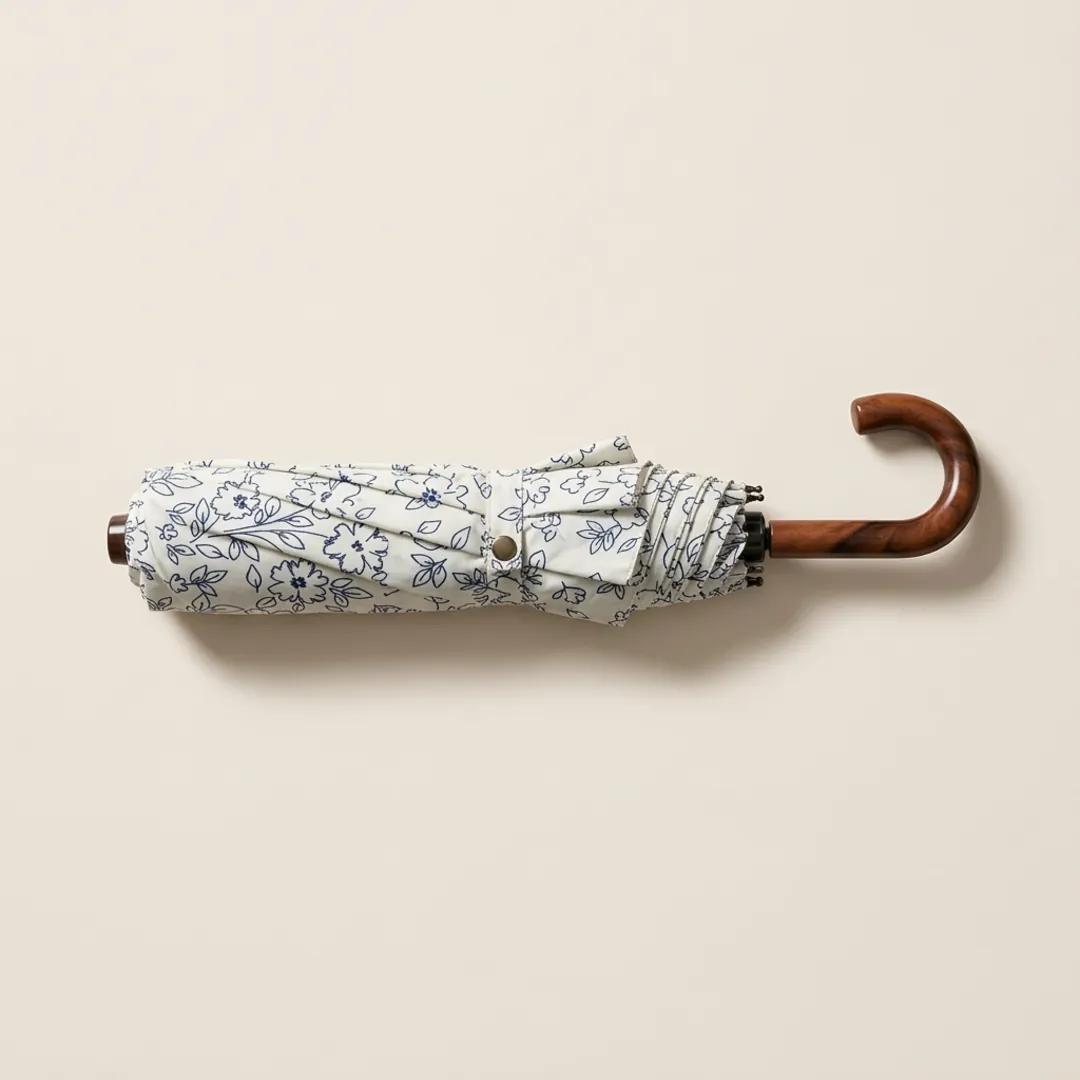
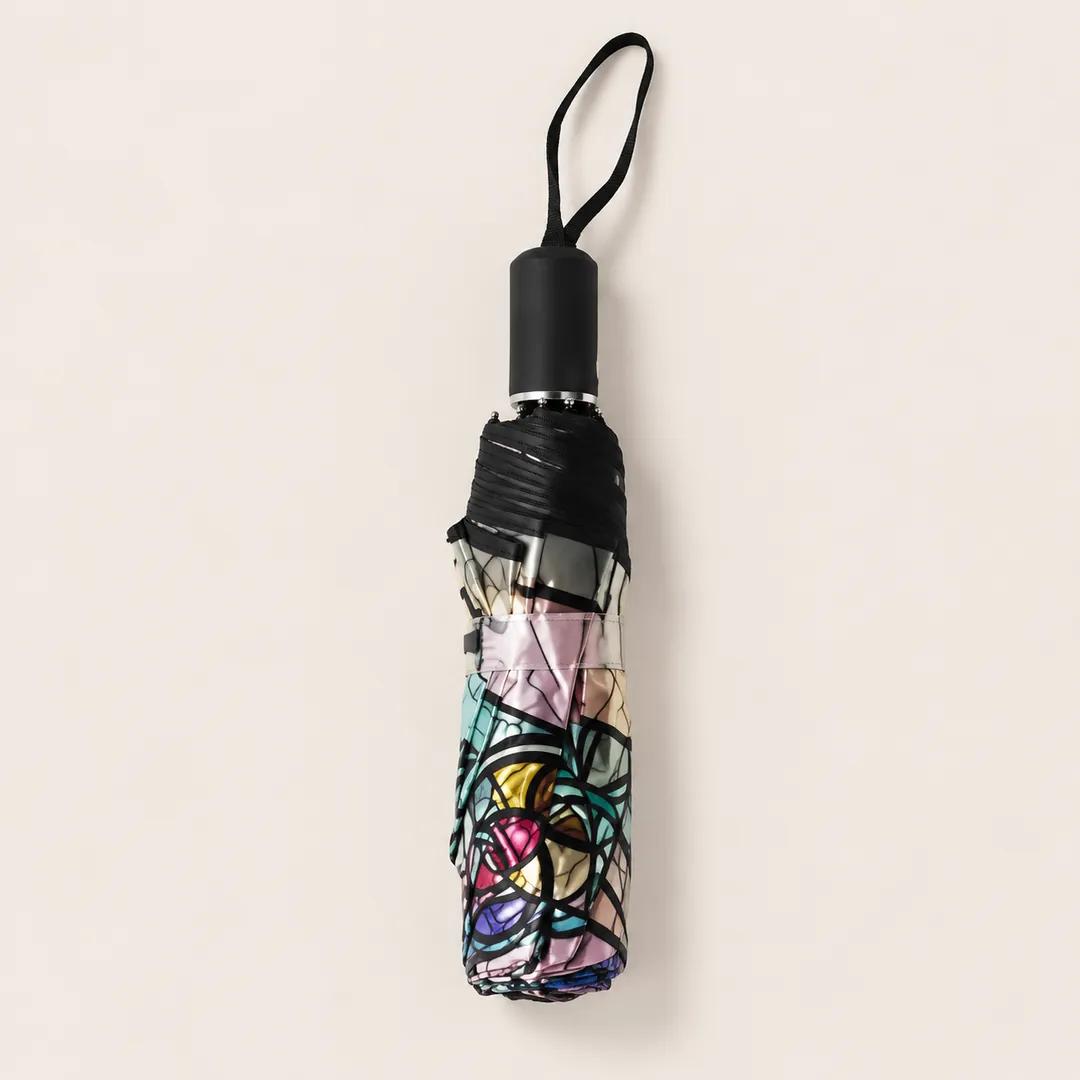
Detailed photos are useful here: they allow you to see the shape, volume, and sometimes the type of finish. At Umbrella Paris, I particularly like using these views to distinguish between two models that seem similar when only looking at their canopy.
A women's umbrella: start with function before style
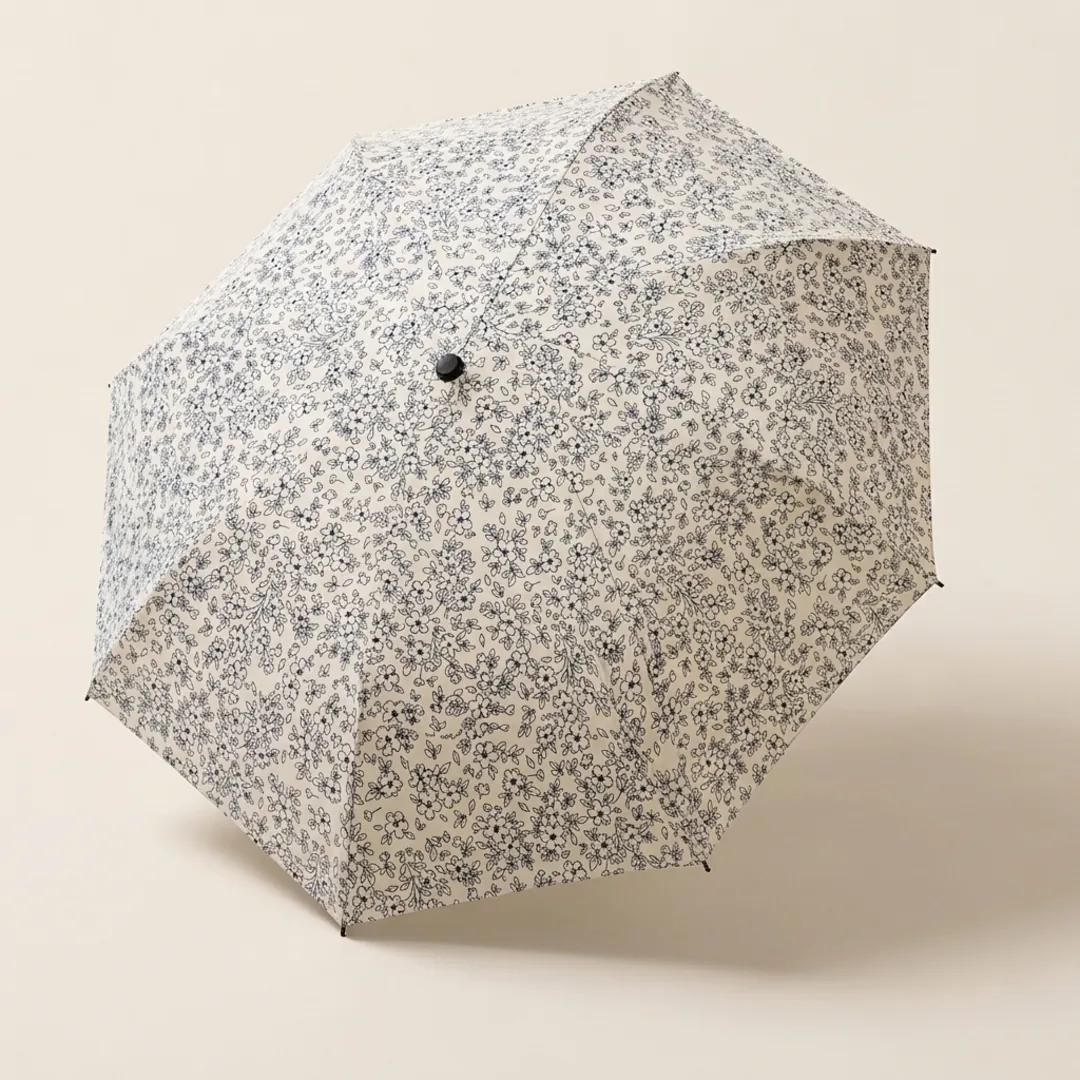
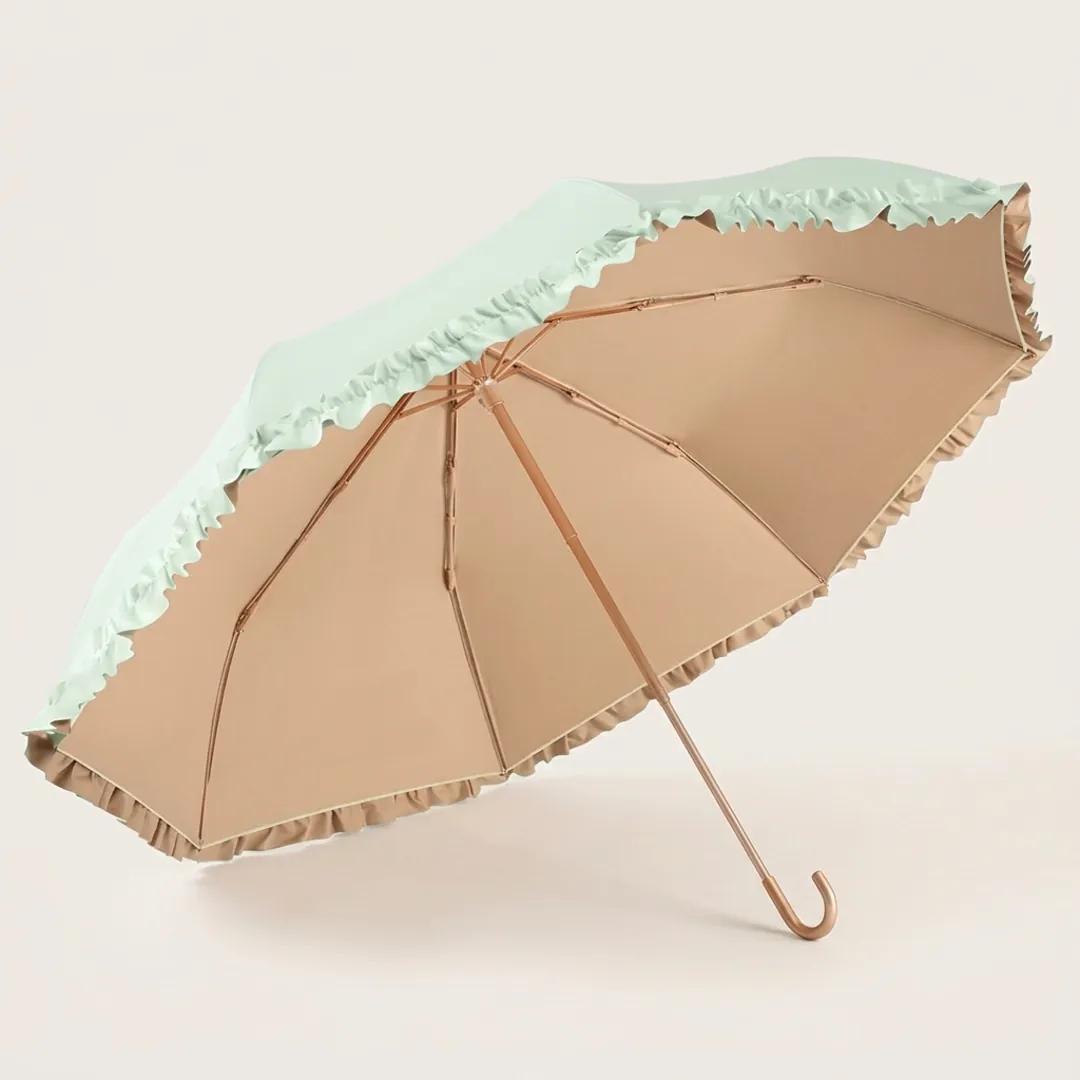
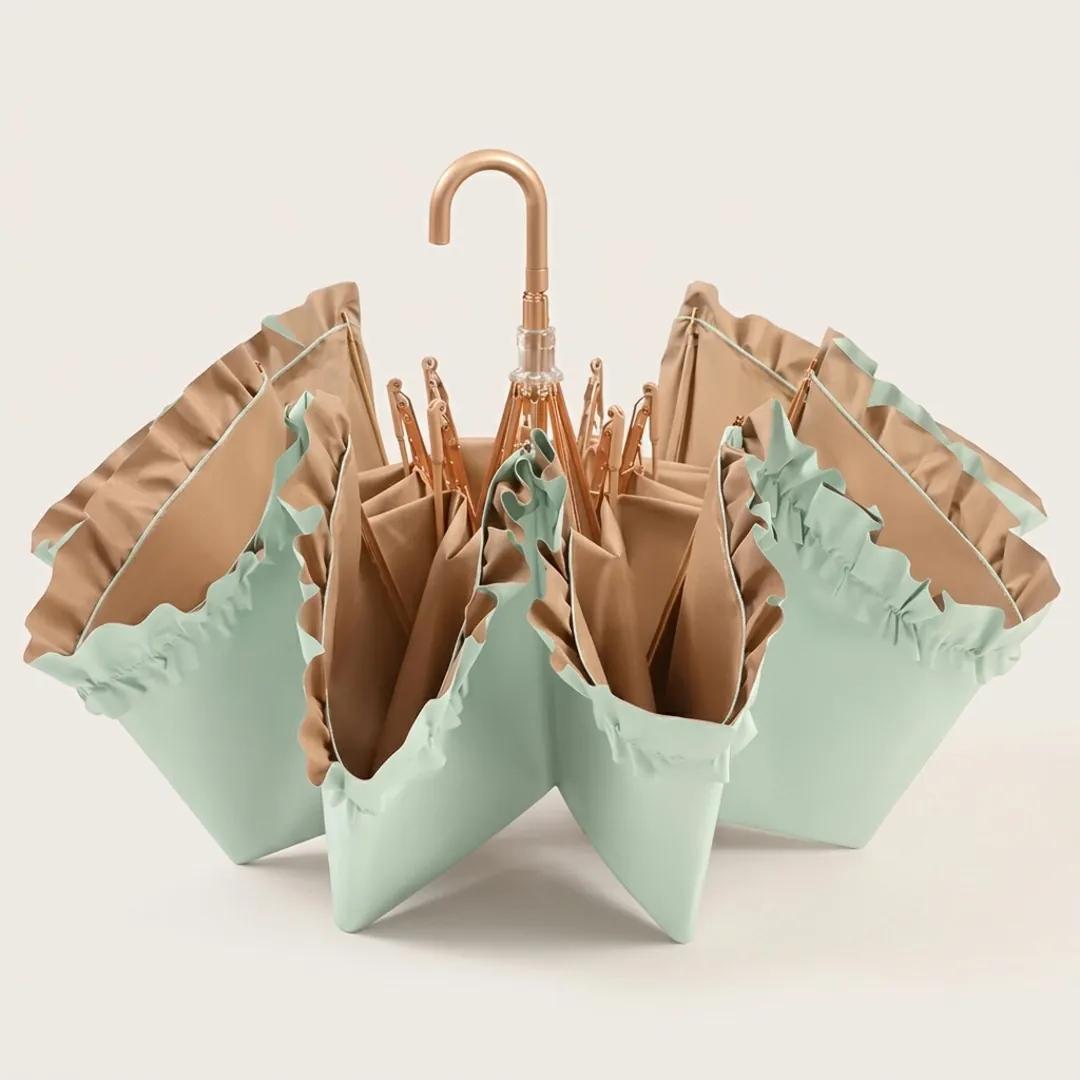
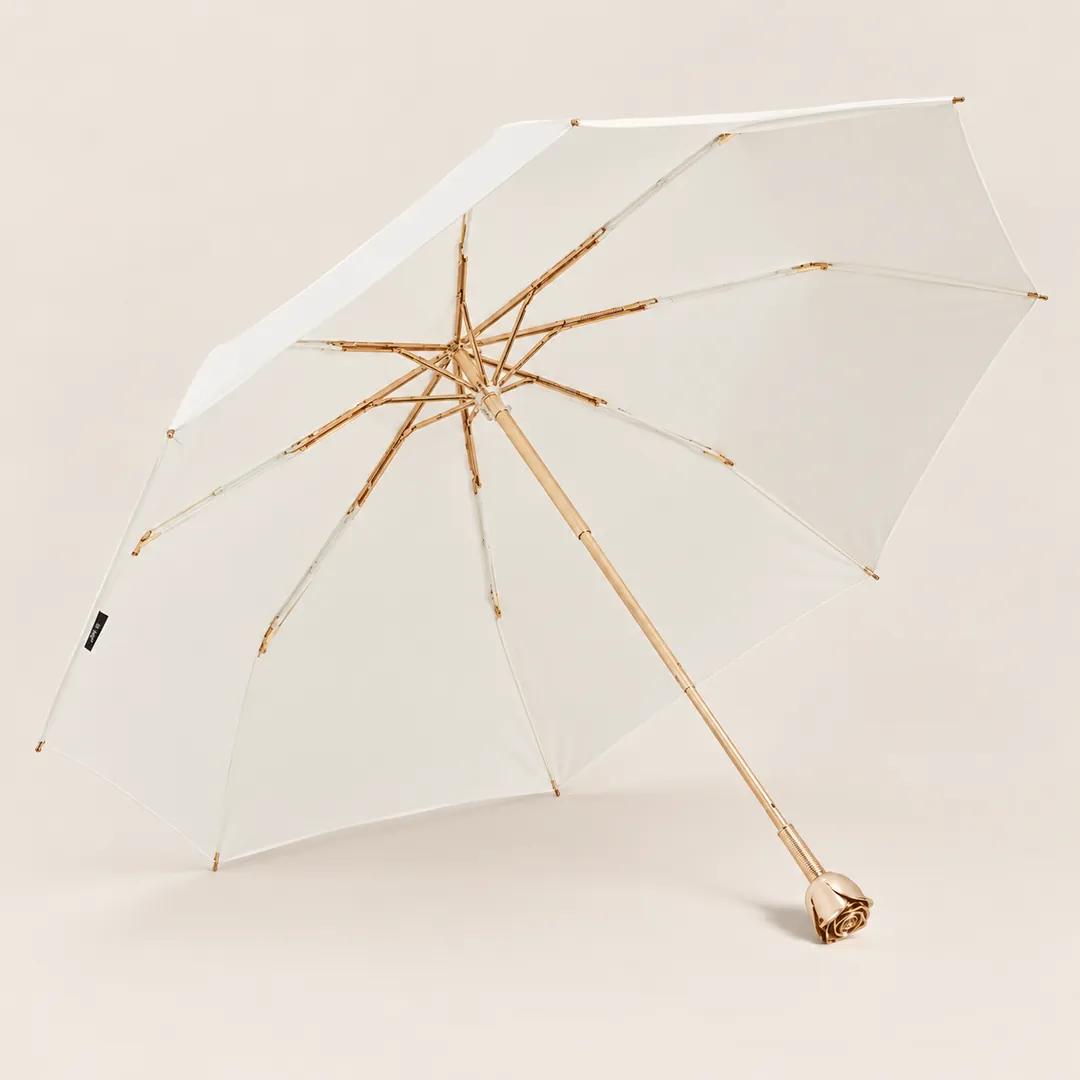
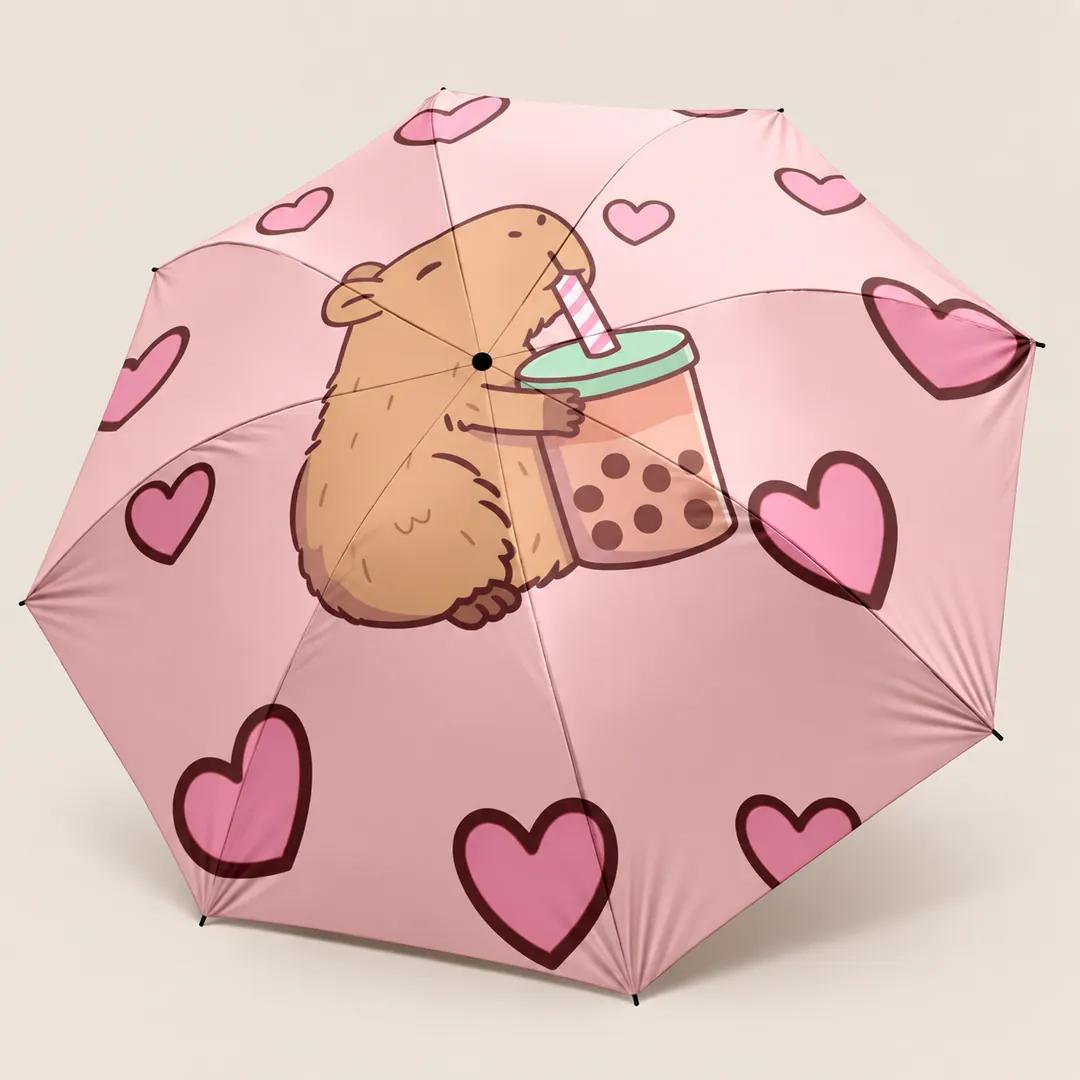
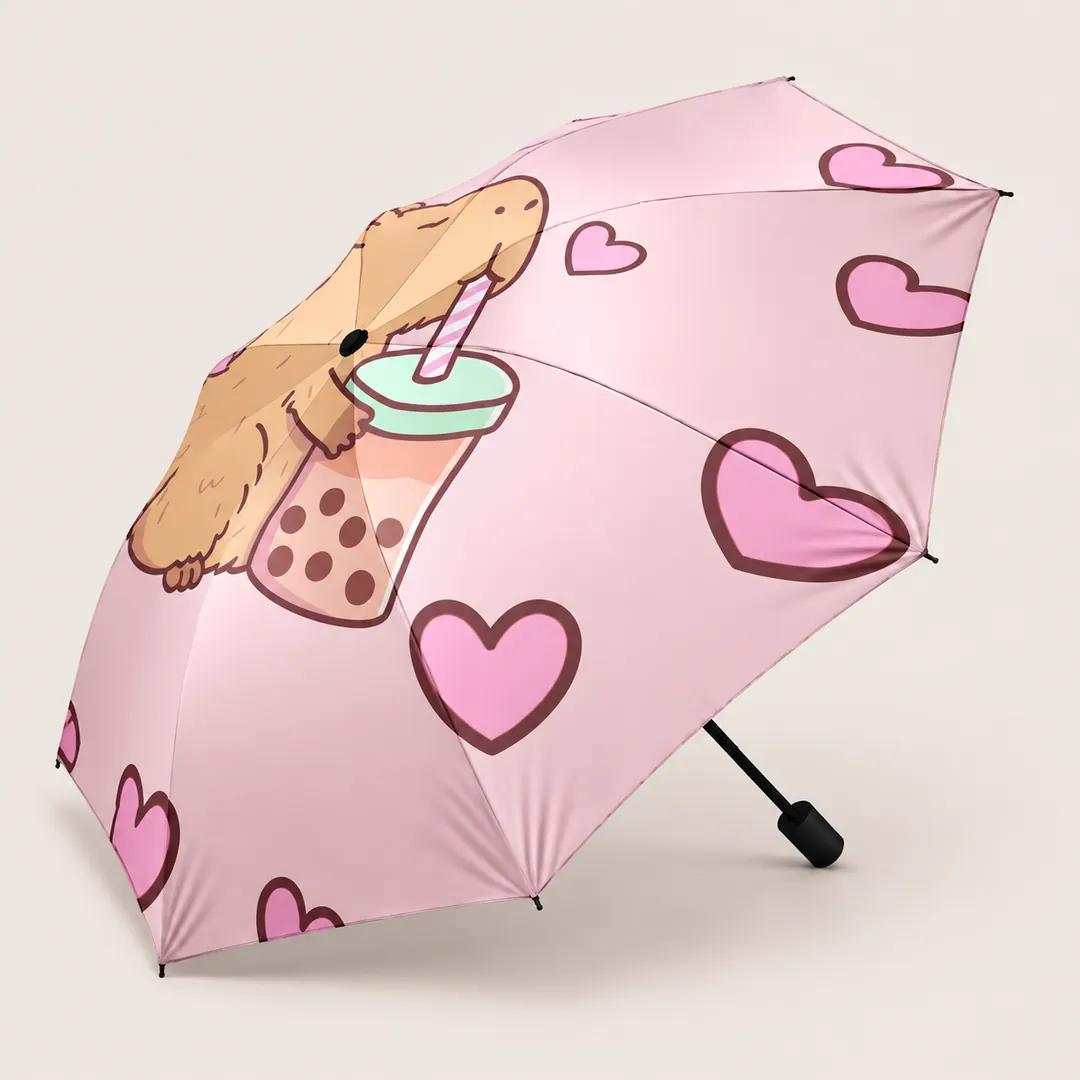
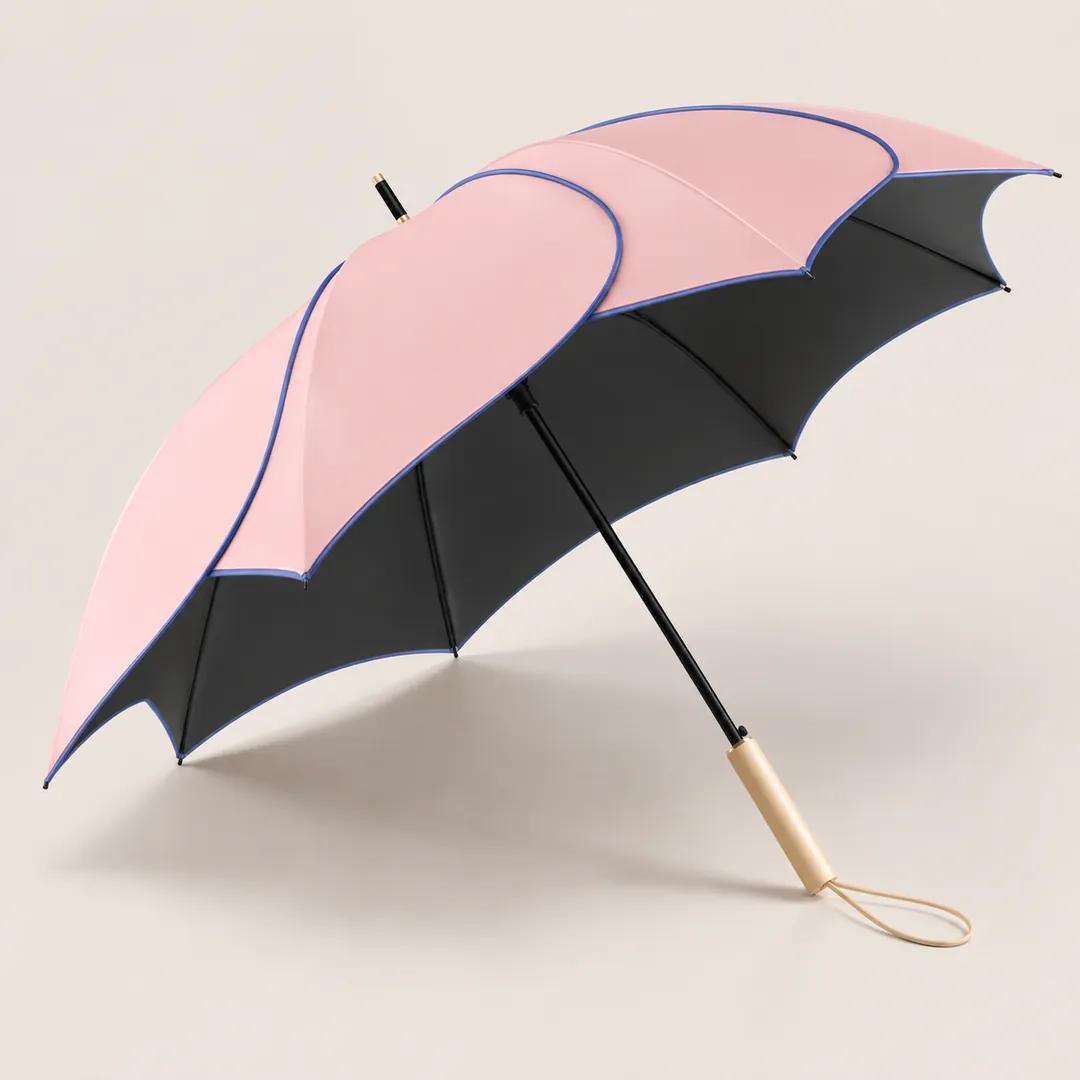
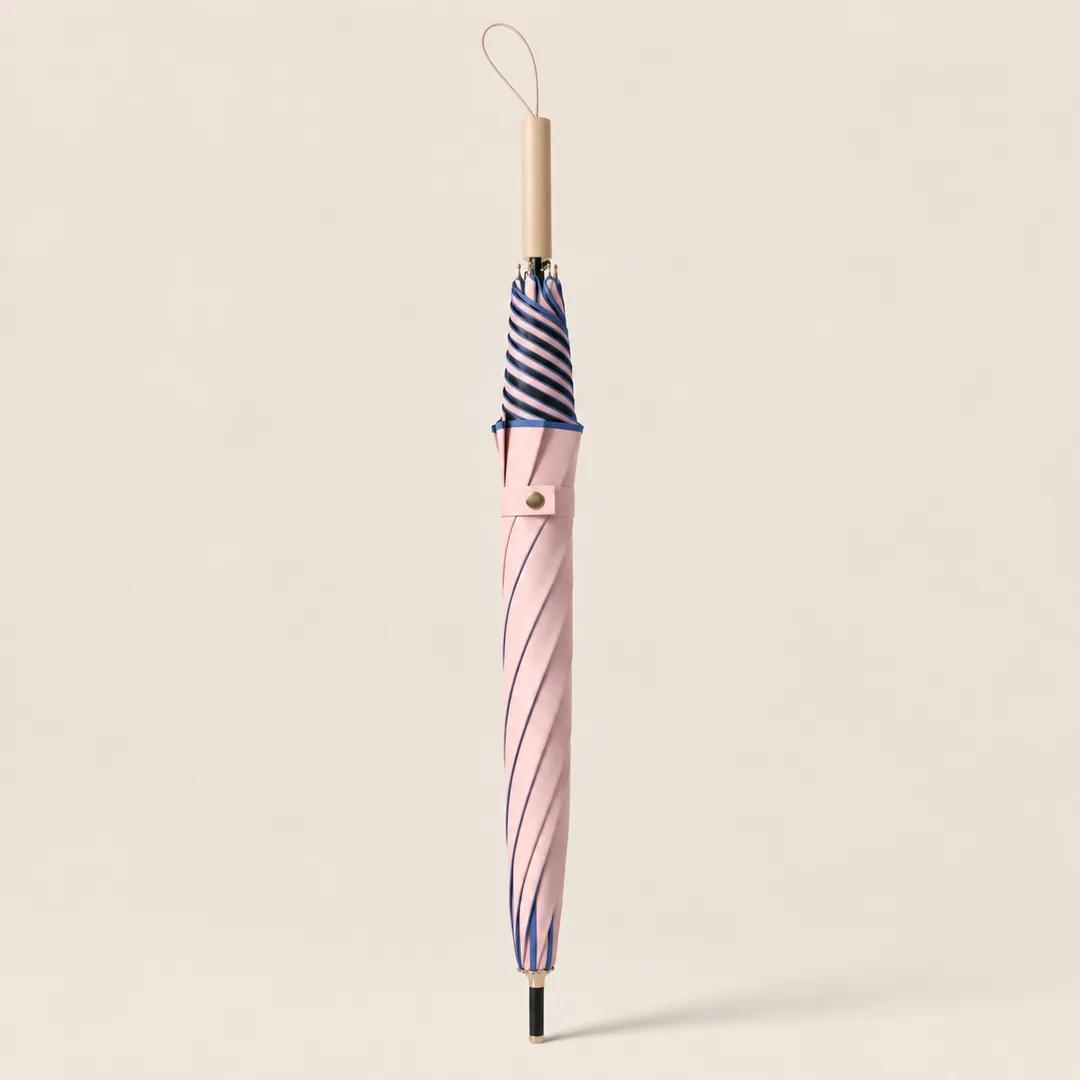
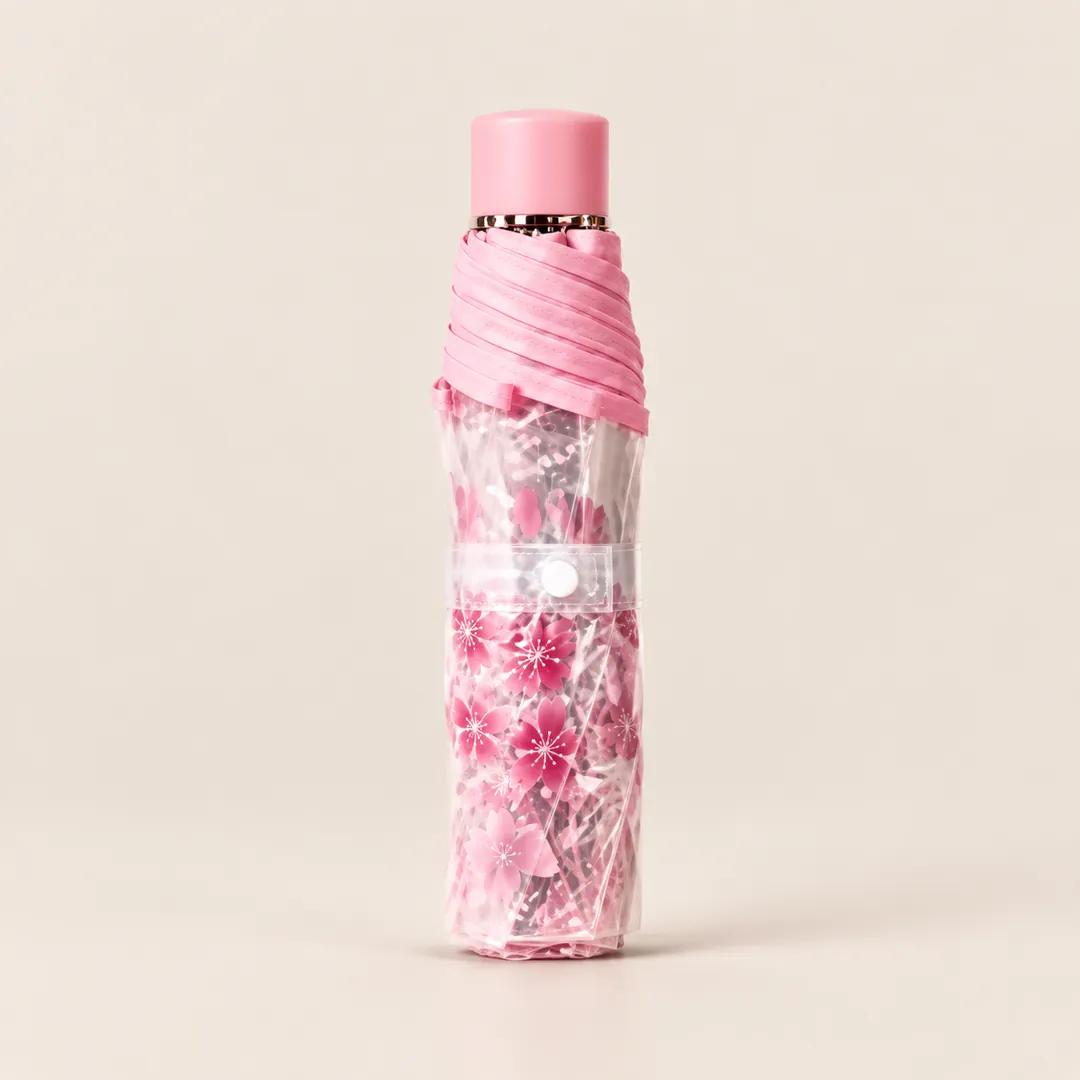
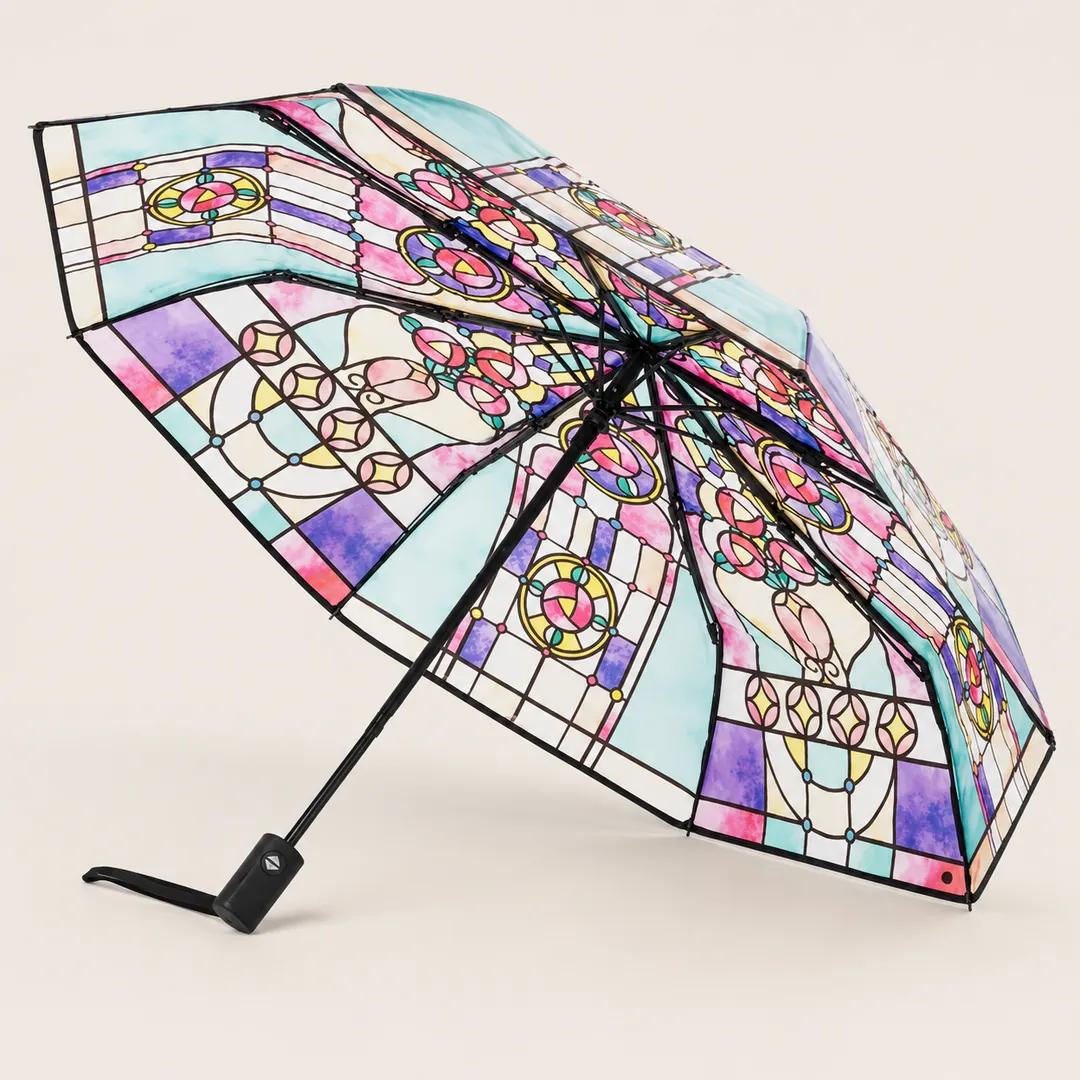
In the women's umbrella collection, our catalog clearly shows that an aesthetic category can group very different constructions: folding models, mini, decorative details, or more classic silhouettes. I find this more useful than imagining there is a specifically "feminine" size or mechanism.

If I had to choose one for myself, I would start exactly as I would for any other umbrella: does it fit in my bag, does its coverage suit my routes, and does its handle suit me? The pattern, color, or finishes come afterward. Style matters — we are more likely to keep an object we like — but it shouldn't overshadow an ill-suited format.
Women's umbrellas

The special case of the transparent umbrella
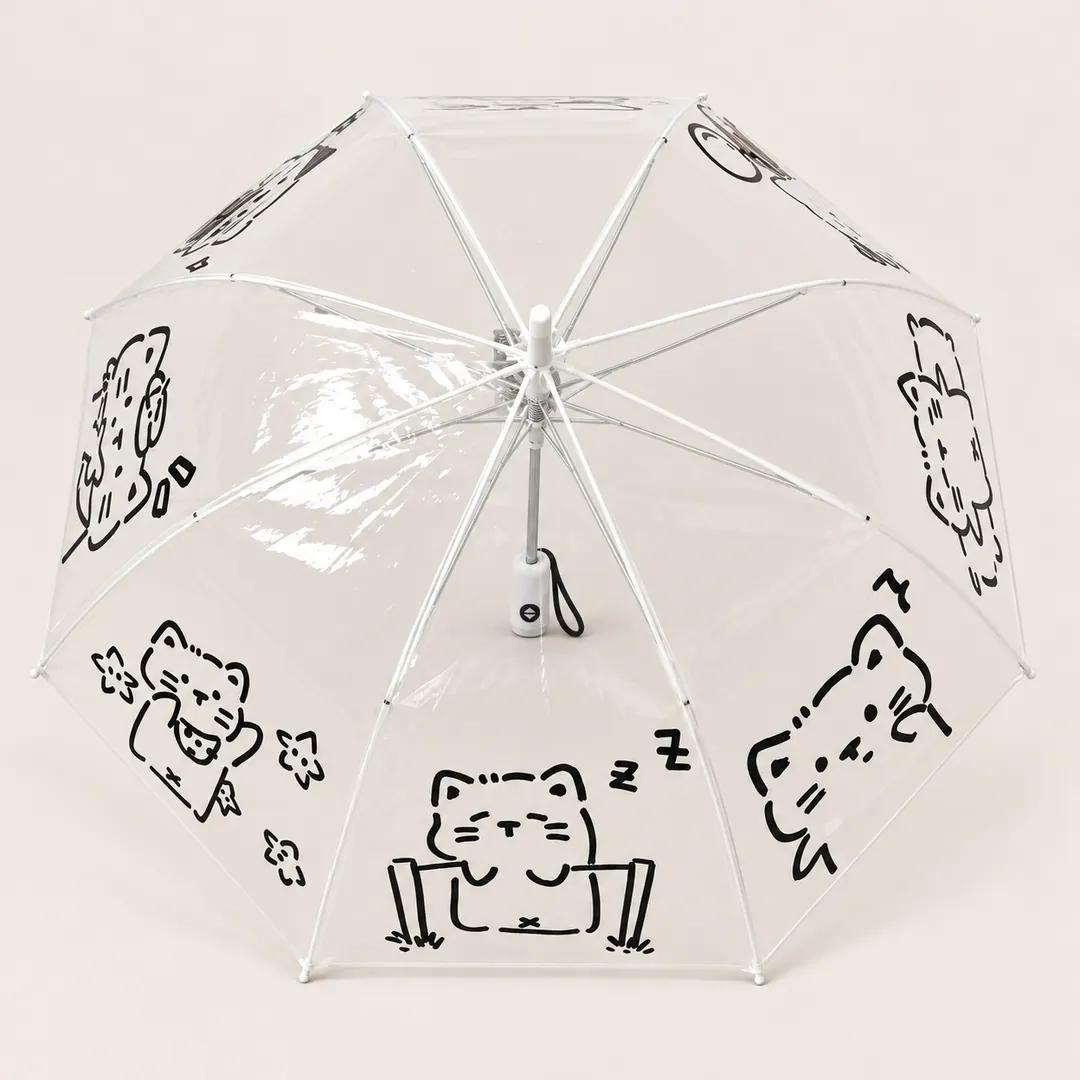
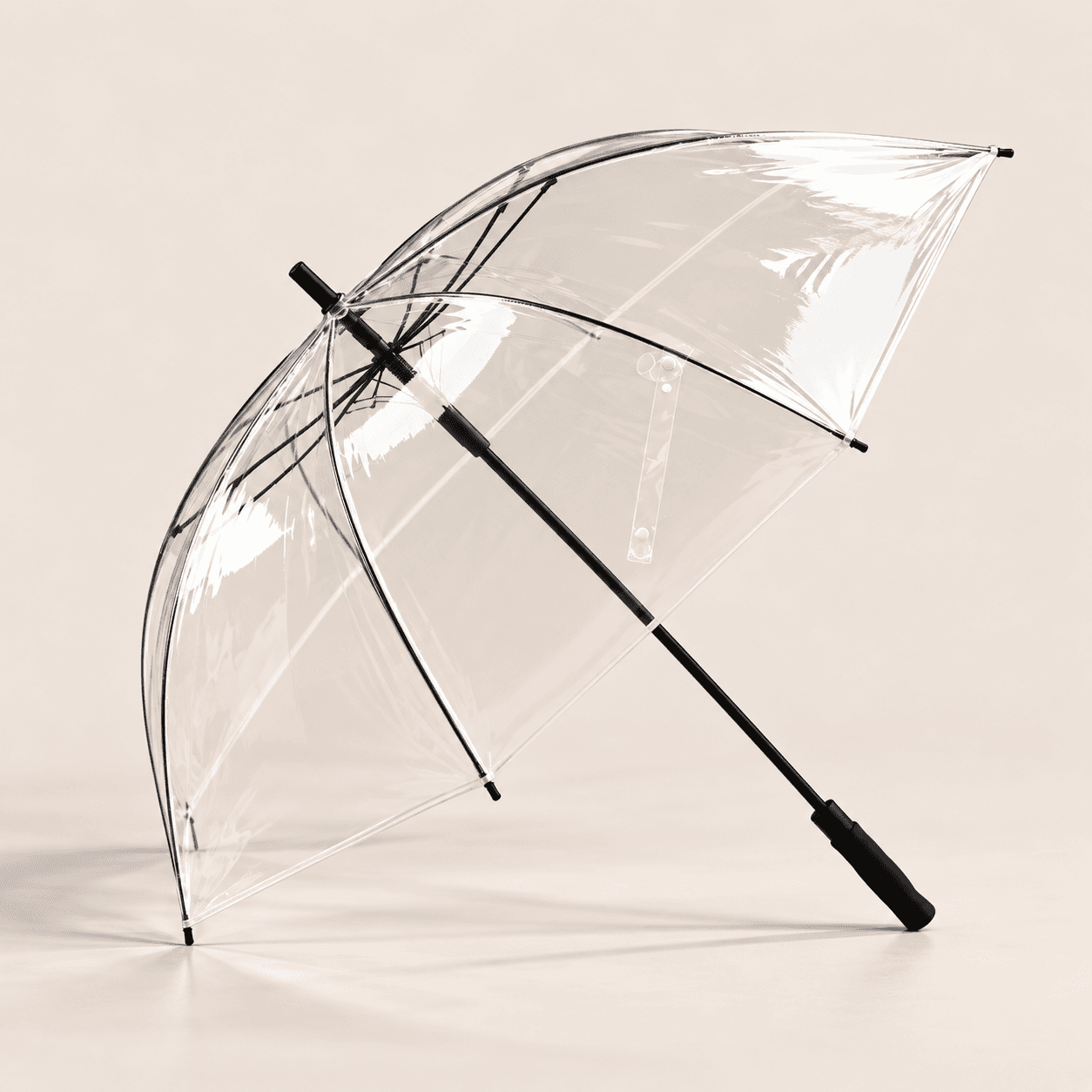
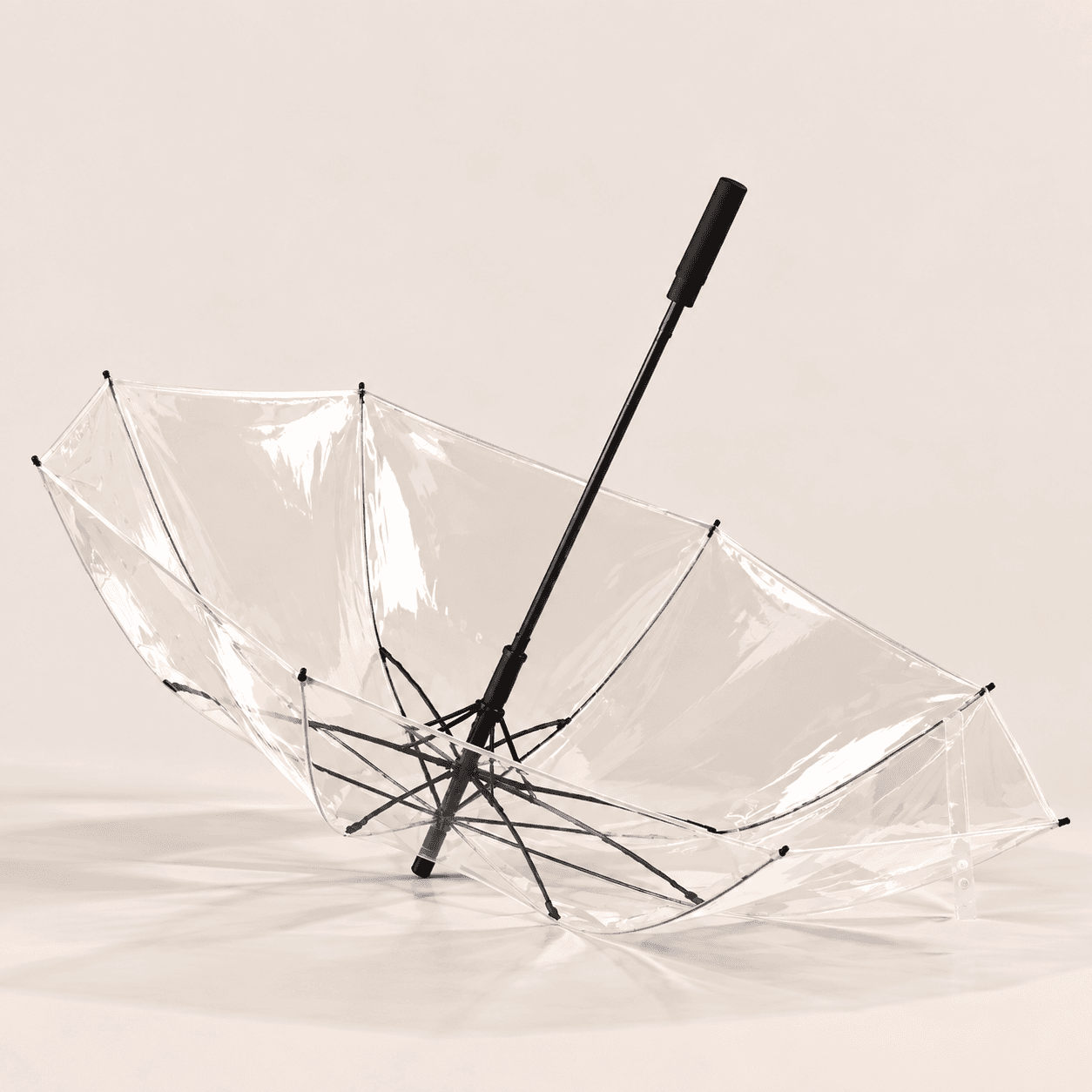
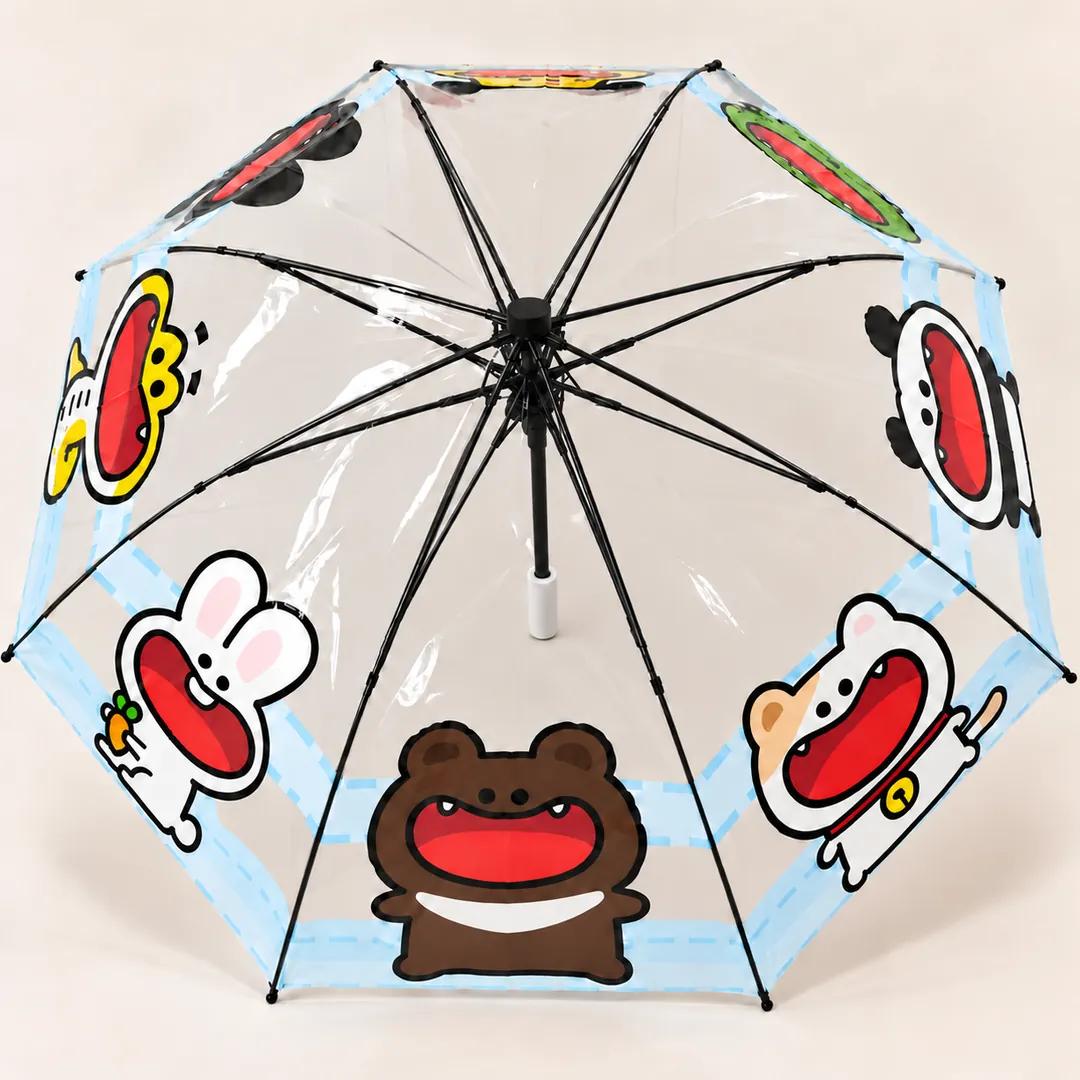
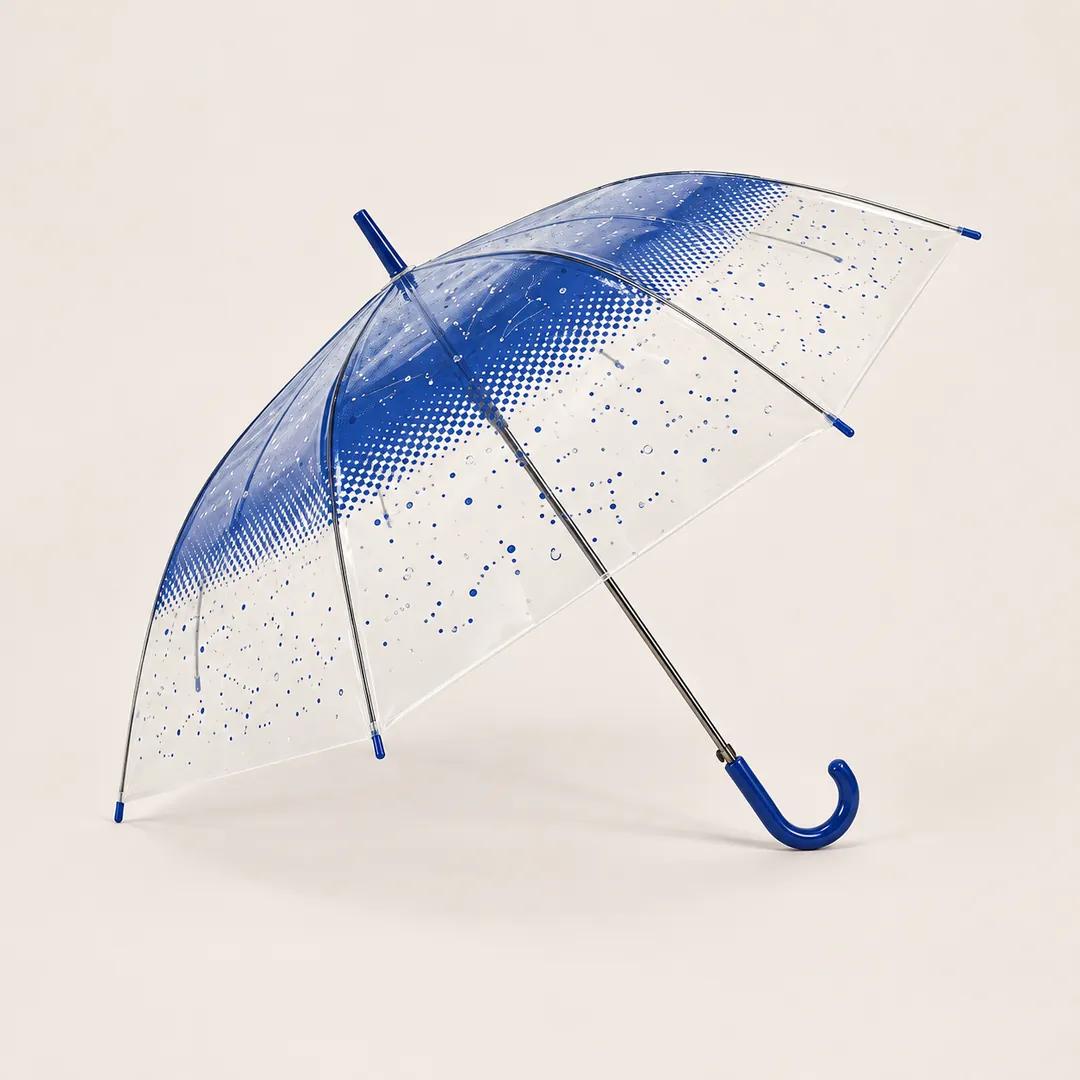
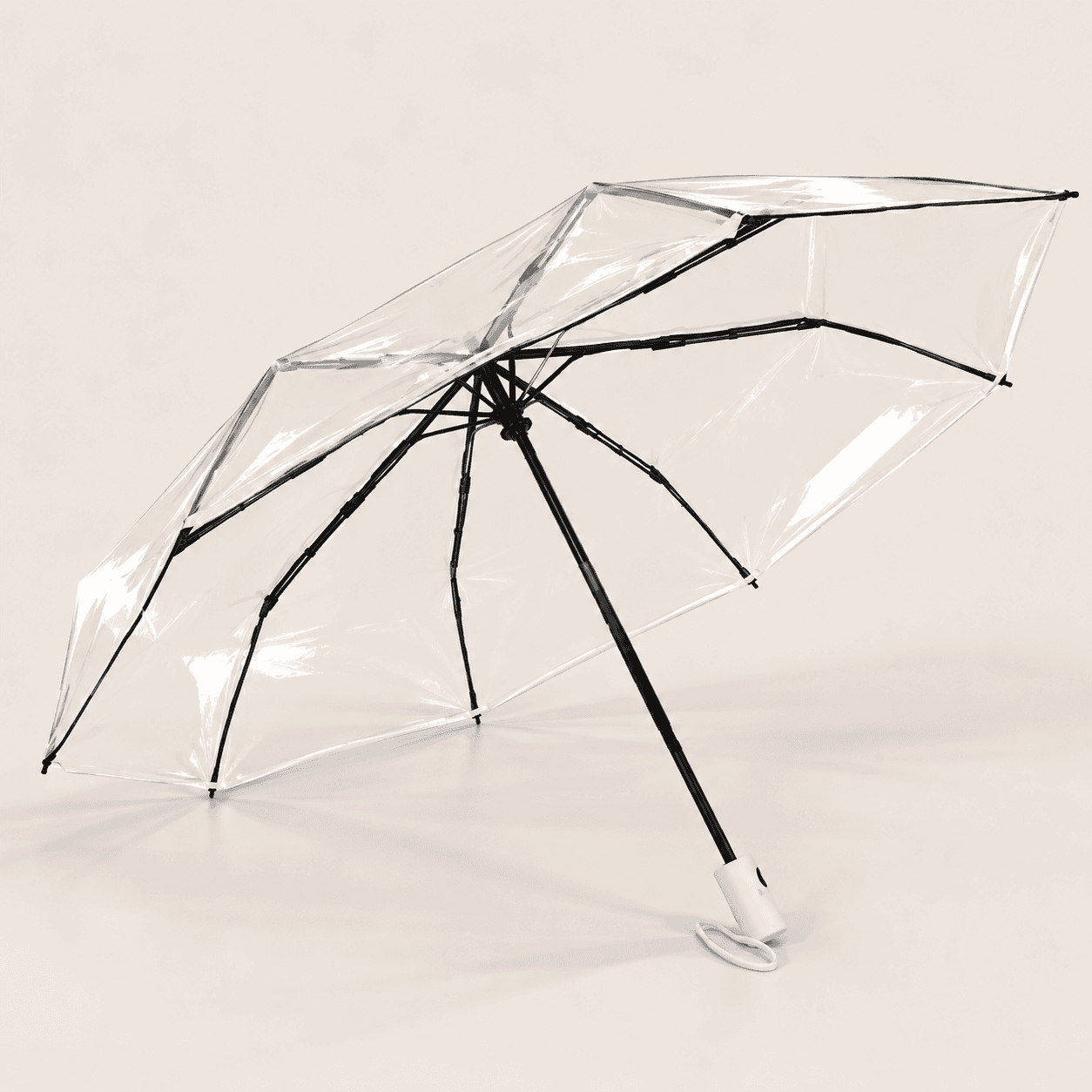
The transparent umbrella is not chosen solely for its aesthetics. Its clear canopy allows for more visibility through the cover, which becomes particularly interesting when the shape extends further around the head.
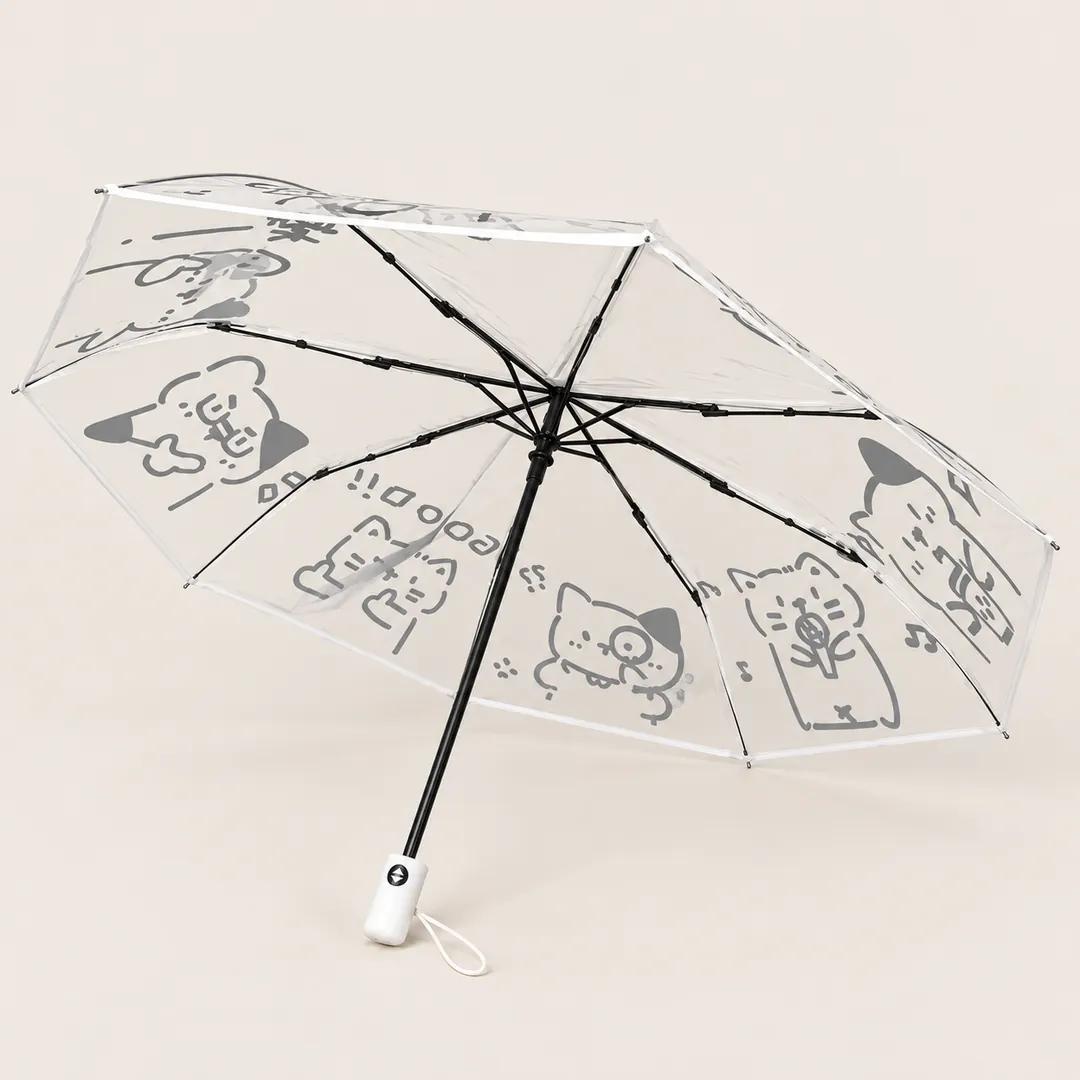
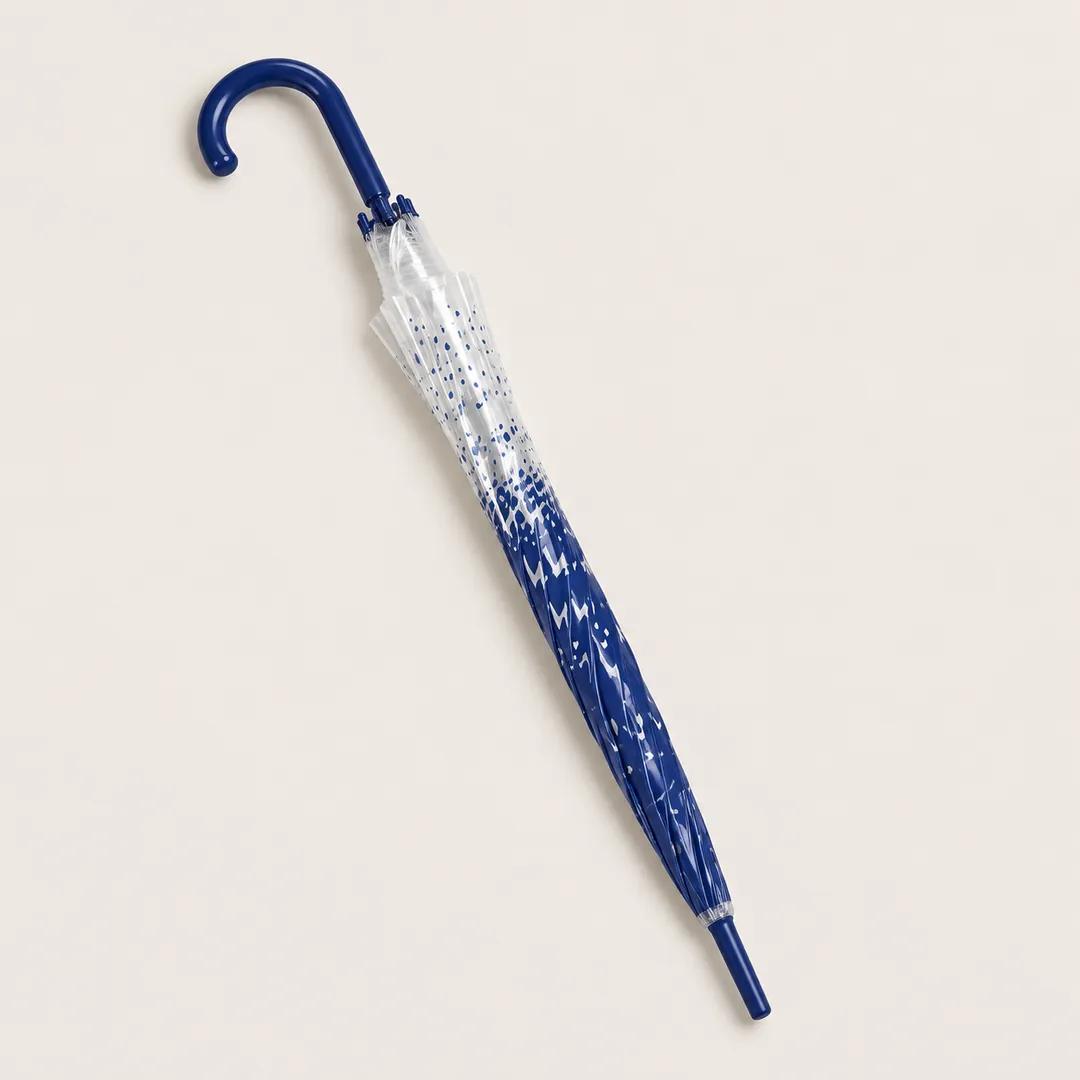
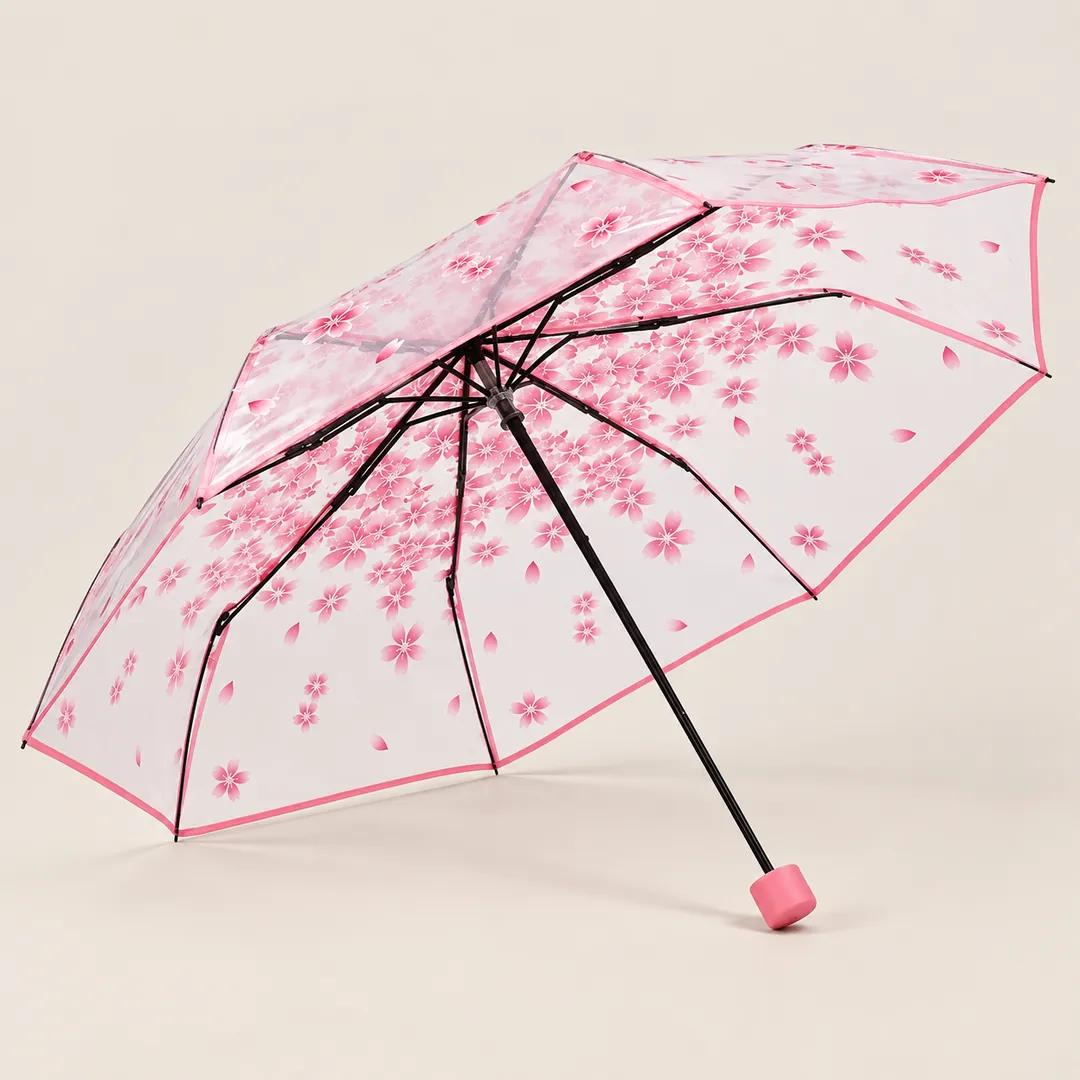
Our catalog also contains several interpretations of transparency, including folding models. It's a good example of a feature that can be combined with other needs: "transparent" describes the canopy, not necessarily the format, size, or mechanism.

What I would prioritize is the overall shape. A more enveloping silhouette makes particularly good use of transparency since you can look through the canopy. I would also keep in mind a very down-to-earth detail: on a clear surface, marks and drops can be more visually present. Letting the umbrella dry properly remains important.
Transparent umbrellas
For travel, I completely change the order of priorities
When traveling, I start with the luggage. An umbrella that is perfect at home can become cumbersome if it has to fit into an already full bag for several days. So I first look at the closed bulk, then the weight, and only then the open surface.
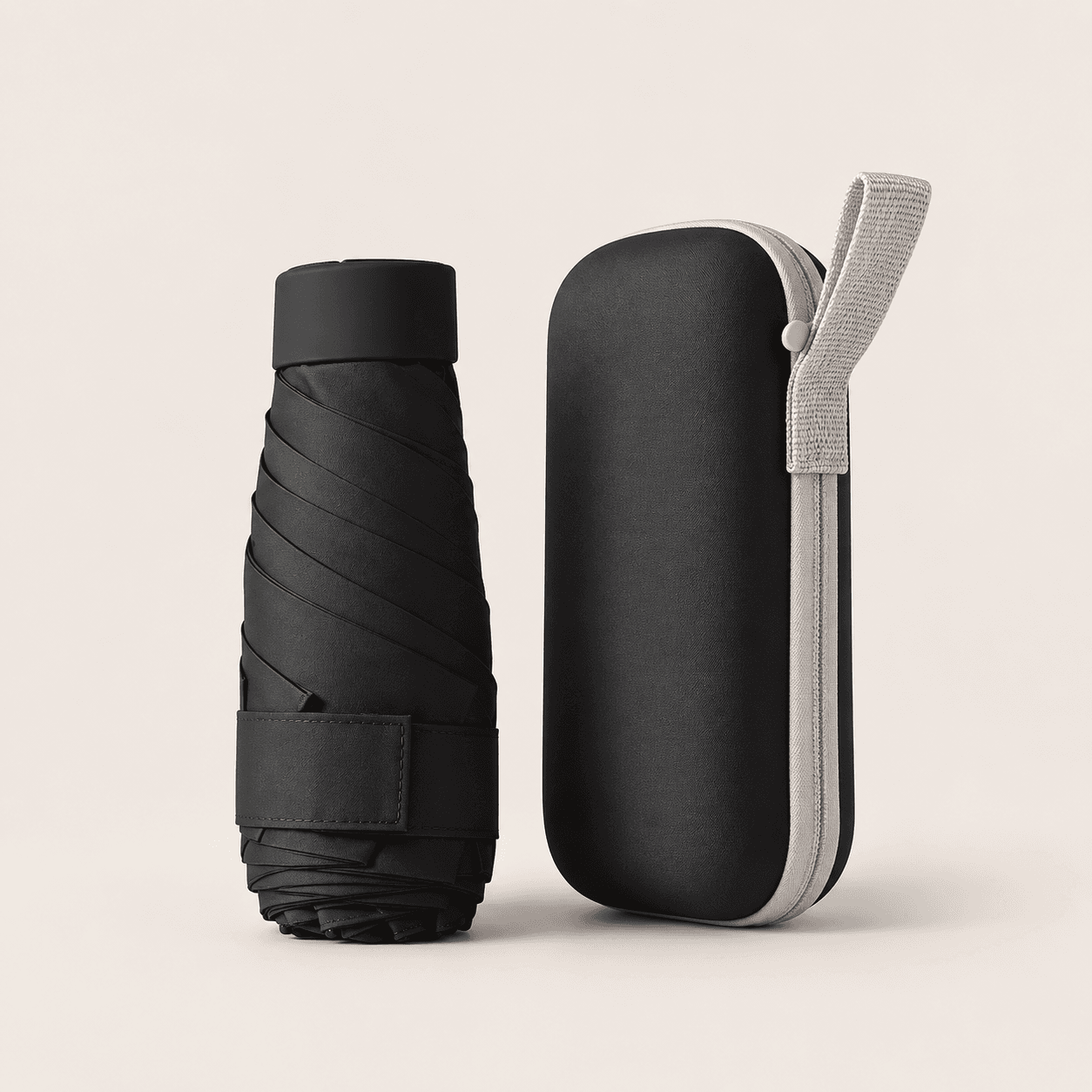
A pocket umbrella or a compact format makes sense when every centimeter counts. But if the destination is known for very rainy days and a lot of walking, I wouldn't necessarily go for the smallest model available. Once again, the right compromise is the one you're willing to carry.
Mistakes I would avoid before purchasing
- Choosing based solely on the number of ribs without considering the rest of the structure.
- Confusing compact when closed with lightweight: these are two different characteristics.
- Opting for the largest possible diameter without considering sidewalks, transport, and crowded spaces.
- Assuming that an automatic mechanism automatically makes the umbrella better.
- Choosing a mini format for its technical specs when you can easily carry a slightly longer model.
- Relying solely on the main photo without checking views of the handle, structure, and closed umbrella.
- Taking a single material as an absolute guarantee of strength.
Most of these mistakes share a common point: they turn a feature into a verdict. I try, on the contrary, to put each piece of data back into context. It's less spectacular than a ten-point ranking, but much more useful for making a choice.
Making your umbrella last: a few simple tips
After use, I recommend letting the umbrella dry before storing it permanently in its cover or at the bottom of a bag. Trapped moisture does no good to the materials and finishes. It's also better to remove excess water without mishandling the structure.
When closing, follow the mechanism intended by the manufacturer rather than forcing a joint that resists. And if a rib seems stuck, it's better to understand what's blocking it before pulling on it. An umbrella doesn't need a complicated maintenance routine; it's mainly about avoiding subjecting it to a second weather once back home.
My checklist before choosing
- What will I carry this umbrella in?
- How often will I actually use it?
- Do I need a folding model or can I keep a long one?
- Does the open size protect what I'm carrying with me?
- Is weight or closed bulk my main concern?
- Is wind frequent in my daily use?
- What does the spec sheet actually say about the structure and ribs?
- Does automatic opening offer me any advantage in my context?
- Does the handle shape seem suitable for the duration of use?
- Am I choosing this feature because it's useful to me, or just because it looks better on paper?
This last question is the one I find most effective. It prevents paying for, carrying, or enduring a feature that you ultimately didn't need.
FAQ: remaining questions before choosing
Which umbrella to choose for everyday use?
For daily use, I would first look for a format that you will actually agree to carry. A folding model balanced between bulk, coverage, and comfort is often logical if the umbrella travels in a bag; a long model may be more relevant if it stays at the office, in the car, or at the entrance.
Which umbrella to choose when it's often windy?
Look at the complete construction rather than just the number of ribs: materials, flexibility, and structure architecture all matter together. And keep in mind that no umbrella is an invitation to stay open in any gust of wind.
Does more ribs mean more strength?
No, not automatically. The number of ribs doesn't indicate their material, geometry, or the quality of the joints. I use it as one piece of information among others, never as a verdict.
Should you choose an automatic umbrella?
I recommend it especially when you often open your umbrella with one hand occupied: transport, car, bags, or stroller, for example. Otherwise, a manual system can be perfectly suitable.
Which format to choose for travel?
Start with the closed length and weight, then check that the coverage remains sufficient. I prefer a model that's slightly less compact but comfortable to use rather than a record-breaking miniaturization that becomes cumbersome in a real rainy day.
So, how to choose your umbrella?
If I had to summarize this entire guide in one rule: first choose the constraints of your daily life, then the umbrella's features, not the other way around. For me, closed format, coverage, structure, weight, and comfort come before arguments that sound good on a spec sheet.
You can then refine according to your usage: check out our folding umbrellas if transport is a priority, women's umbrellas if you're also looking for a particular style, or clear umbrellas if visibility and the aesthetic of a clear canopy interest you.
As for me, I will always prefer a coherent umbrella to an impressive one on paper. It's rarely the most spectacular feature that makes the difference in daily life; it's the whole that matches — or not — the way you use it. — Capucine, writer at Umbrella Paris