Folding or Cane Umbrella: Which Should You Choose?
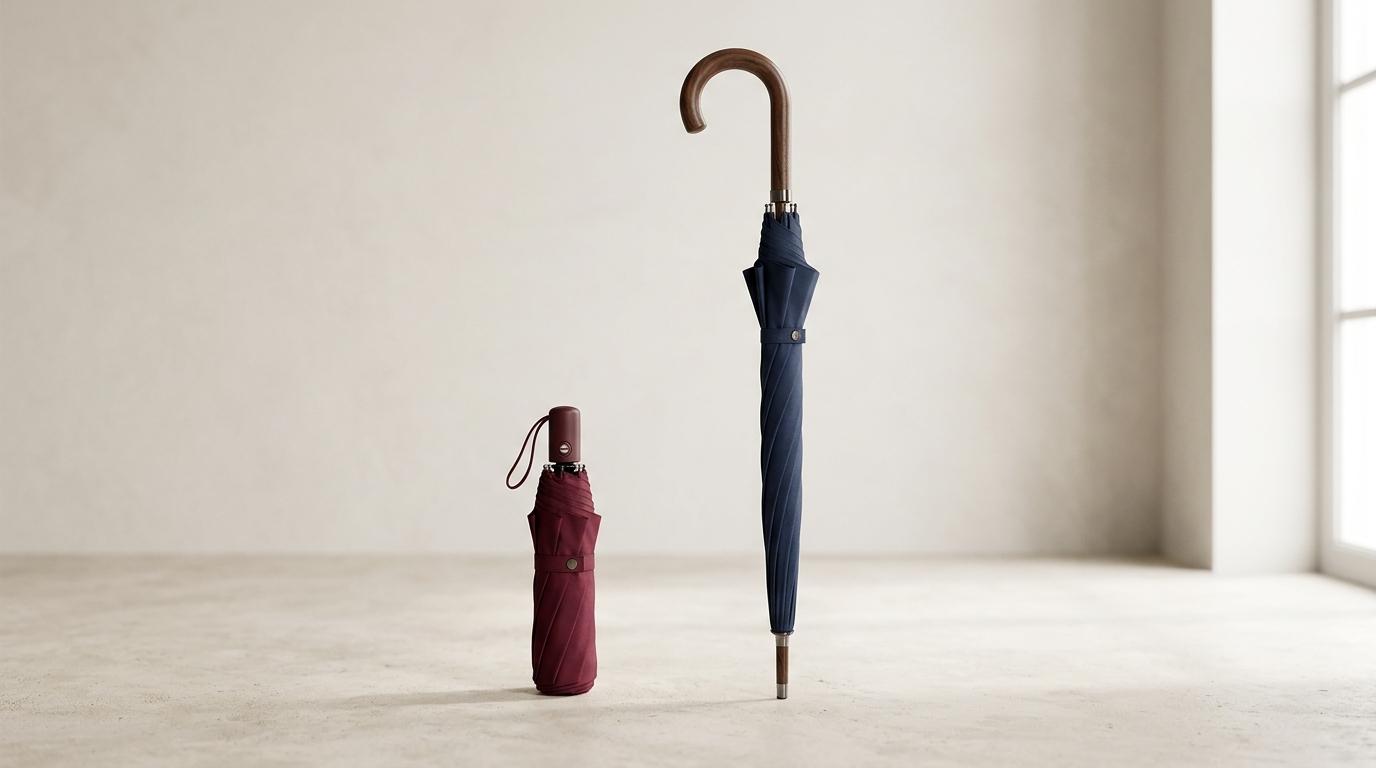
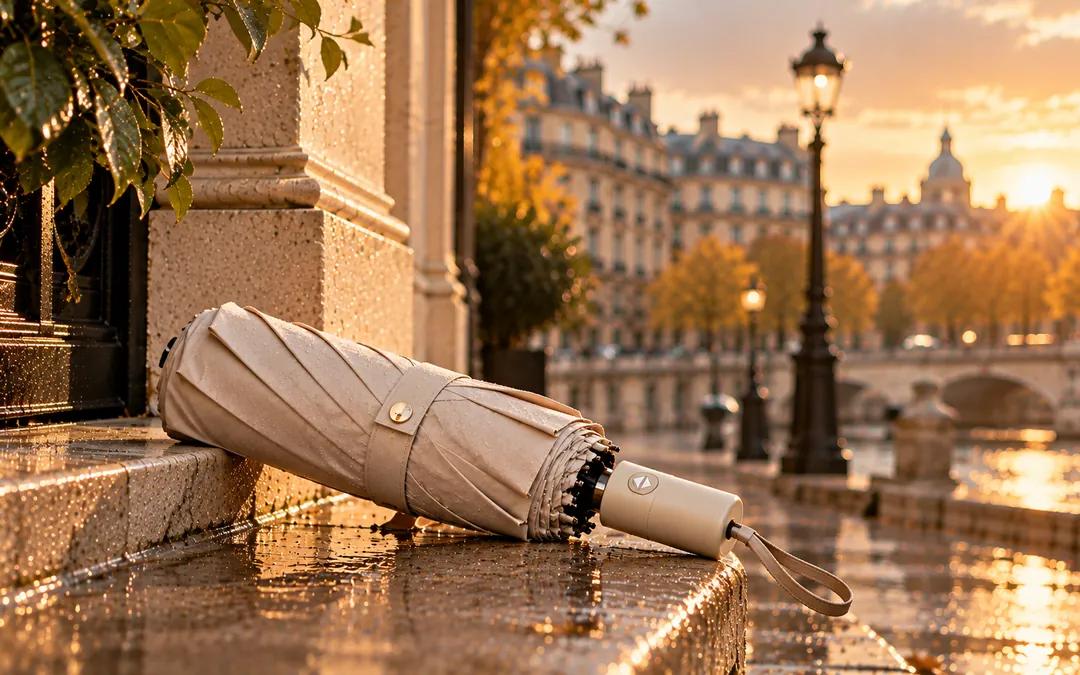
Folding Umbrella or Cane Umbrella? If your priority is to store your umbrella in a bag, the folding type is generally the most logical choice. If you don't mind holding your umbrella and prefer a simpler structure, a good grip, or generous coverage, the cane umbrella deserves more of your attention.
However, it's not a contest with a universal winner. A good folding umbrella can be more pleasant, better built, and more suited to your daily life than a mediocre cane umbrella. And vice versa. Personally, I start with a very simple question: where will the umbrella be when it's not raining? The answer often eliminates half of the dilemma.
The Real Difference Between a Folding Umbrella and a Cane Umbrella
The fundamental difference is not aesthetic. It lies in how the umbrella folds.
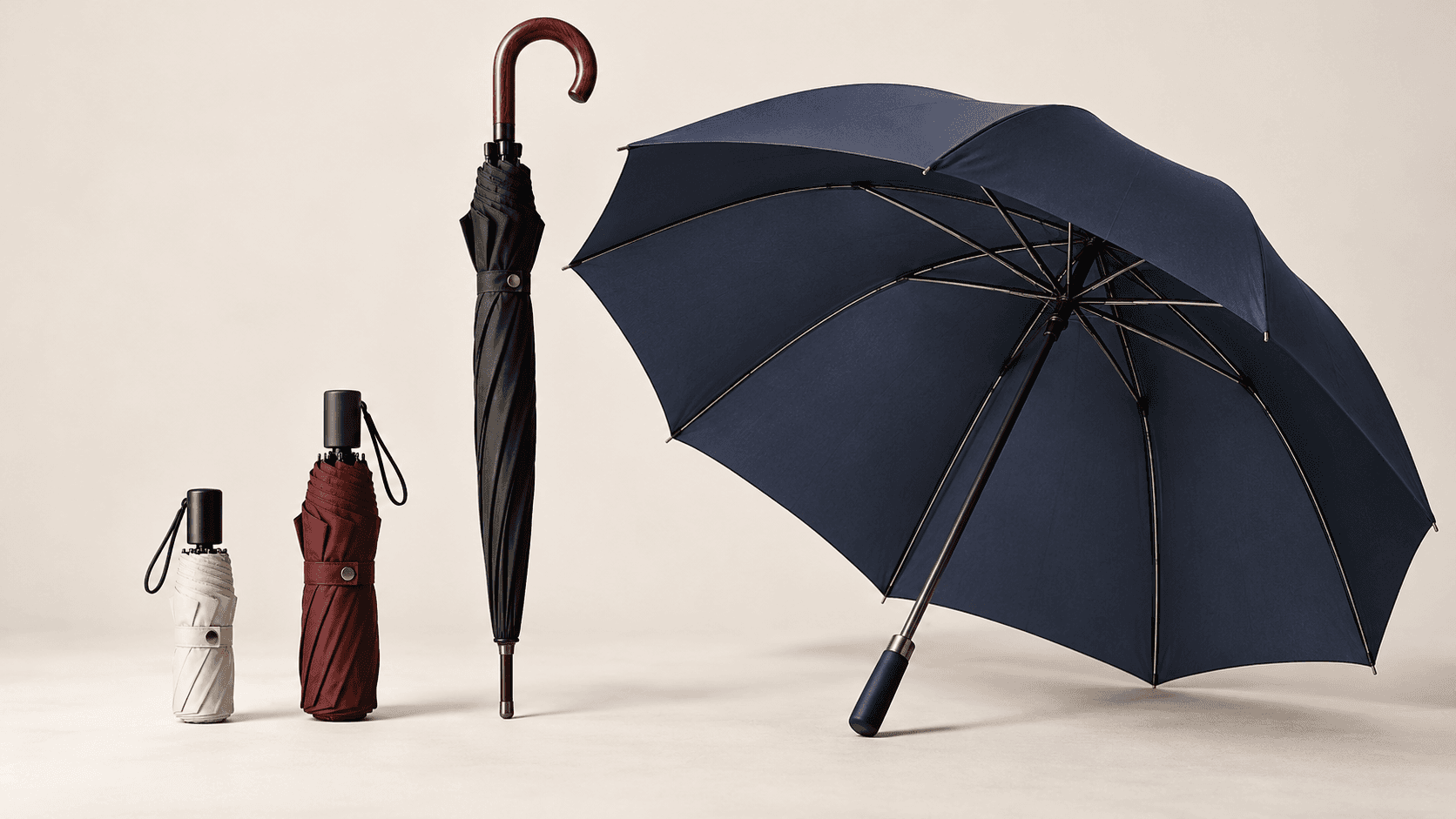
On a folding umbrella, the shaft retracts into several sections and the ribs have joints that significantly reduce the length of the umbrella when closed. This is precisely what allows it to fit into a bag, backpack, or luggage.
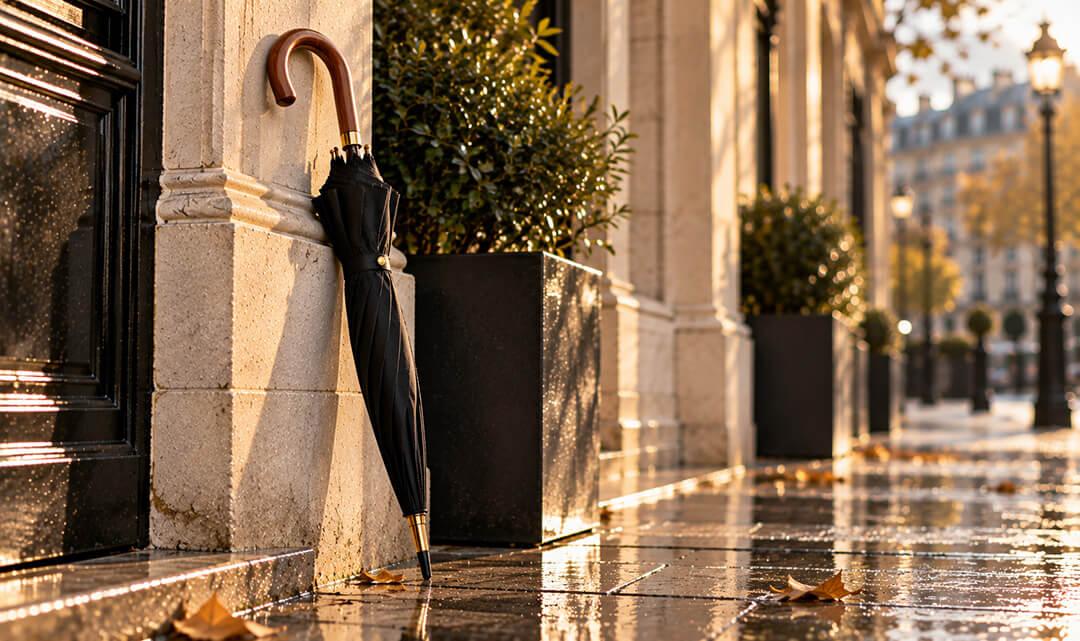
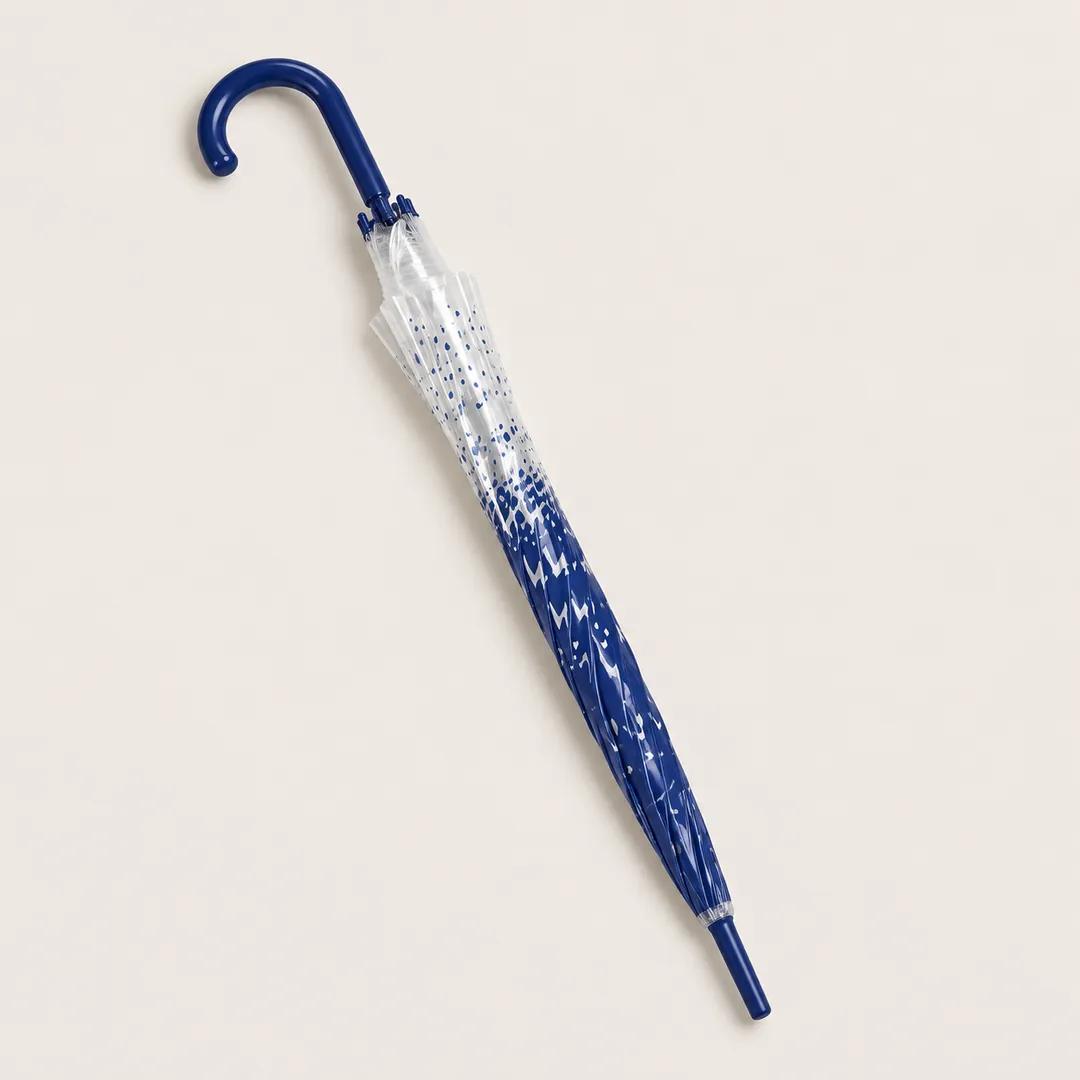
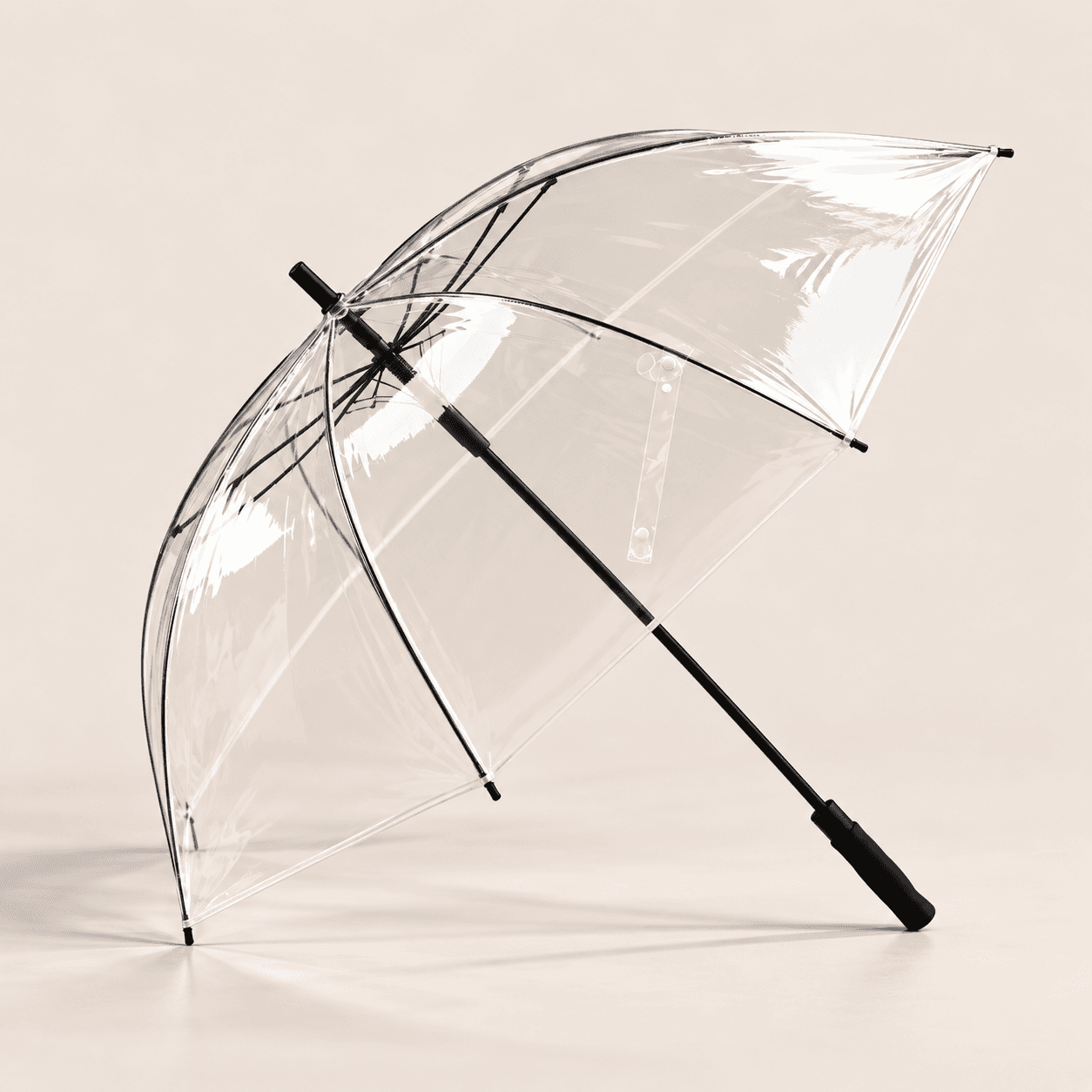
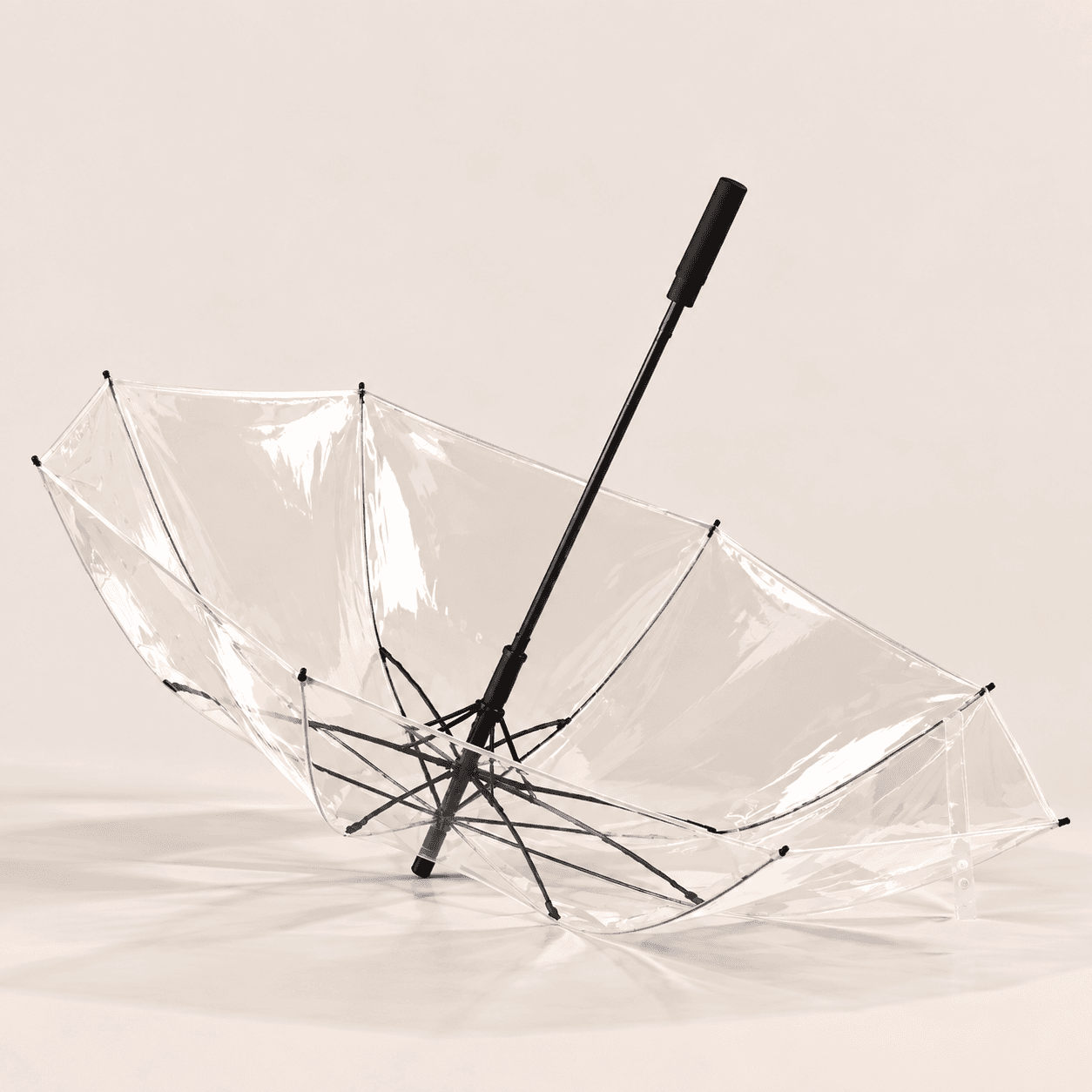
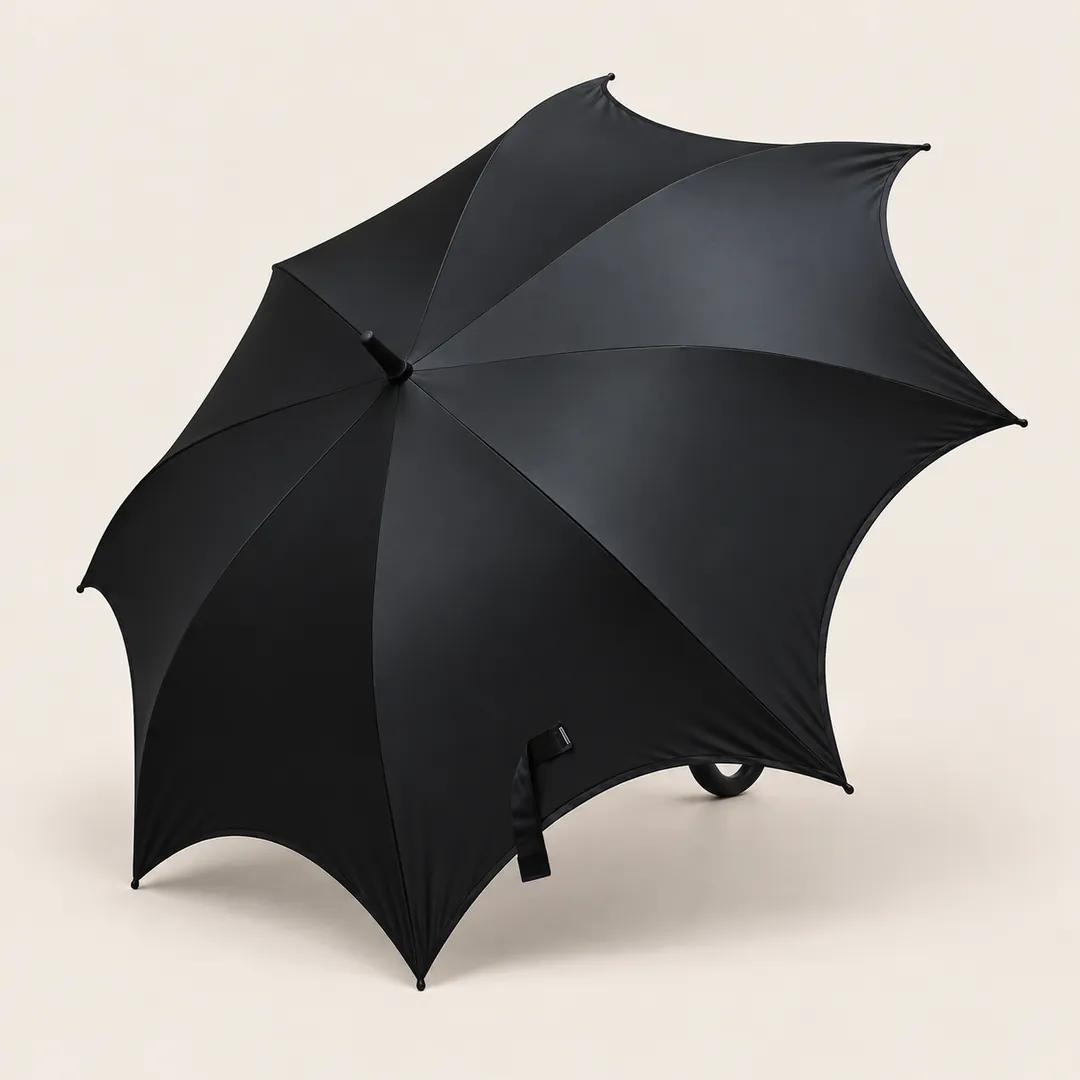
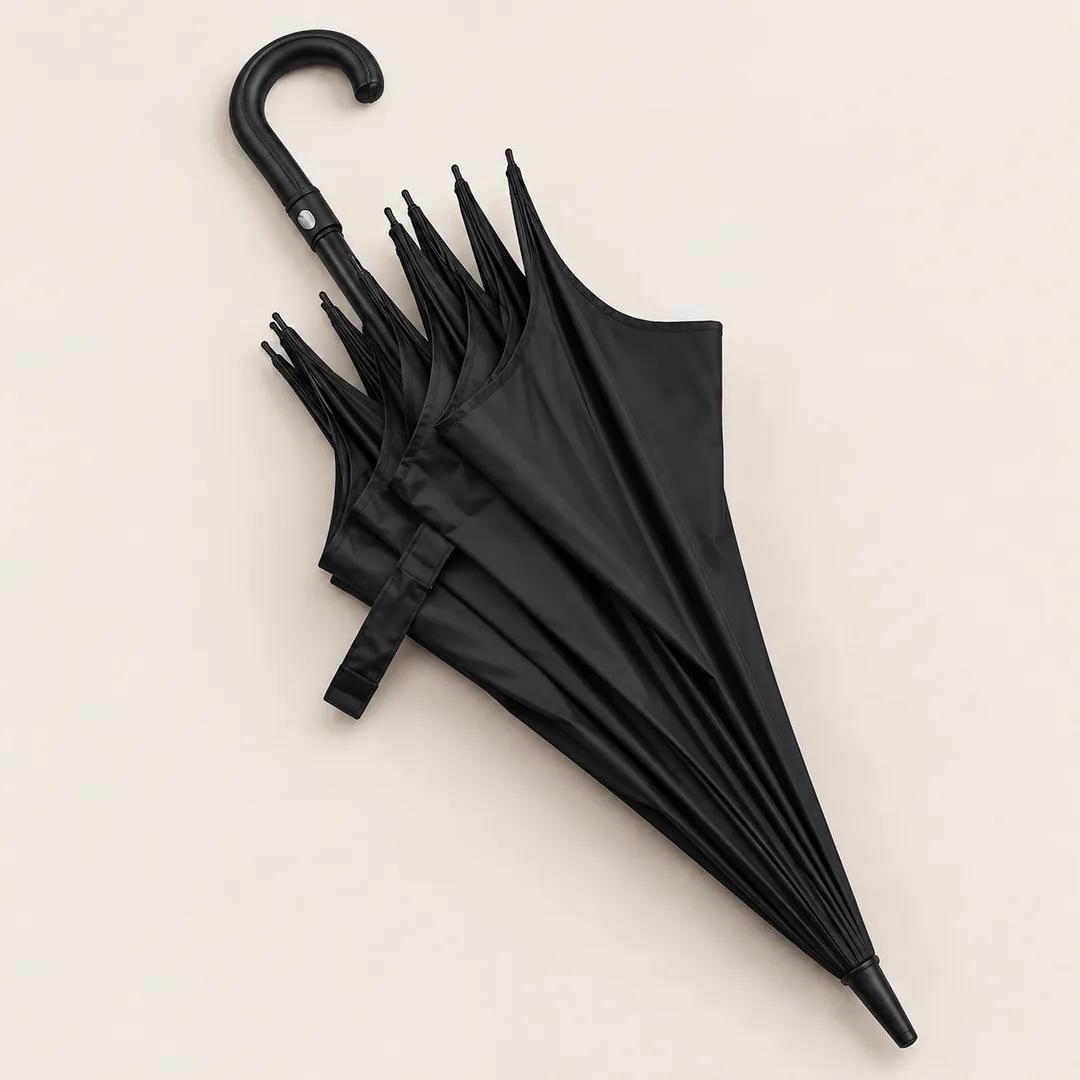
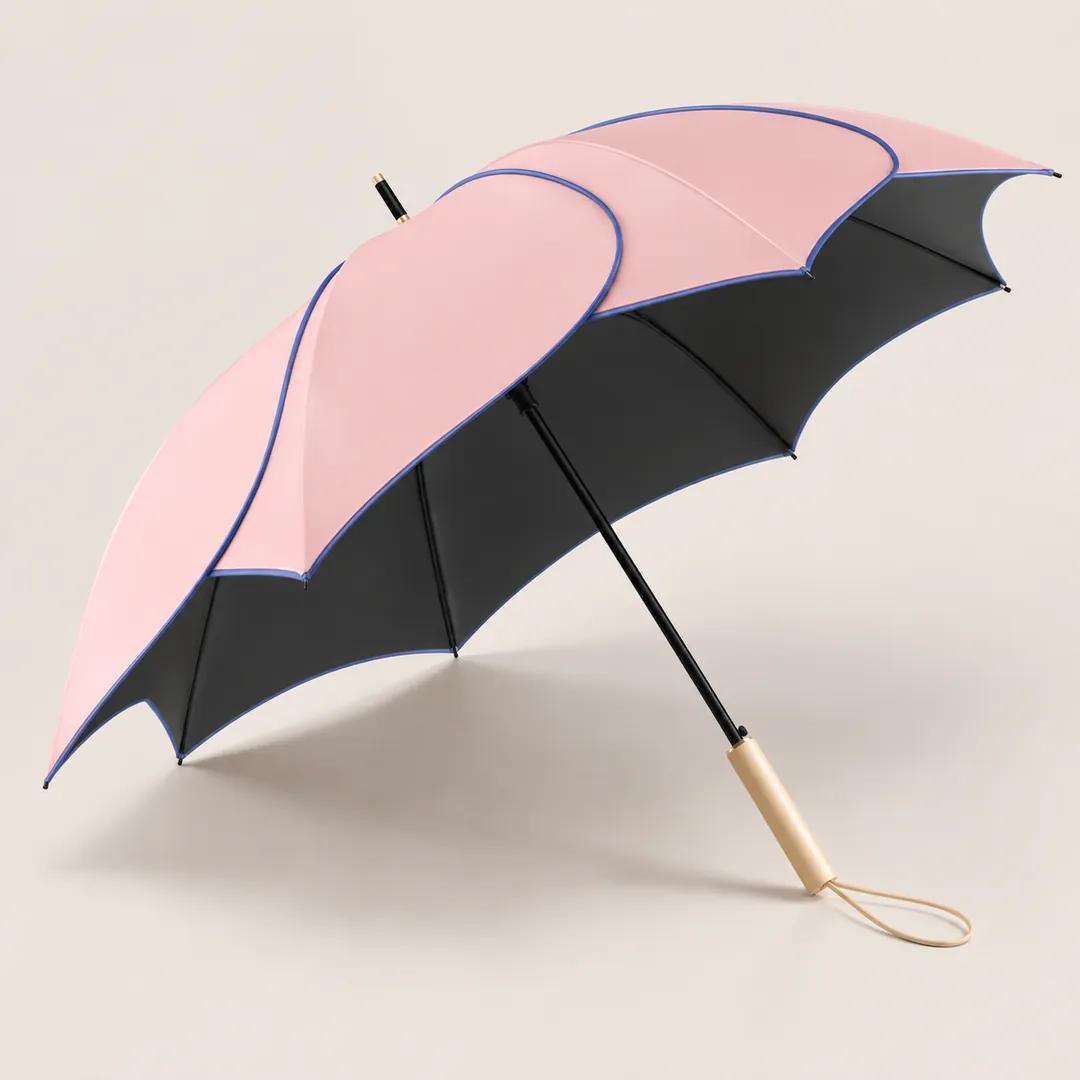
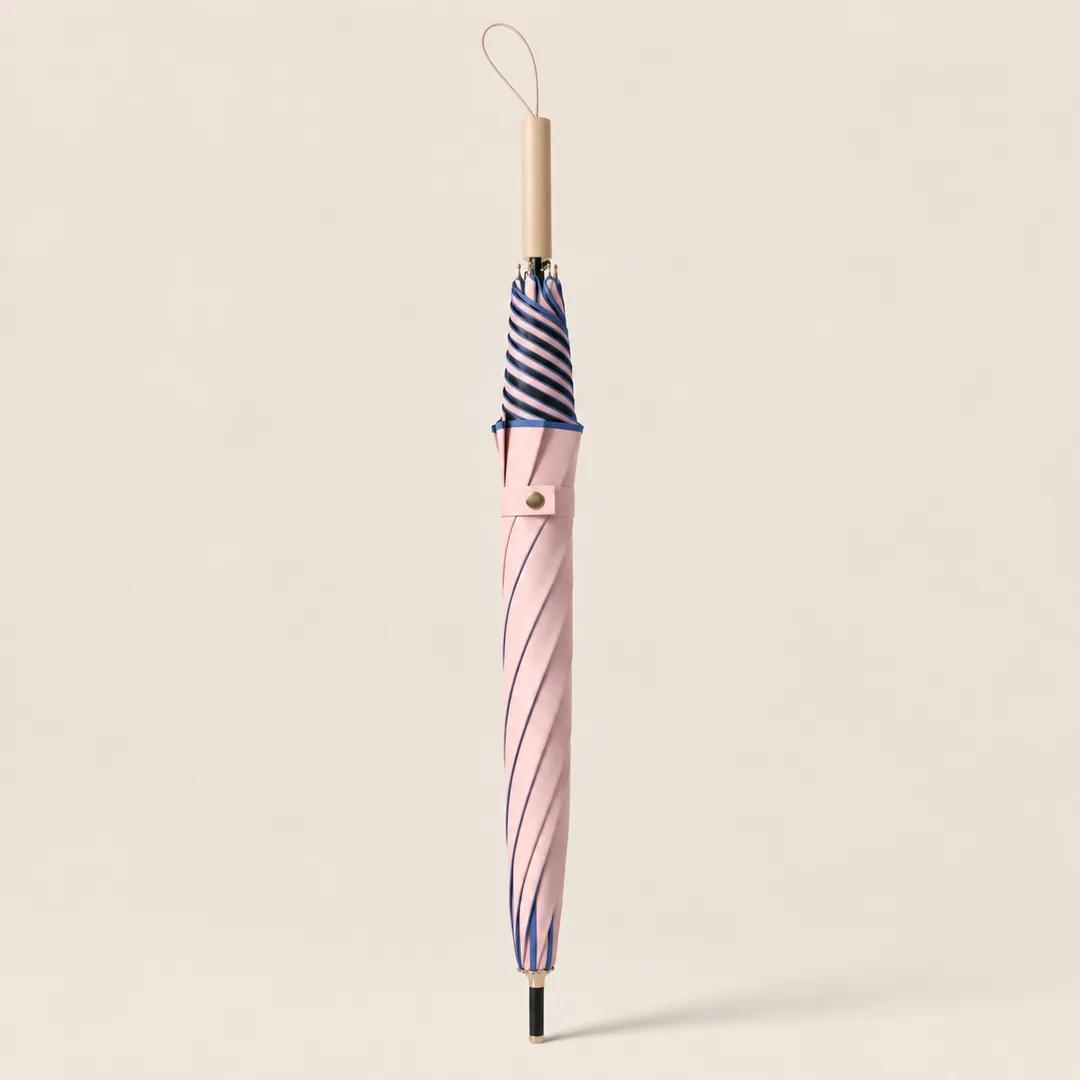
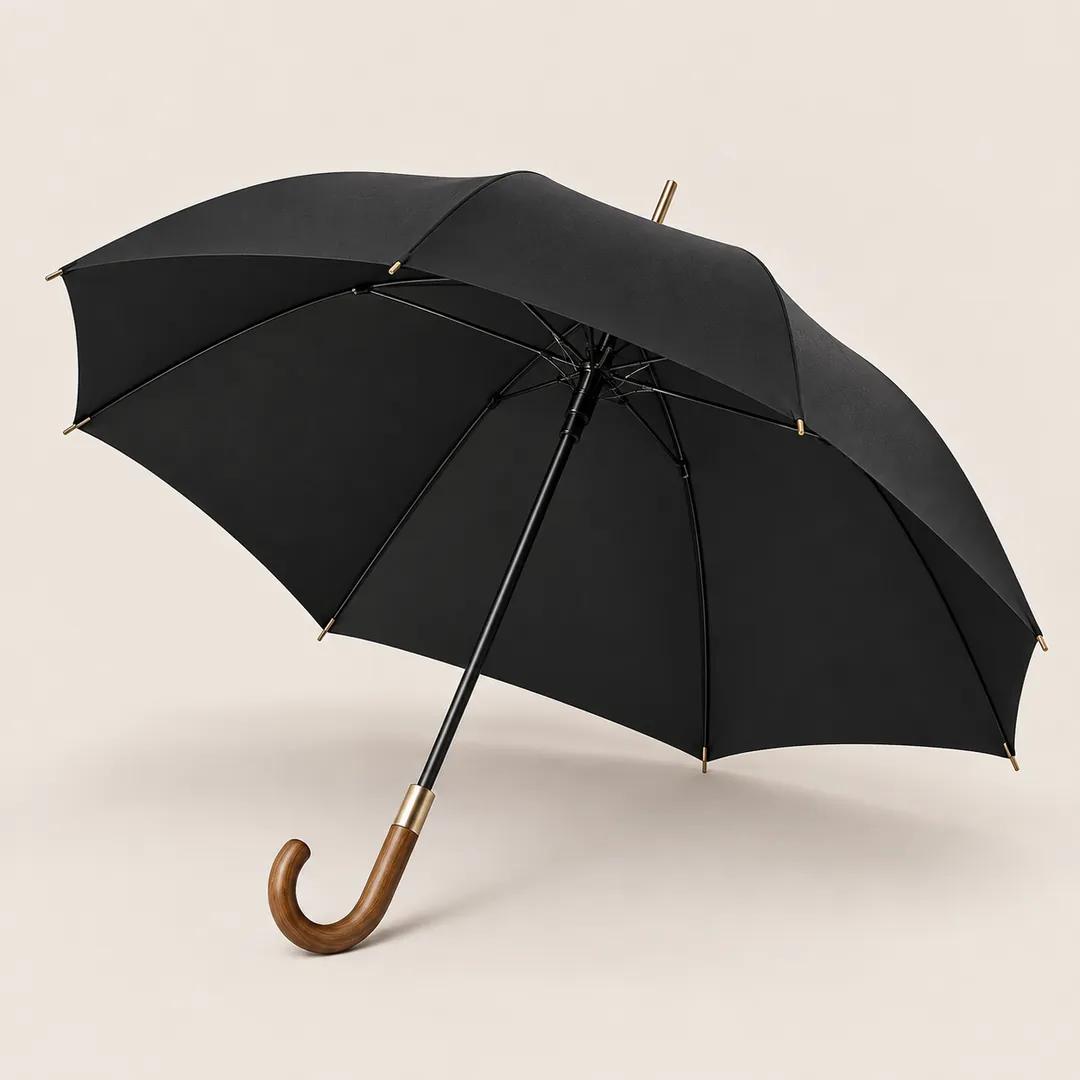
A cane umbrella, sometimes called a straight umbrella, retains a long shaft when closed. Its ribs do not need to fold in the same way to make the umbrella compact.
This architectural difference leads to almost everything else: size, number of joints, how the umbrella is carried, and the trade-off between compactness, weight, coverage, and mechanical simplicity.
I emphasize the word trade-off. Saying "folding = fragile" and "cane = sturdy" would be far too simplistic. The format informs us about the umbrella's architecture, not its build quality.
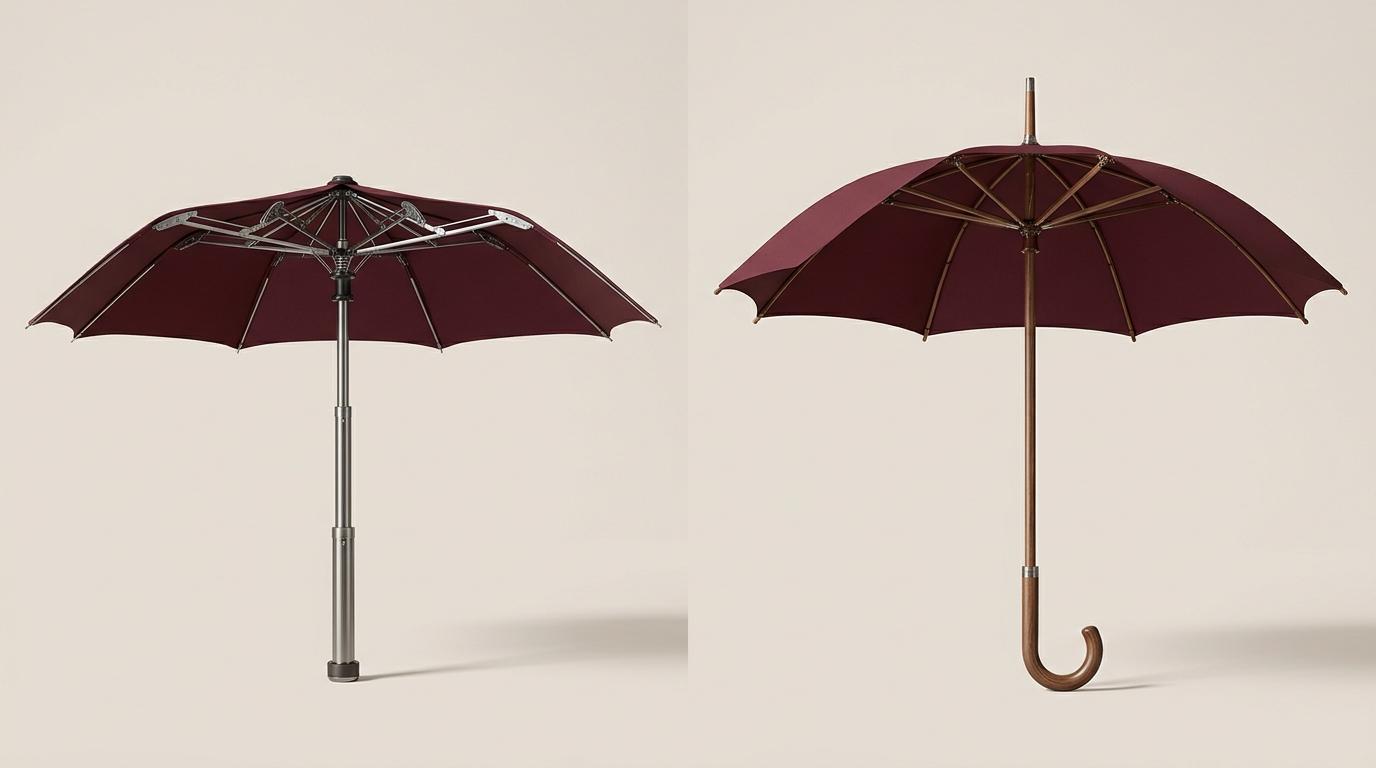
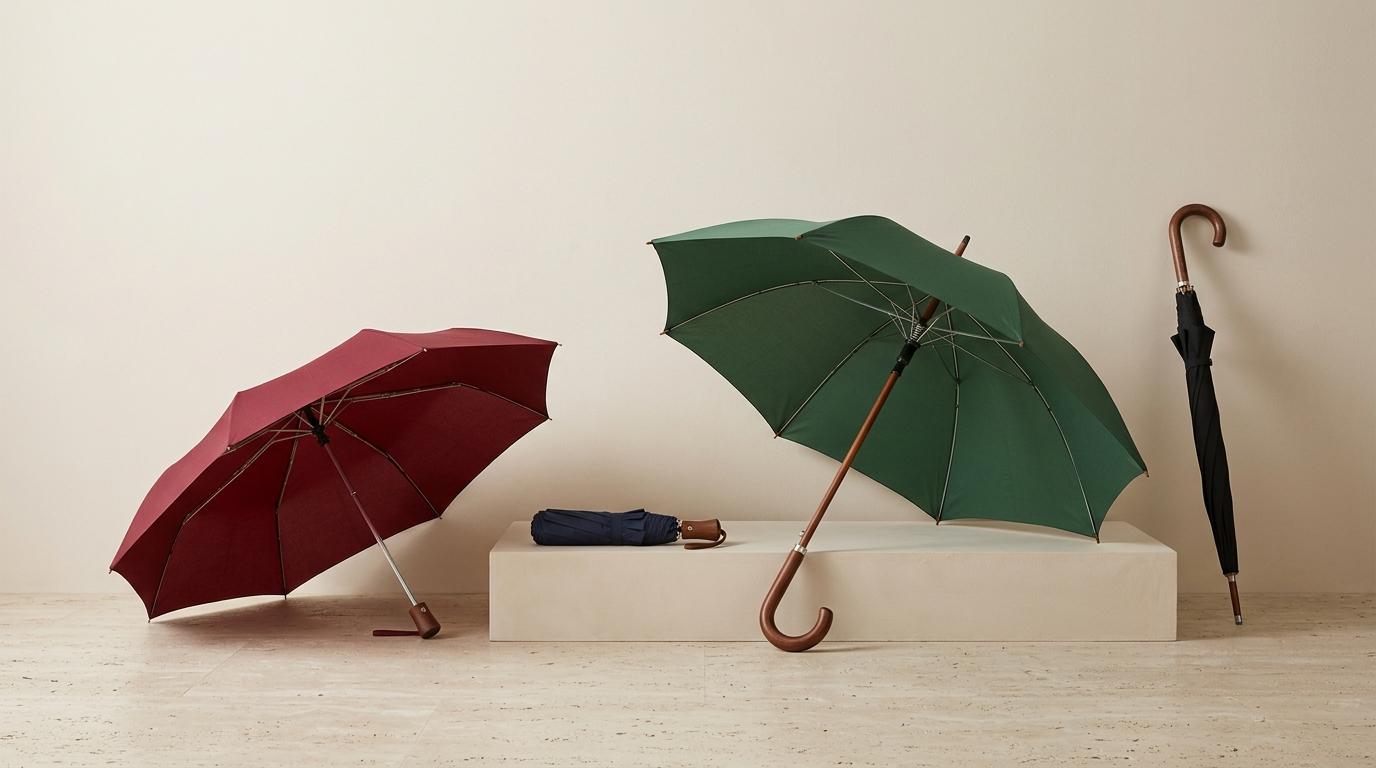
Folding or Cane: A Quick Comparison
For Transport, the Folding Umbrella Takes the Lead
This is the case where the difference is least ambiguous. If you want to put your umbrella in your bag when it stops raining, the folding type was designed precisely for that.
Imagine a journey from home → station → subway → office. The umbrella can be open for ten minutes, closed on the train, taken out at the subway exit, and then stored once you arrive. In this scenario, having to keep a cane umbrella in hand during all the dry parts of the journey can become more of a hassle than the rain itself.
This is also why I never look solely at the word "compact" on a product sheet. The three pieces of information I prefer to compare are the closed length, weight, and open diameter. They tell much more about what the umbrella will actually be like in daily life.
An extremely short but heavy folding umbrella isn't as appealing as a short and light model. Conversely, reducing size at all costs isn't necessarily wise if it results in a tiny handle or coverage that no longer suits its use.
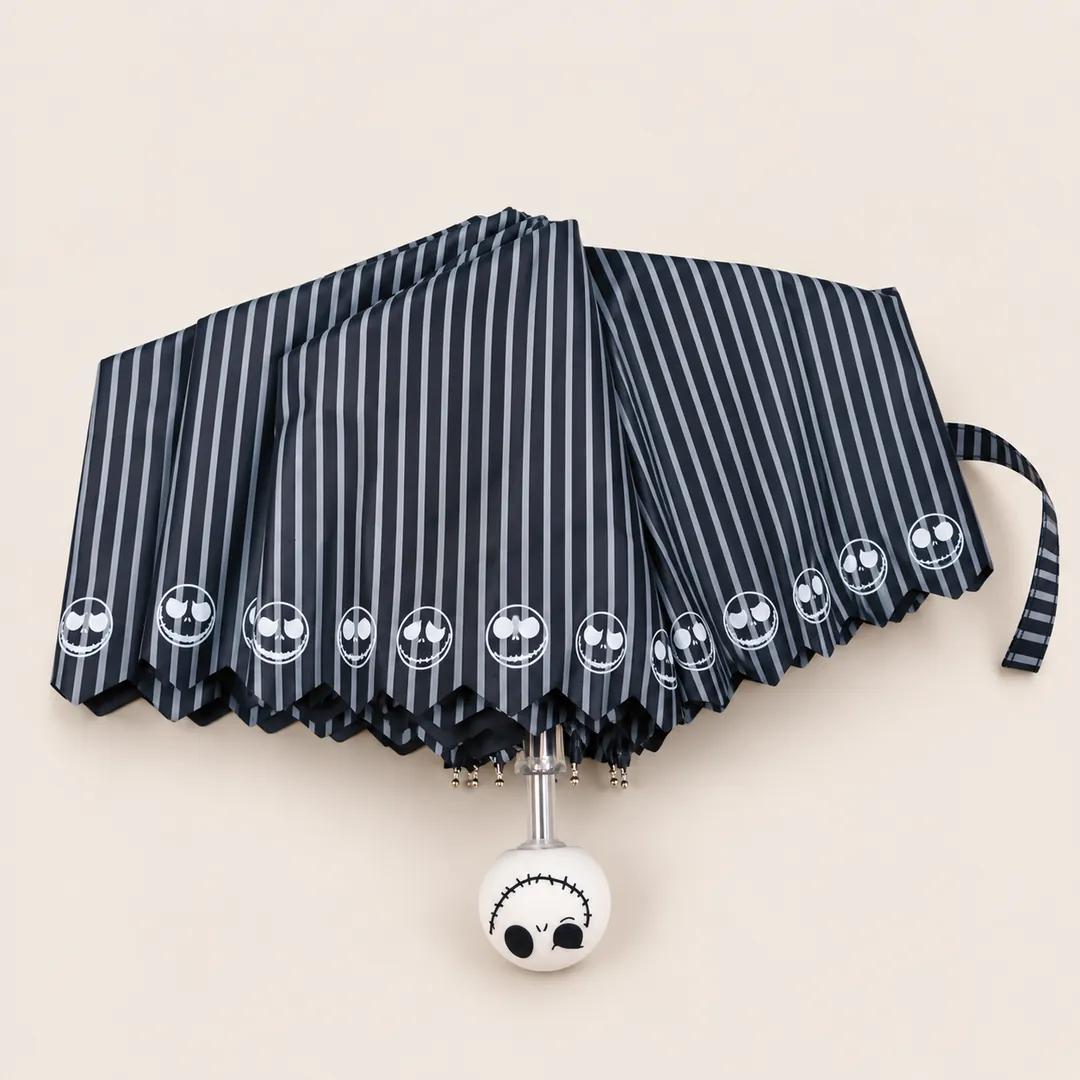
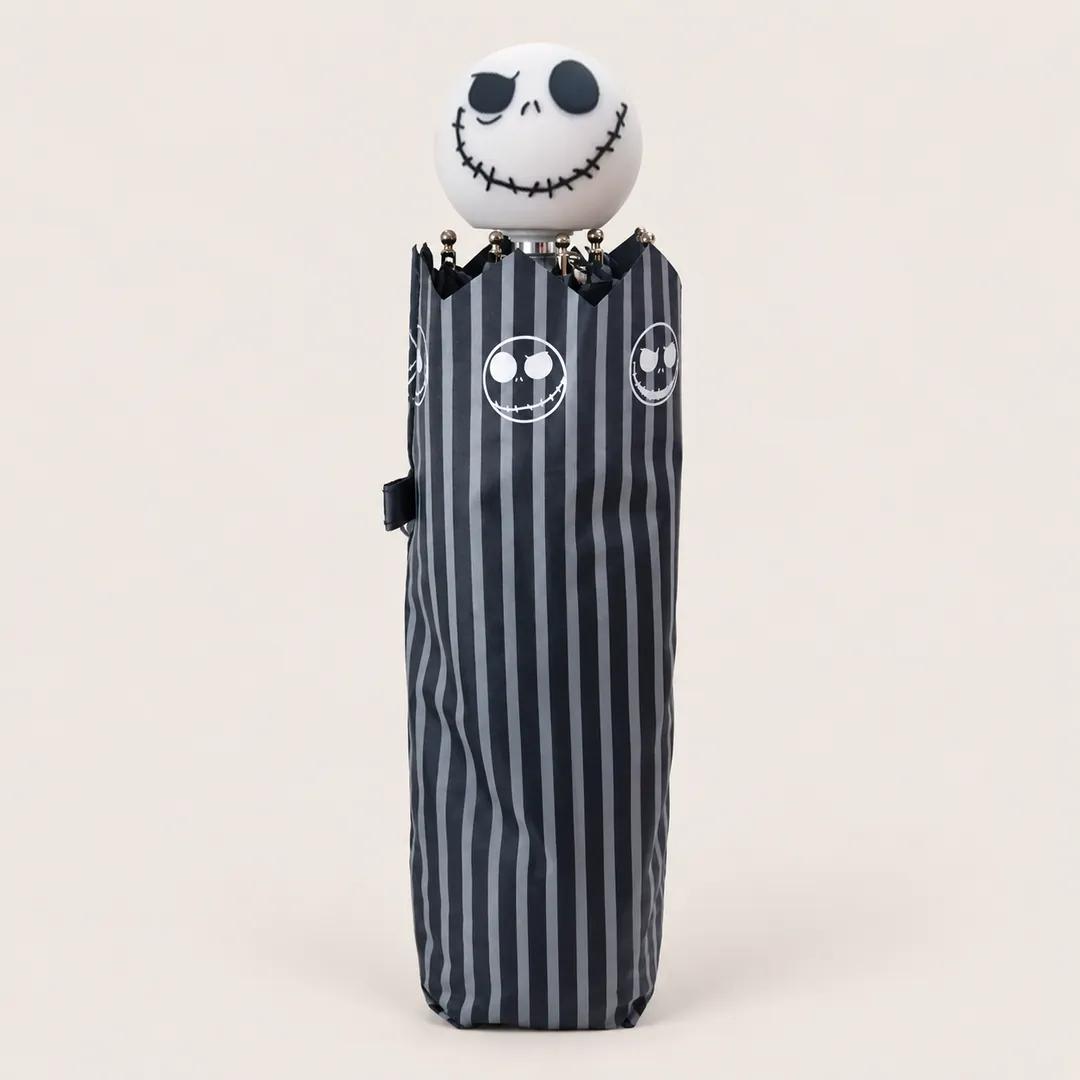
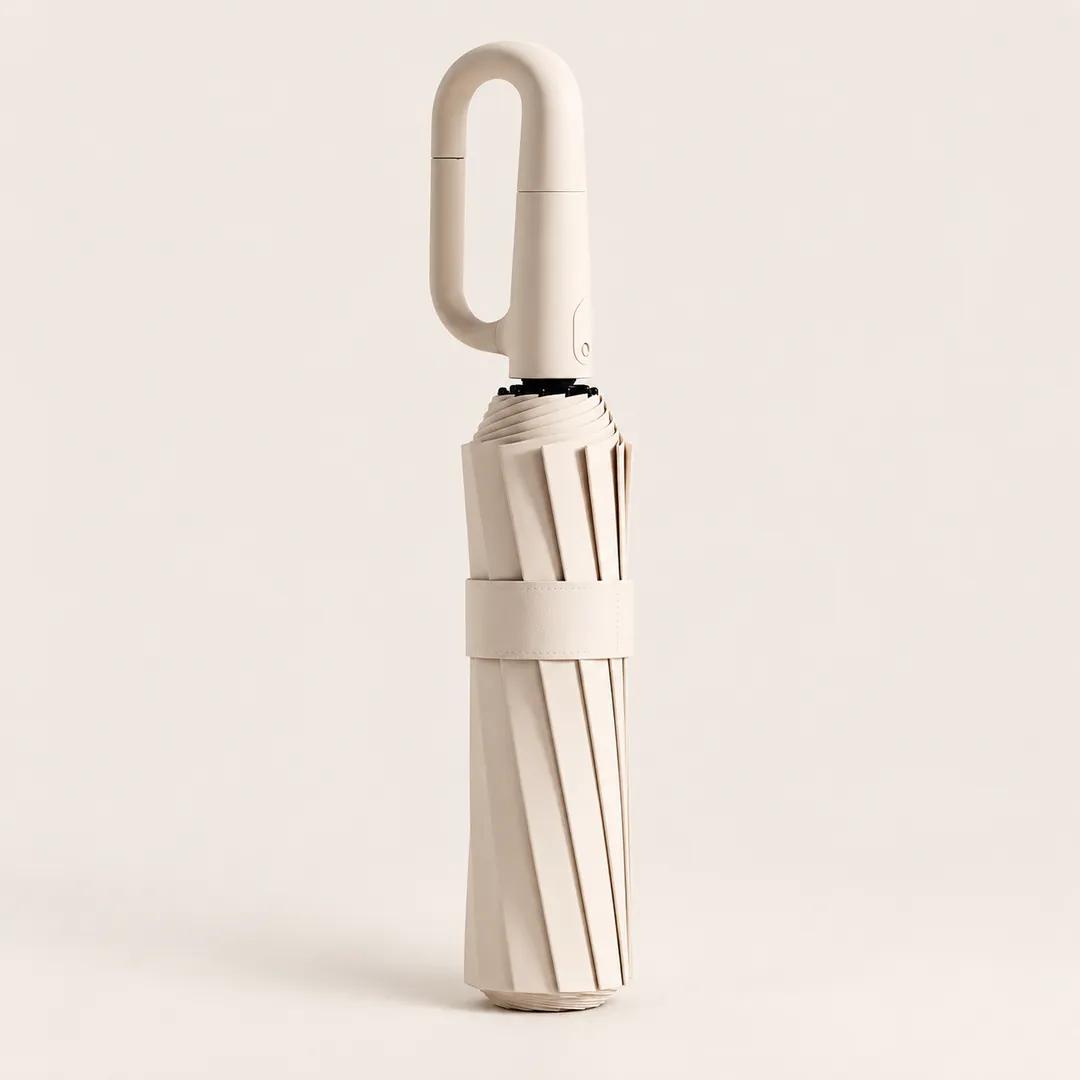
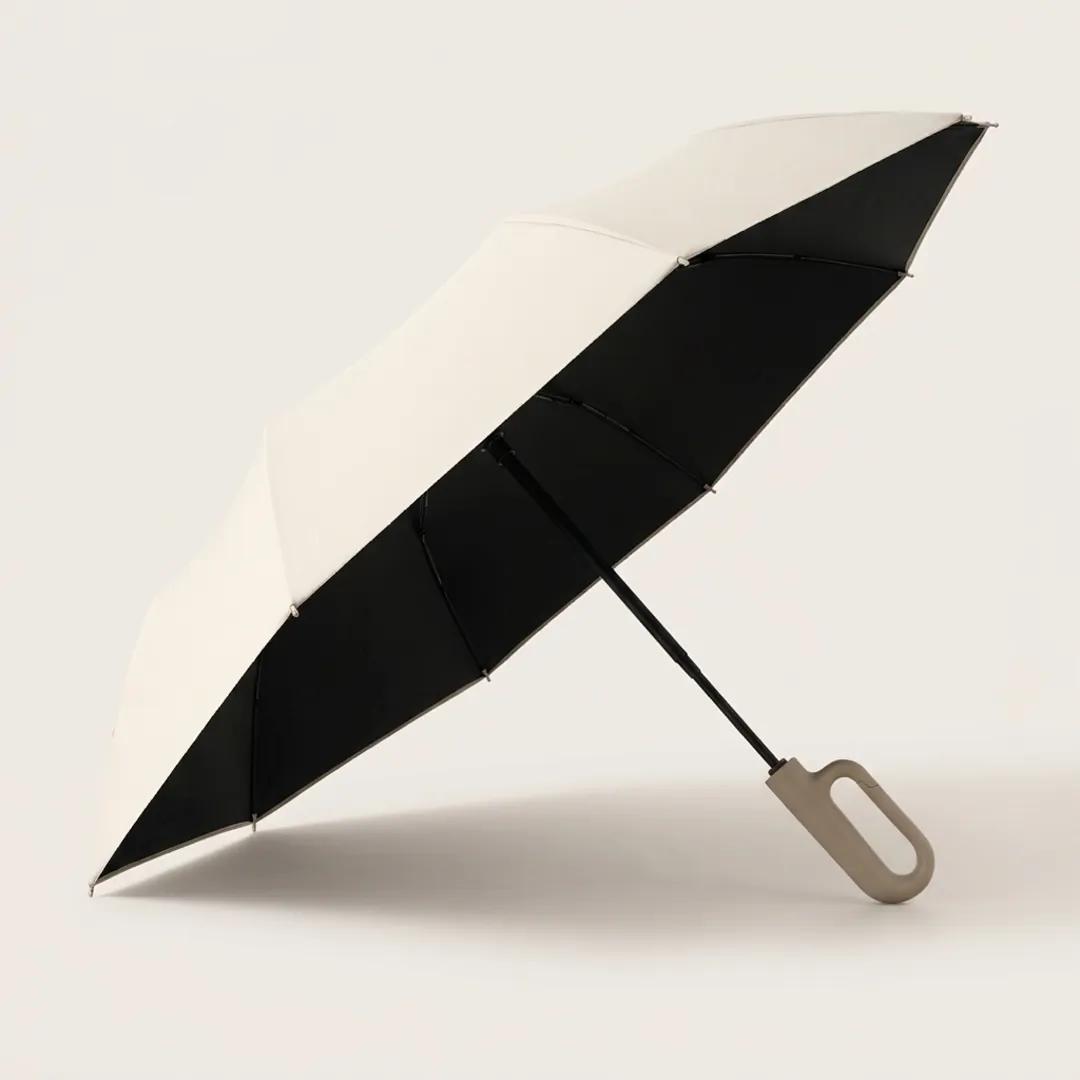
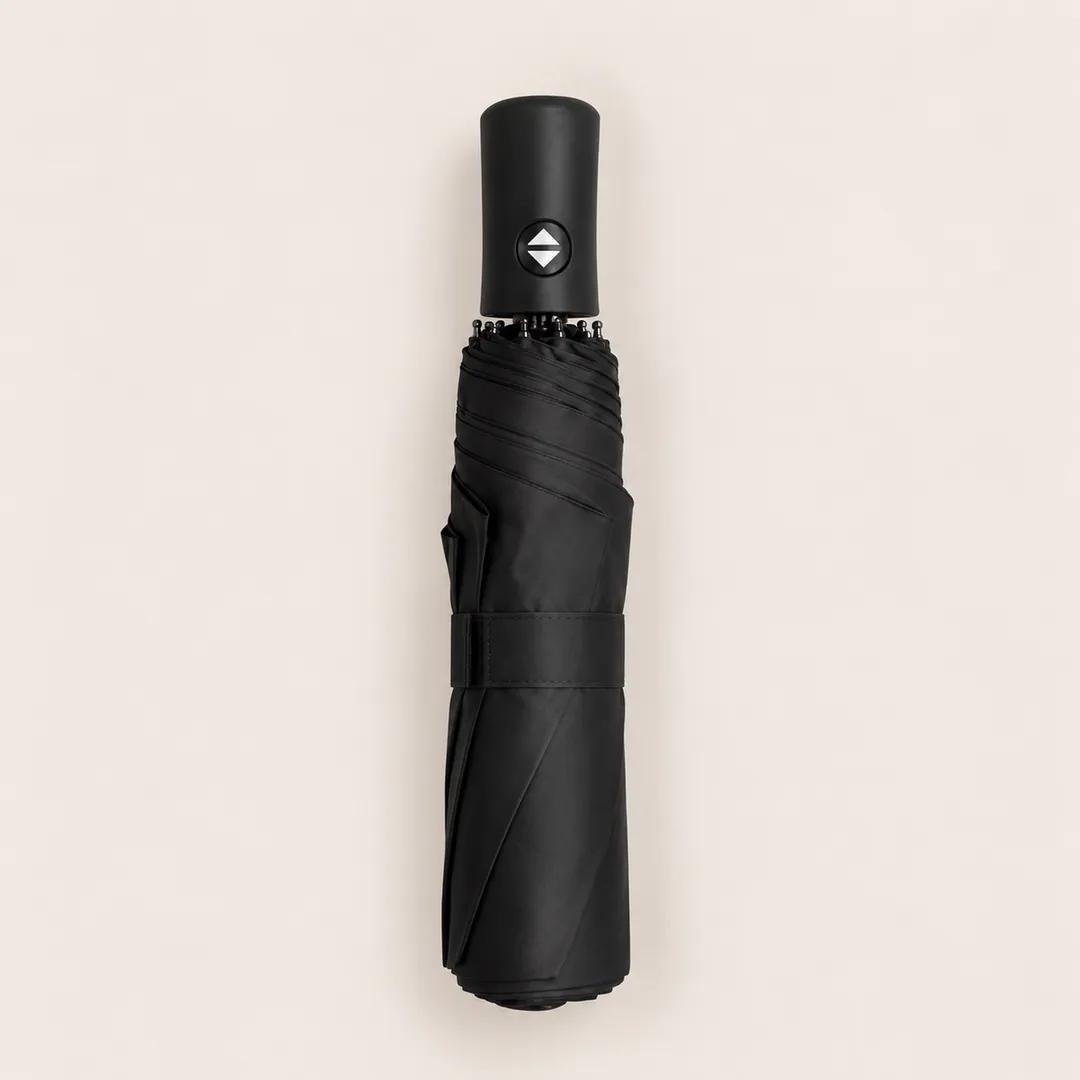
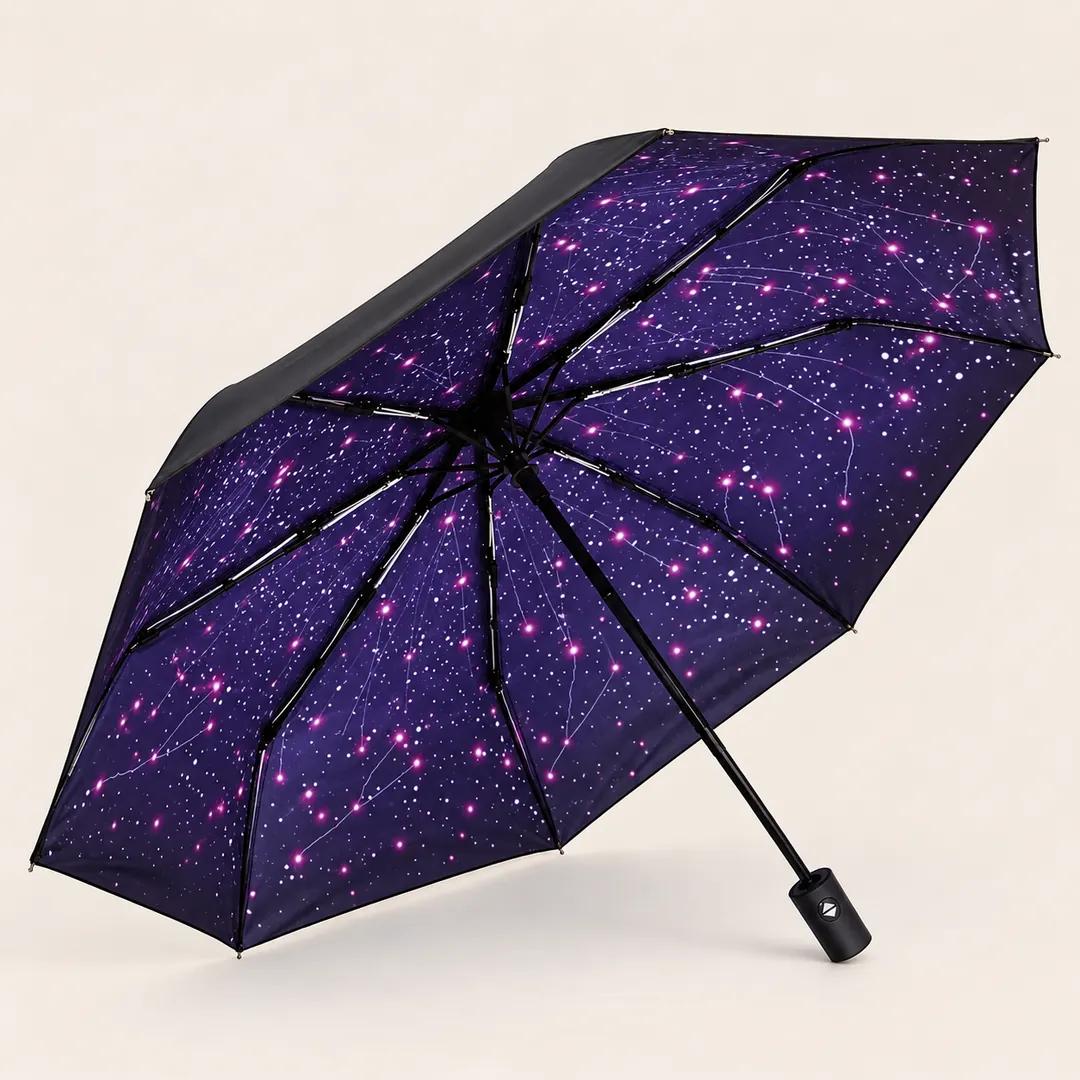
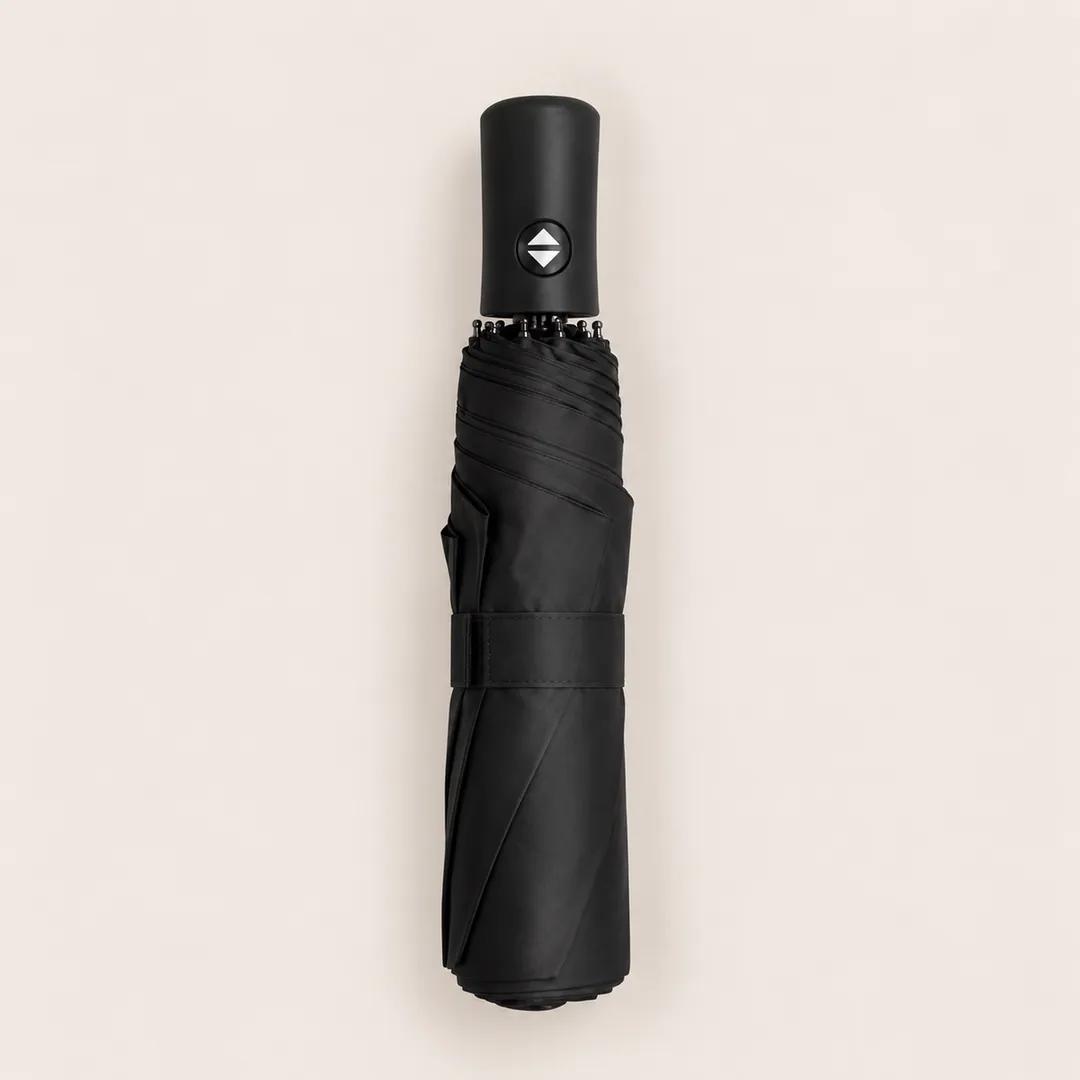
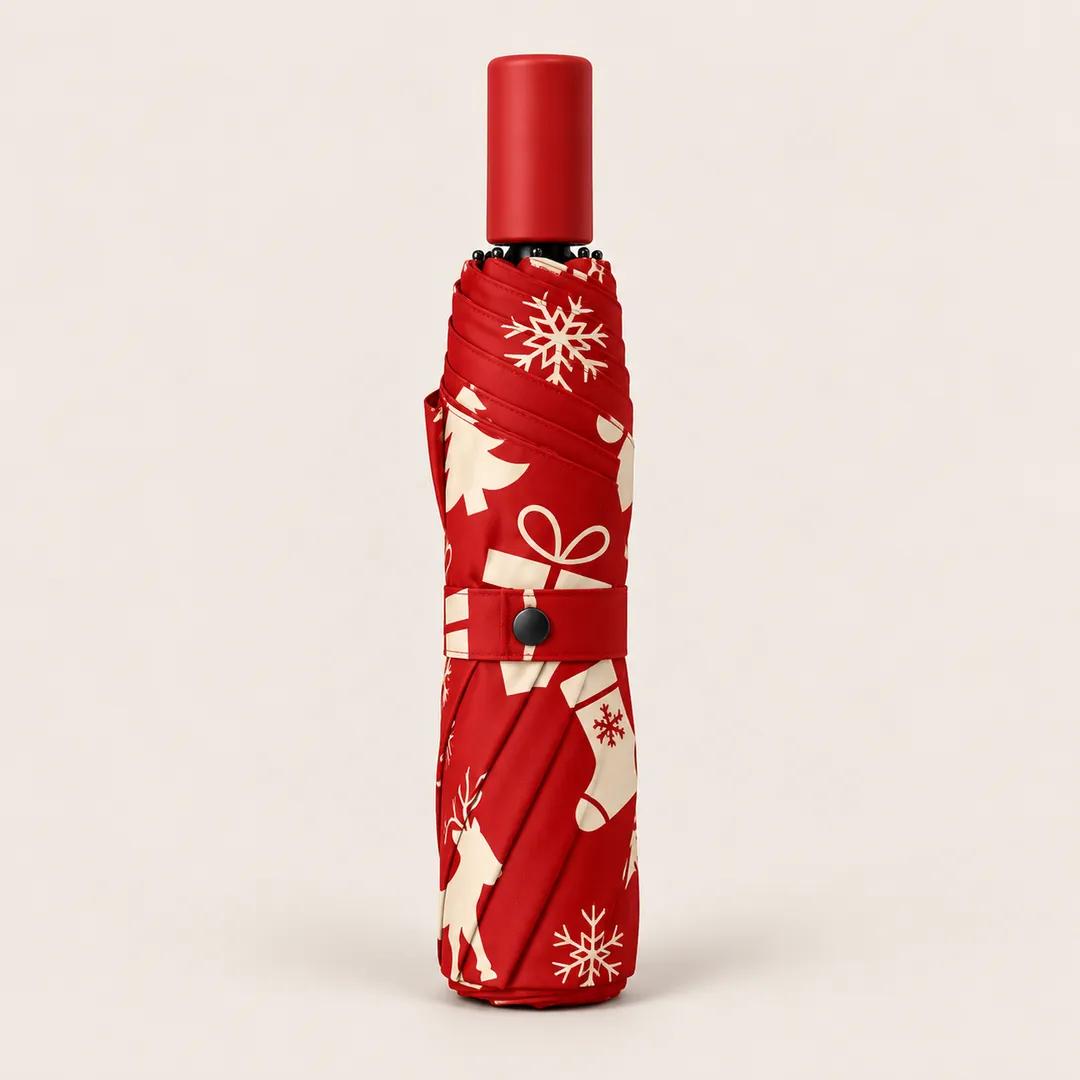
Our Folding Umbrellas


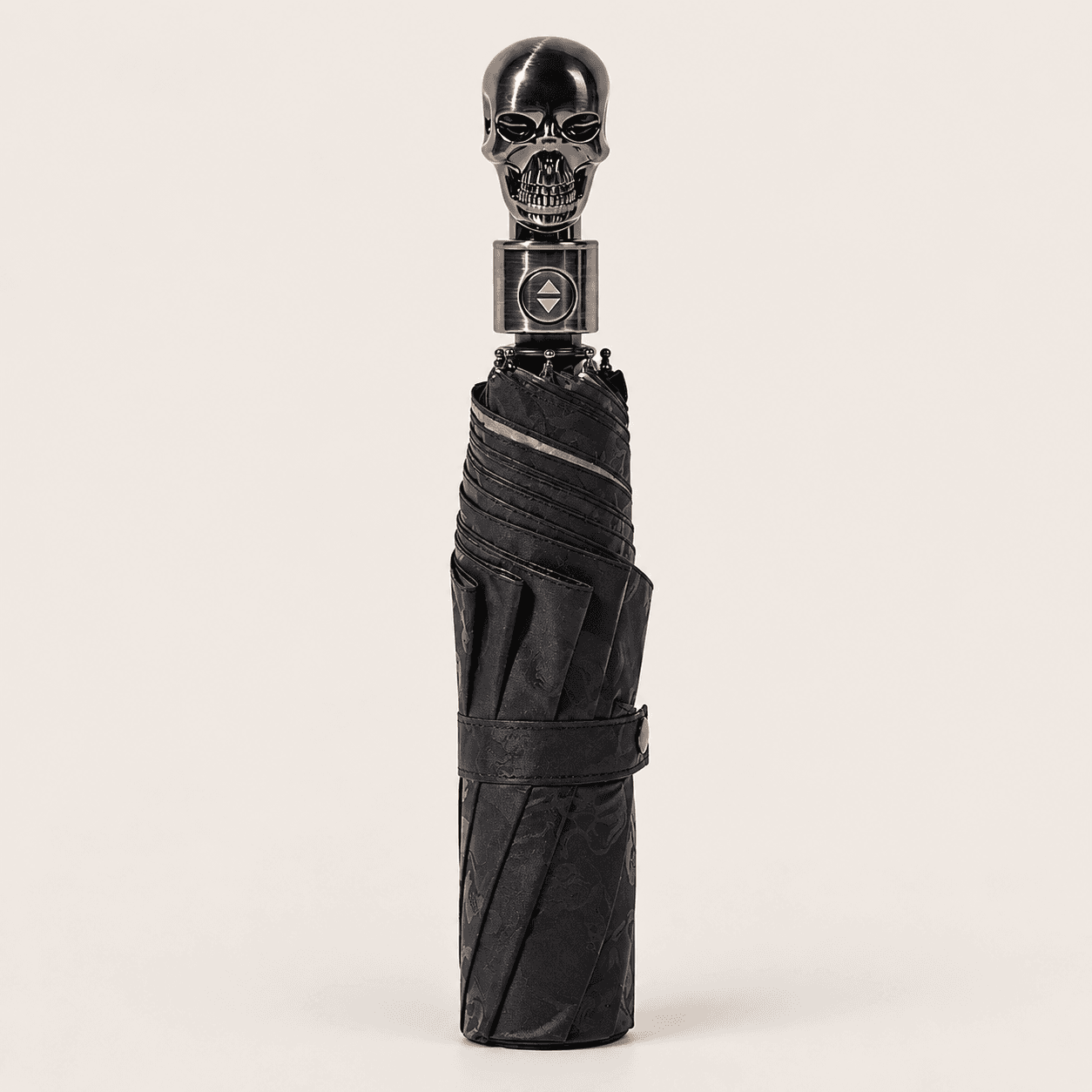
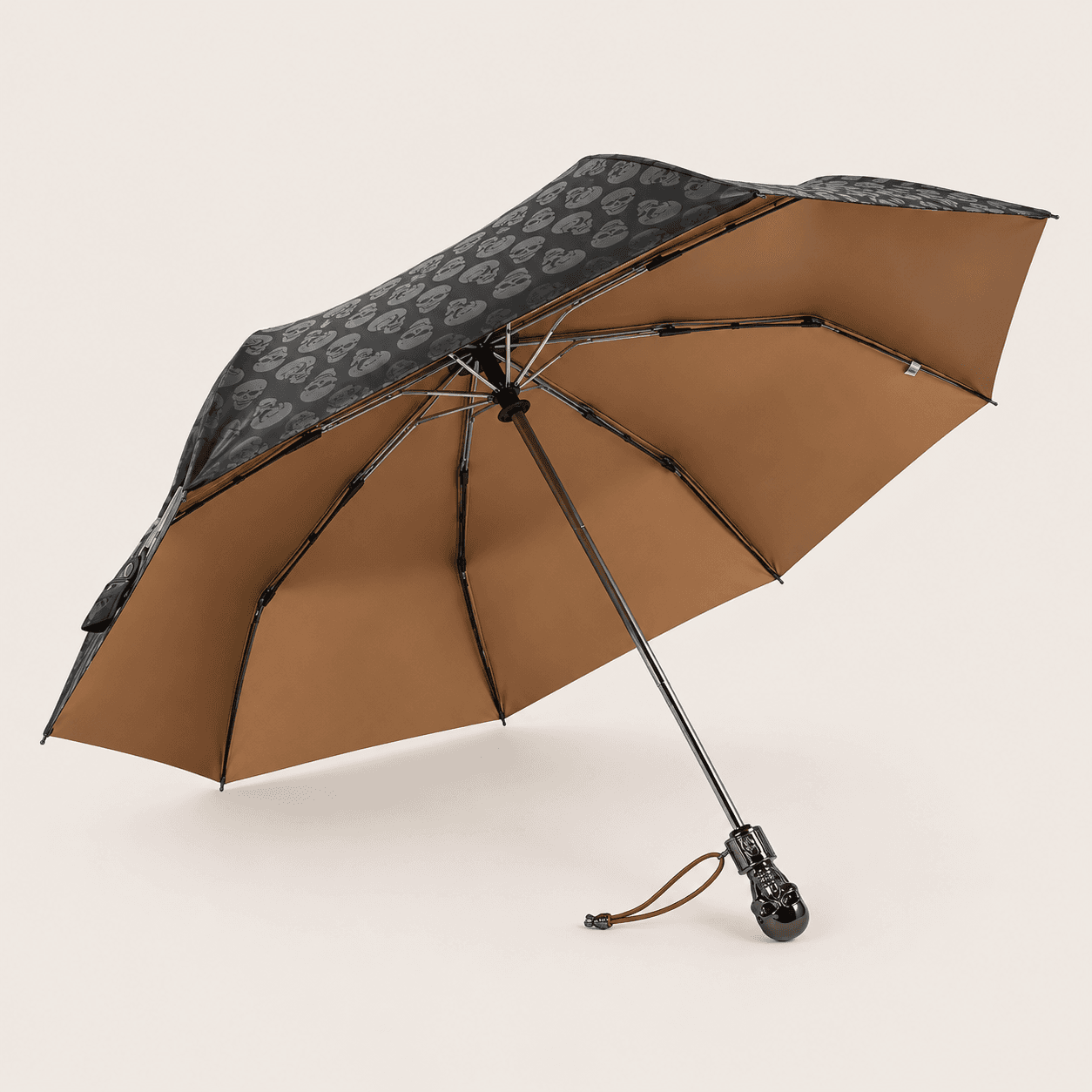
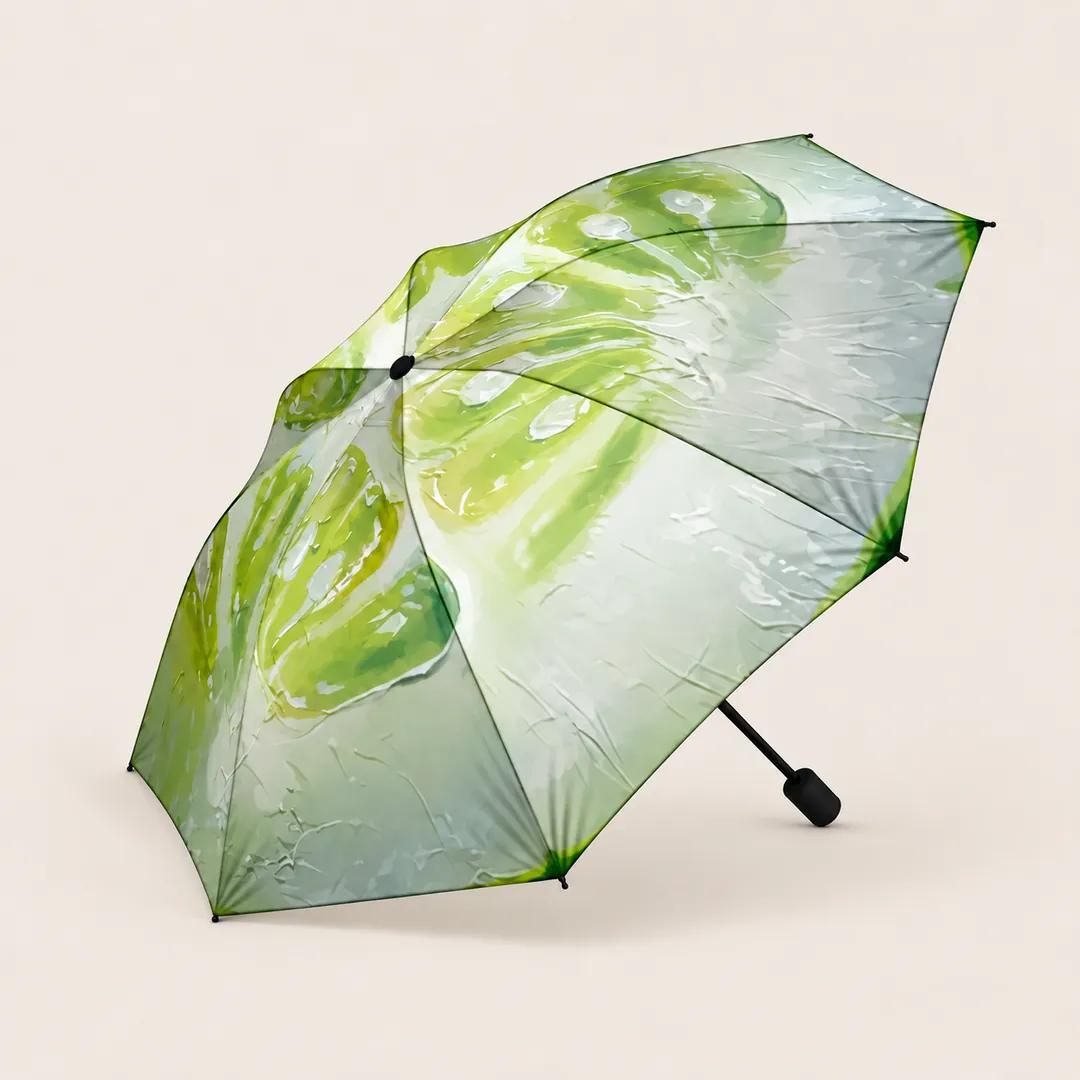

The Cane Umbrella Is Ideal When You Don't Need to Store It
The main drawback of the cane umbrella is obvious: even when closed, it remains long. But this drawback almost entirely disappears in certain uses.
If you set out to walk in the rain and know the umbrella will stay open for most of the journey, its closed length ultimately matters little. The same goes for an umbrella you usually leave in the entryway, at the office, or in a car.
In this case, I find it more relevant to look at the handle, the canopy diameter, the weight in hand, and the overall construction. Not having to miniaturize the umbrella also allows more freedom in its design.
However, be careful not to turn this difference into a promise of quality: a less segmented architecture doesn't automatically mean better manufacturing. The materials, assemblies, ribs, canopy attachment, and shaft design remain crucial.
Our Cane Umbrellas
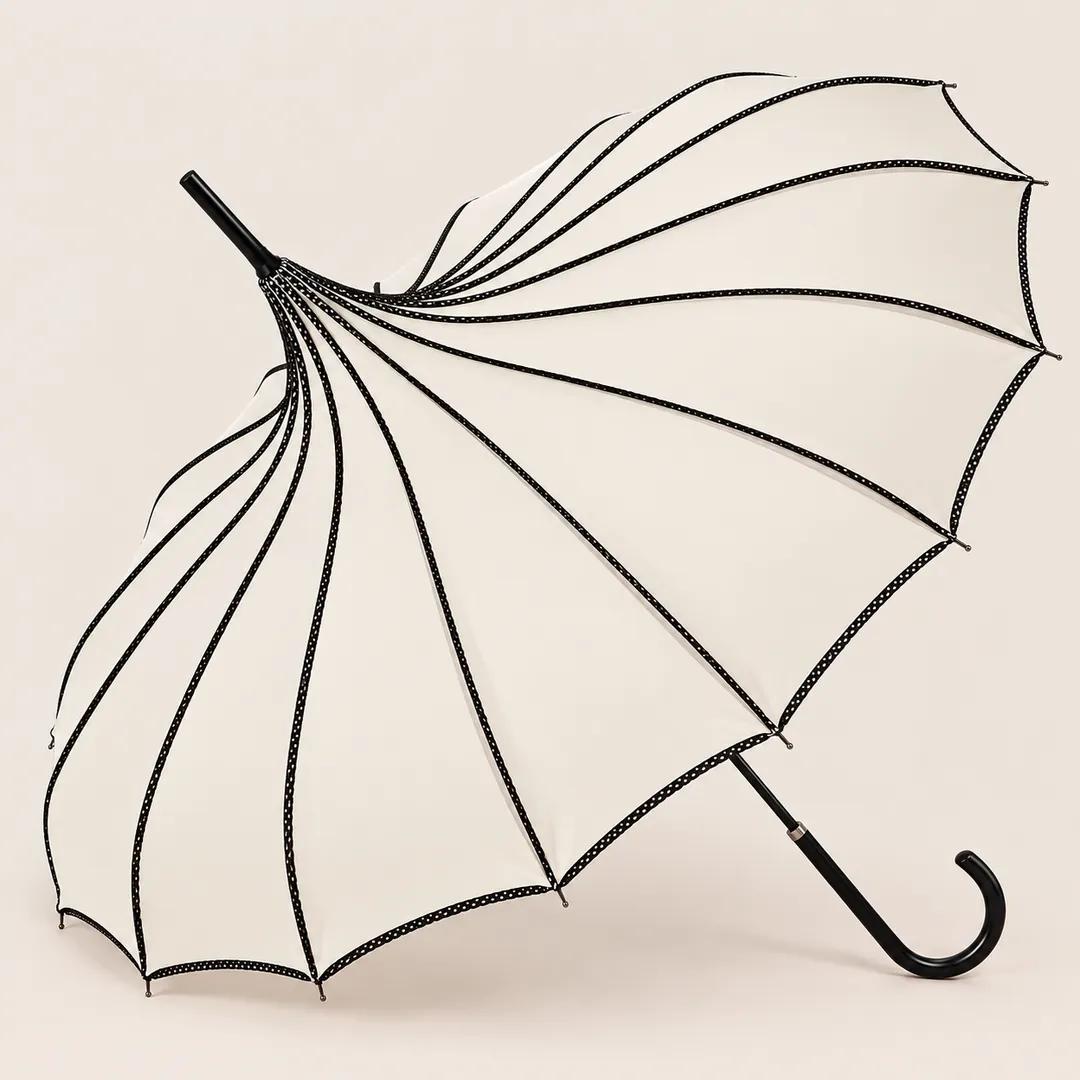
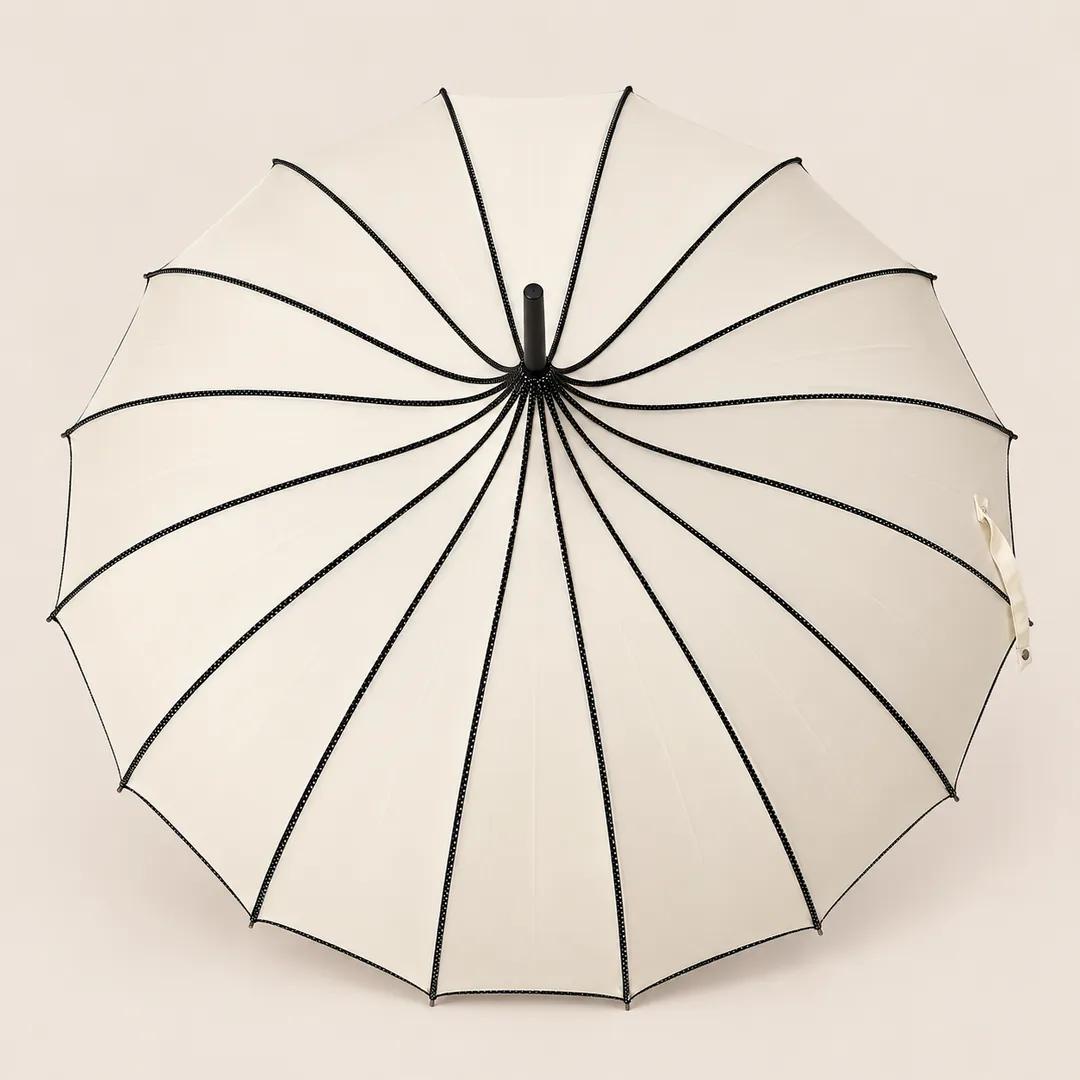
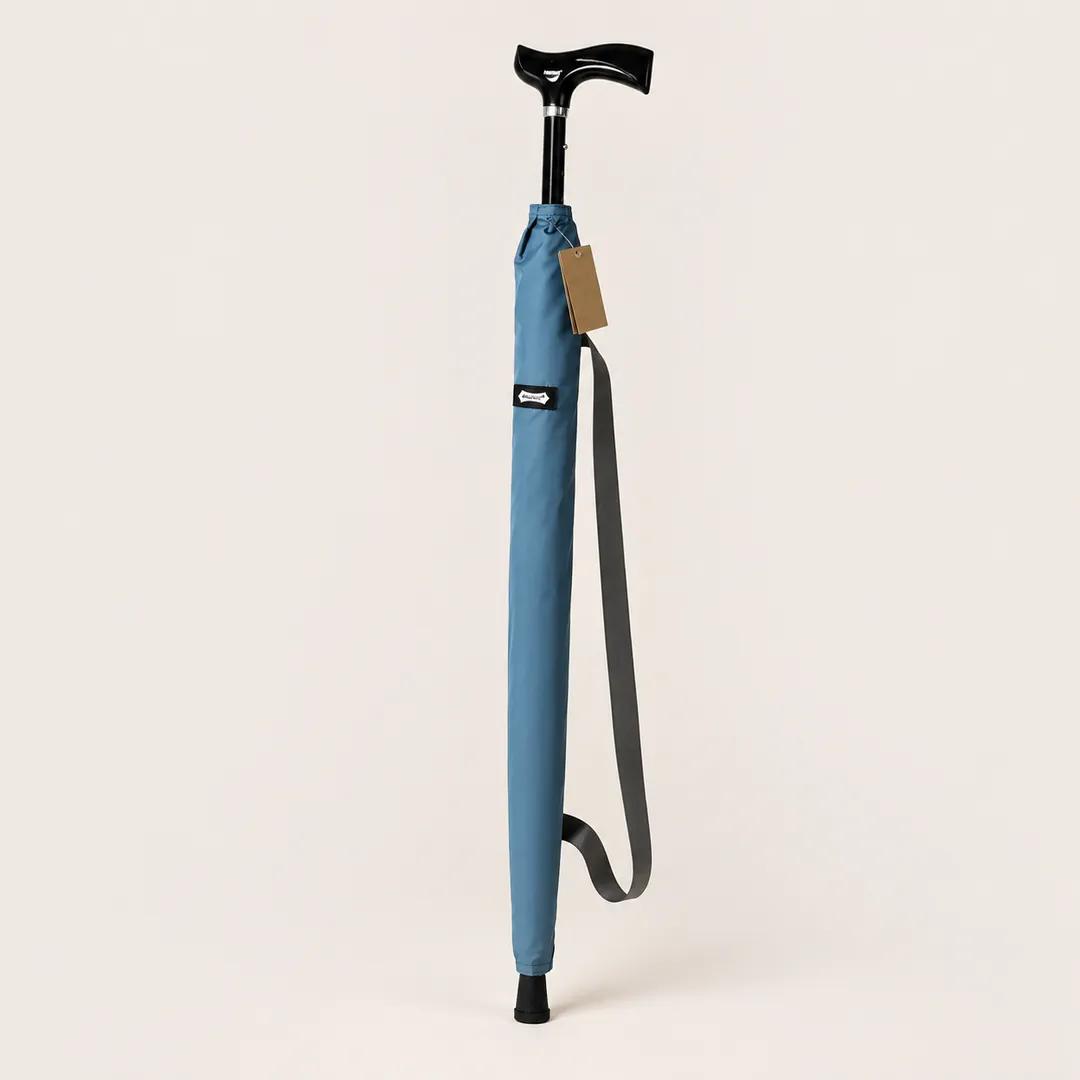
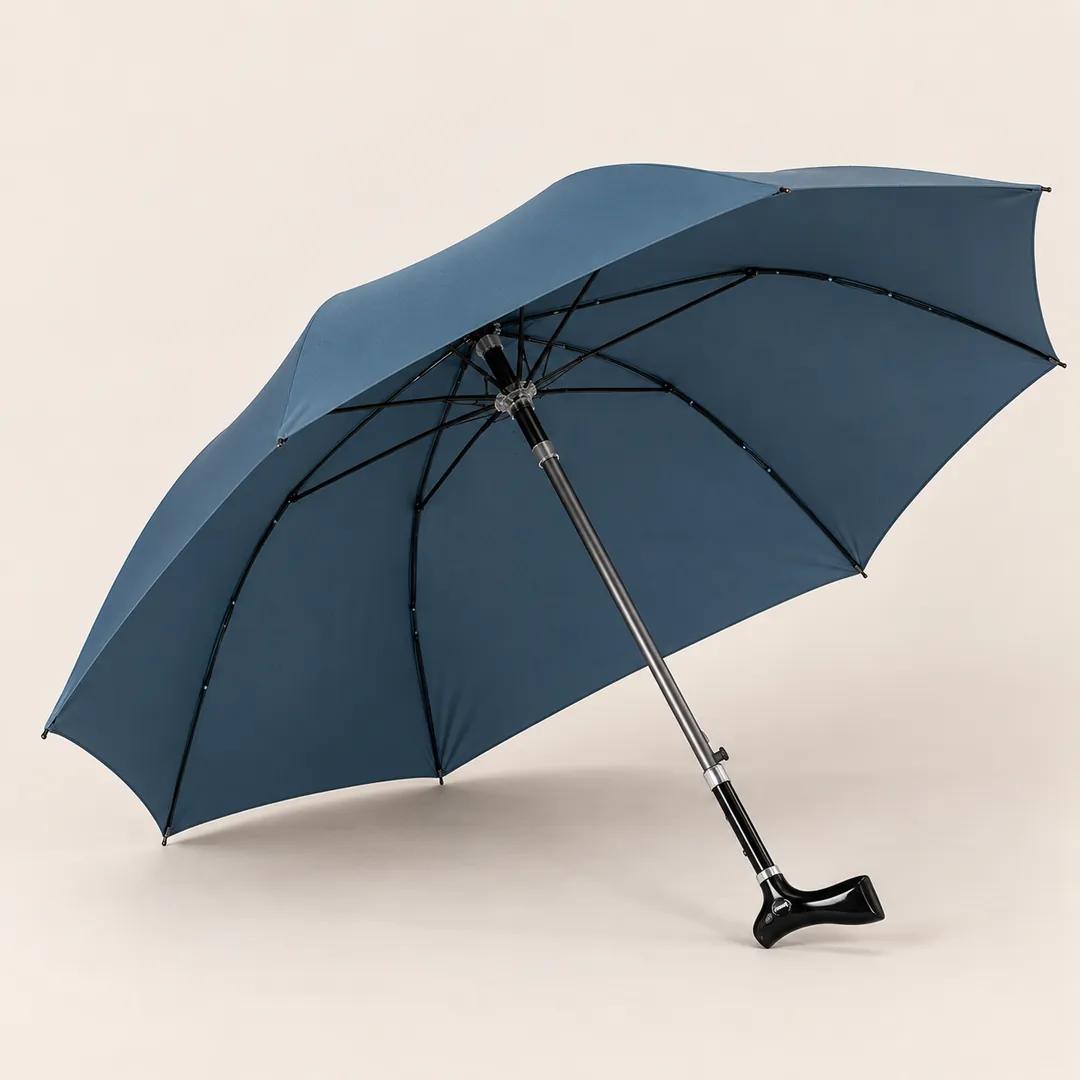
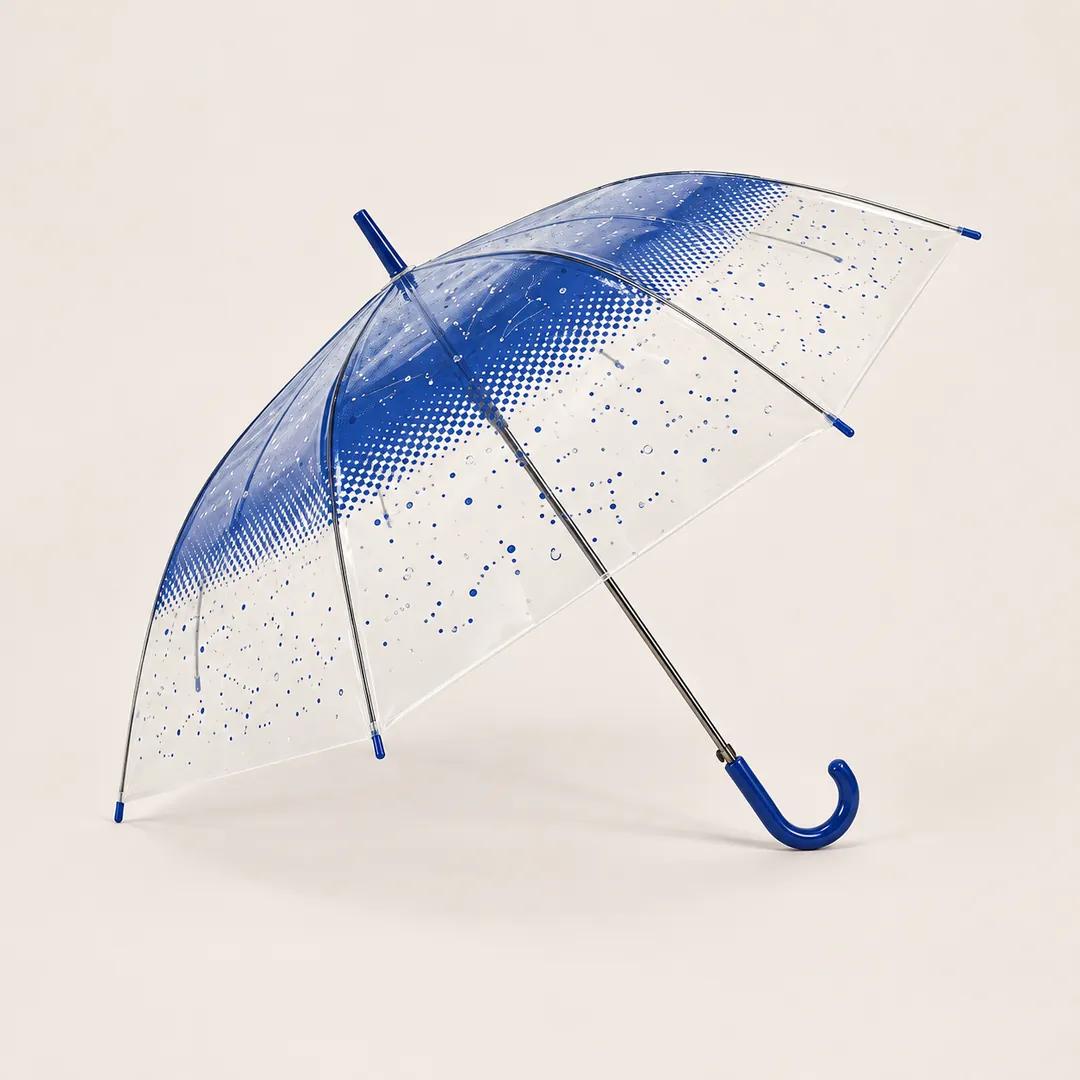
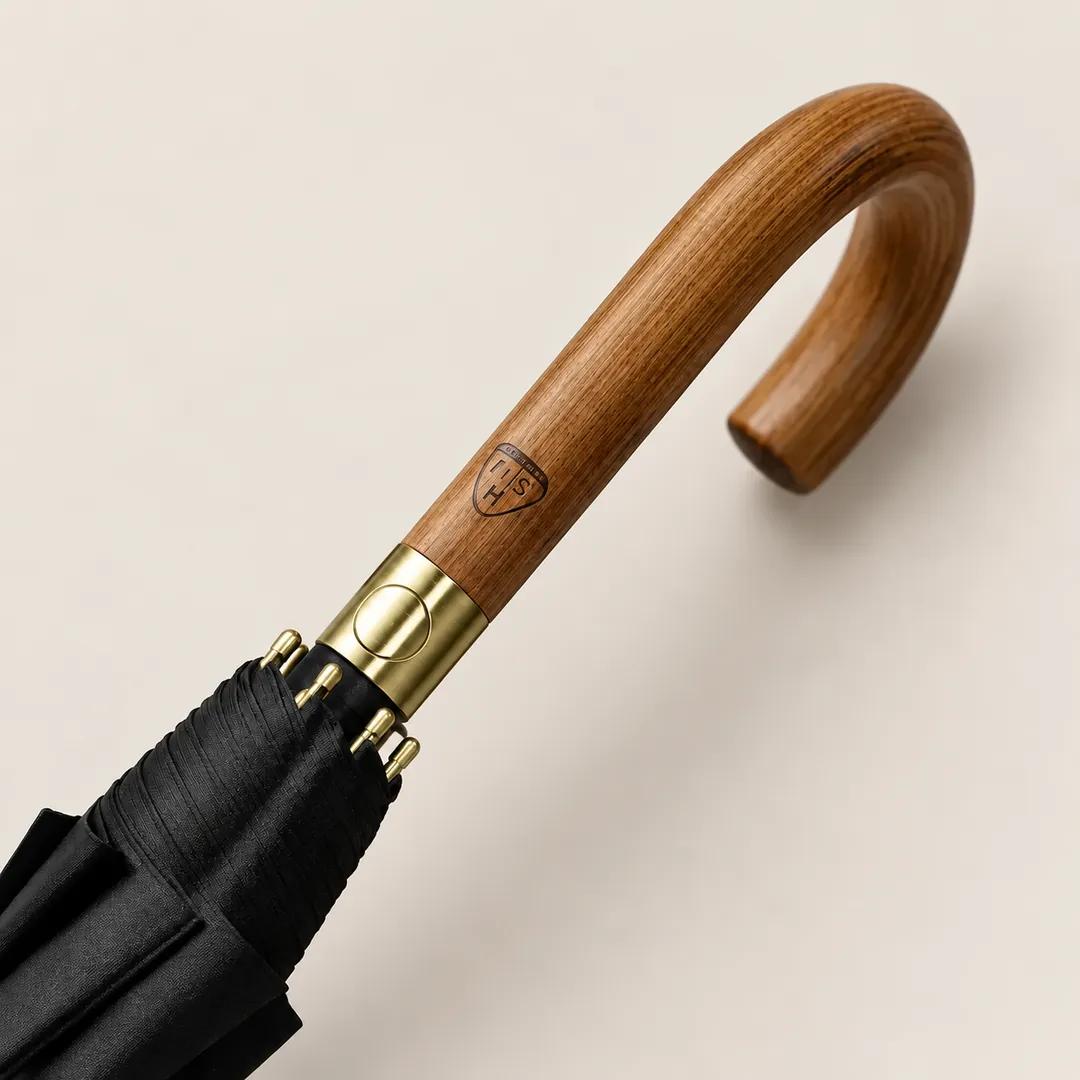
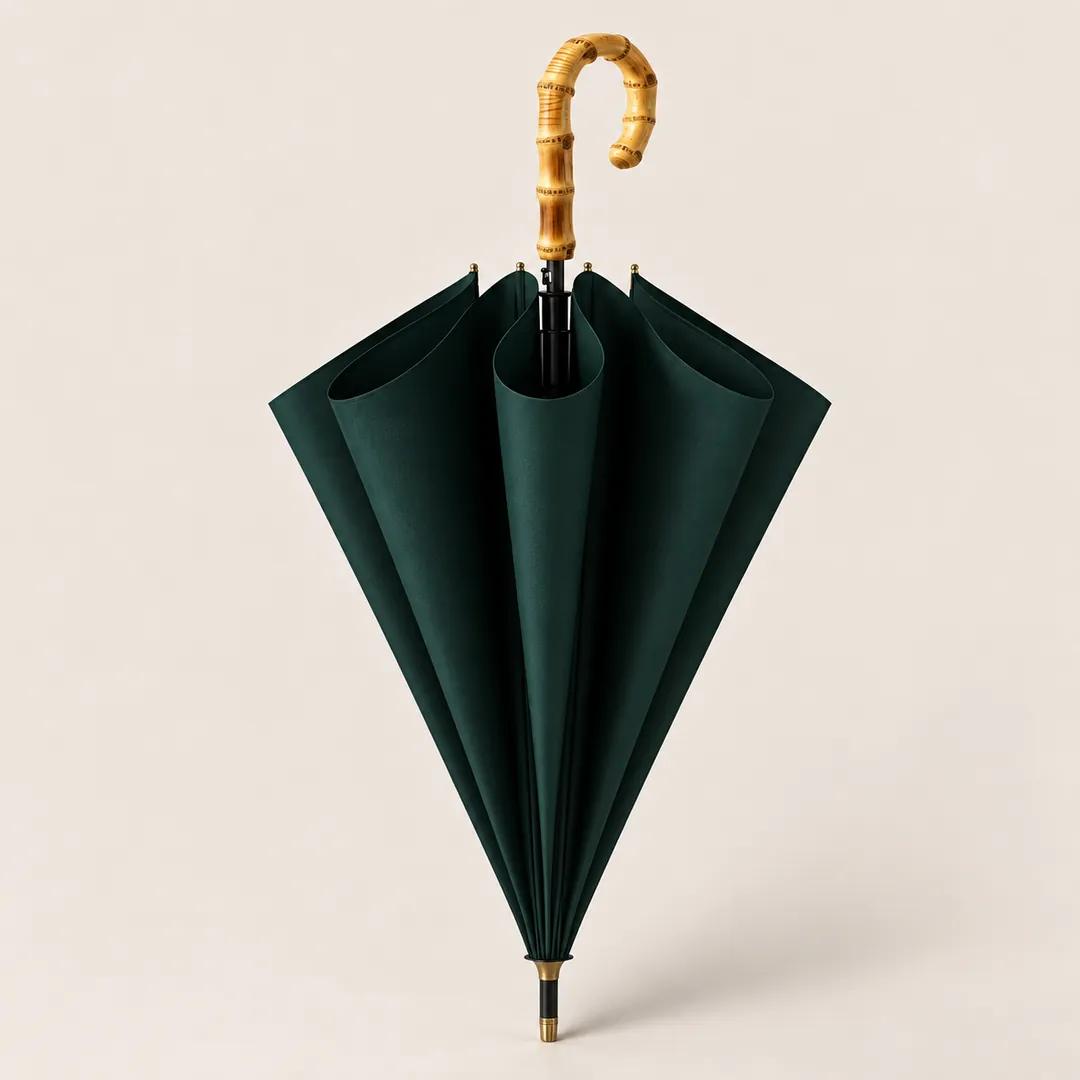
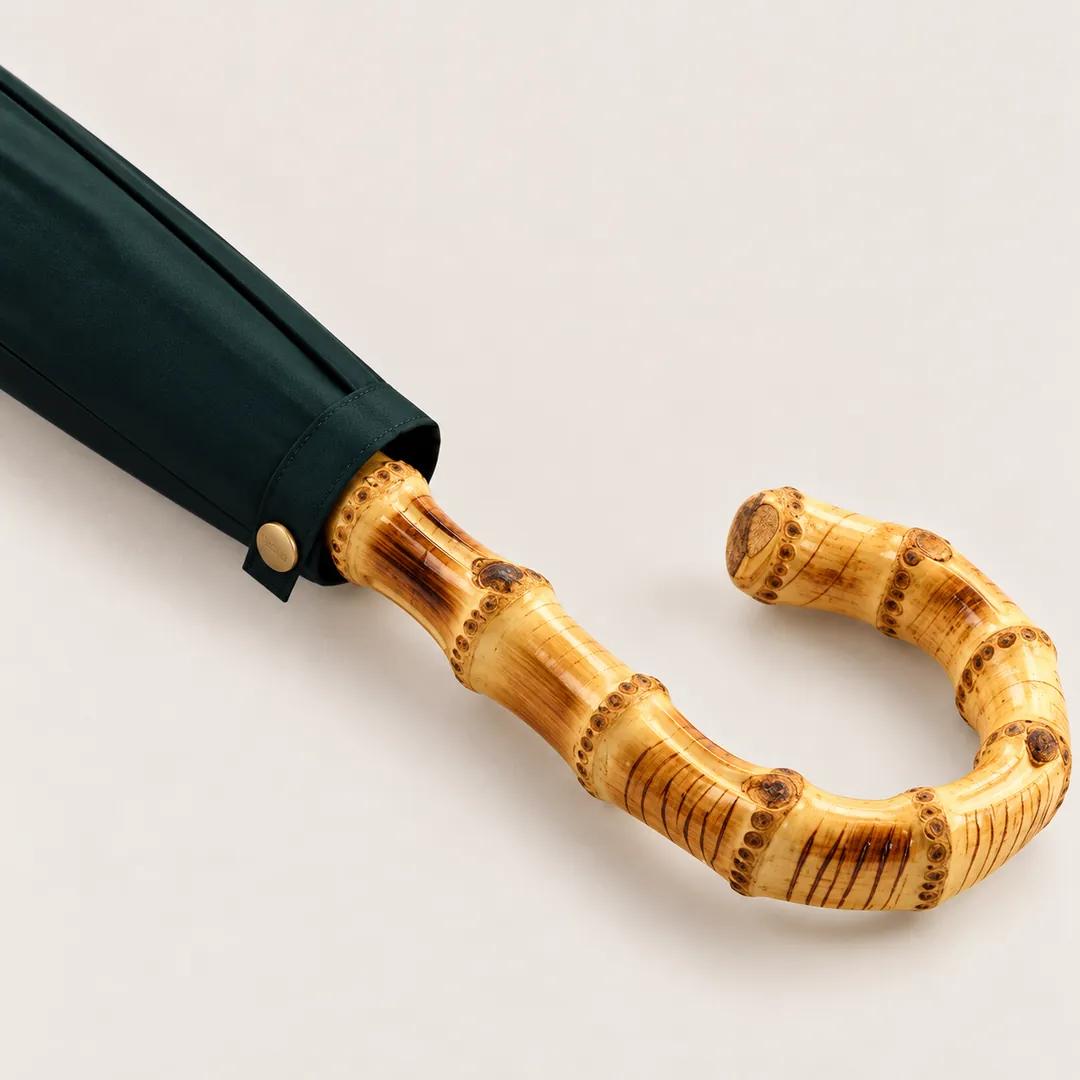
Is a Cane Umbrella More Durable Than a Folding Umbrella?
Not necessarily.
There is, however, an interesting mechanical difference. To become compact, a folding umbrella must have multiple sections in its shaft and joints in its ribs. A stick umbrella can maintain a more straightforward structure since it doesn't need to reduce its length as much.
One might be tempted to stop there and declare the stick umbrella more robust, but... I wouldn't. An additional joint is an extra mechanical element, but its presence doesn't tell us how it's designed, what material it's made from, how it's assembled, or how the whole structure reacts when the canopy and ribs are stressed.
Two folding umbrellas can therefore behave very differently. The same goes for two stick umbrellas. The number of ribs is not enough to differentiate them either.
If sturdiness is your priority, the format is only a first filter. You then need to look at the actual design of the model: shaft, ribs, joints, fastenings, canopy tension, and overall coherence.
Which umbrella withstands wind better?
It's impossible to seriously answer based solely on the words "folding" or "stick."
The stick umbrella often has a less segmented structure, which might seem advantageous. But wind resistance also depends on the flexibility of the ribs, their materials, the assemblies, the canopy's geometry, and the overall build quality.
One must also consider a sometimes overlooked element: the surface exposed to the wind. A large canopy offers more coverage in the rain, but it can also catch more wind. "Bigger" is not synonymous with "better in strong winds."
Be equally cautious with materials. Fiberglass can add flexibility to certain parts of a frame, but its mere presence doesn't qualify an umbrella as windproof. Aluminum, steel, or other material combinations must also be judged in the context of the complete structure.
If wind is your main concern, it's better to compare models designed with this constraint in mind in our collection of windproof umbrellas rather than automatically choosing a stick umbrella.
Does a folding umbrella offer less protection from the rain?
No, not by definition. It's important to distinguish the size of the umbrella when closed from its dimensions when open.
This is a particularly misleading confusion when comparing two models. An umbrella can be very compact in a bag and deploy a significantly larger canopy once open. Conversely, just because an umbrella is a stick doesn't guarantee a specific diameter.
For coverage, look at the open dimensions. For transport, look at the closed dimensions. These are two different measurements that answer two different questions.
A generous coverage becomes interesting if you're tall, wear a bulky coat, regularly carry a shoulder bag, or simply want more space under the canopy. But again, there's a trade-off: more diameter can mean more bulk, more weight depending on the construction, and a larger surface exposed to the wind.
Weight: don't assume folding means lightweight
The folding umbrella is often associated with lightness because it's designed to be carried. However, this is not a rule.
A folding umbrella with a large canopy, an automatic mechanism, or a reinforced structure can weigh quite a bit. Conversely, some stick umbrellas can use a relatively lightweight construction.
Personally, I mainly judge the weight in relation to its use. A few extra grams are much more noticeable on an umbrella that spends all day in a bag than on a model that stays in a car and is then used directly in the rain.
For an umbrella intended for travel or to stay daily in a bag, I would once again compare the trio weight + closed length + open diameter. If weight is truly your priority, our collection of lightweight umbrellas allows you to start directly from this criterion.
Transport, walking, car, travel: the right format changes with your day
On public transport
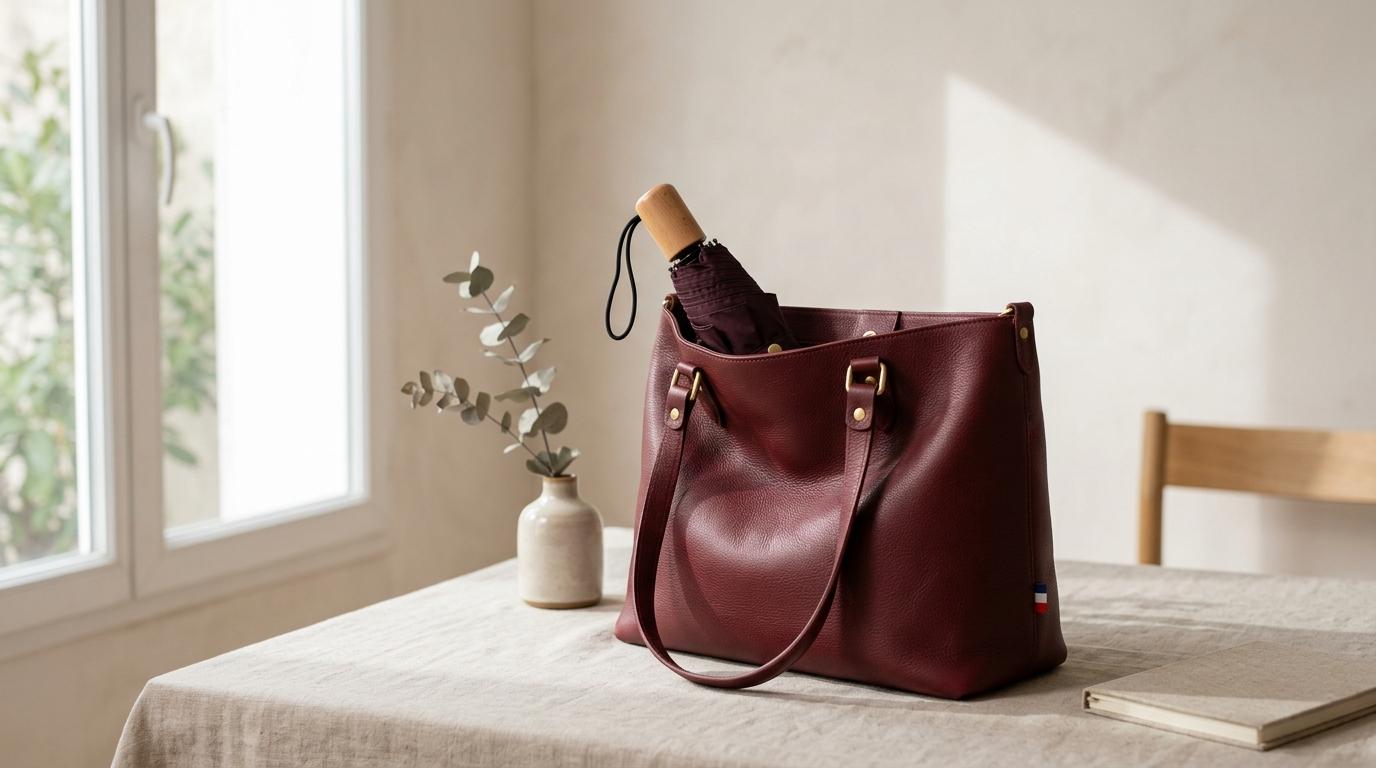
The folding umbrella is generally the easiest to manage in a crowded subway or bus: once closed, it takes up less space and can be stored more easily.
However, there's still a very concrete detail: a wet umbrella doesn't become dry just because it's compact. Storing it immediately among your belongings isn't always advisable. A suitable cover or the ability to let it drip for a few minutes also matters in the equation.
For long walks
If you know the umbrella will remain open during a long walk, compactness loses some of its appeal. The comfort of the handle, the coverage, and the perceived weight in hand become more important.
This is typically a situation where I would gladly consider a stick umbrella, without making it an absolute rule.
In the car
The car completely changes the reasoning: your umbrella no longer necessarily needs to fit in a bag. A stick umbrella can stay in the trunk or cabin without its length being very bothersome.
A folding umbrella still retains the advantage if you want to transfer it to a bag later or have a very compact model.
For travel
With a carry-on or an already loaded bag, the closed length and weight become much more important. The folding umbrella then naturally becomes appealing.
However, I would check its open size before choosing the smallest possible model. The best travel umbrella isn't necessarily the one that disappears best in the suitcase: it's the one you're willing to carry while maintaining adequate protection once you arrive.
For the most stringent luggage constraints, you can also compare our pocket umbrellas.
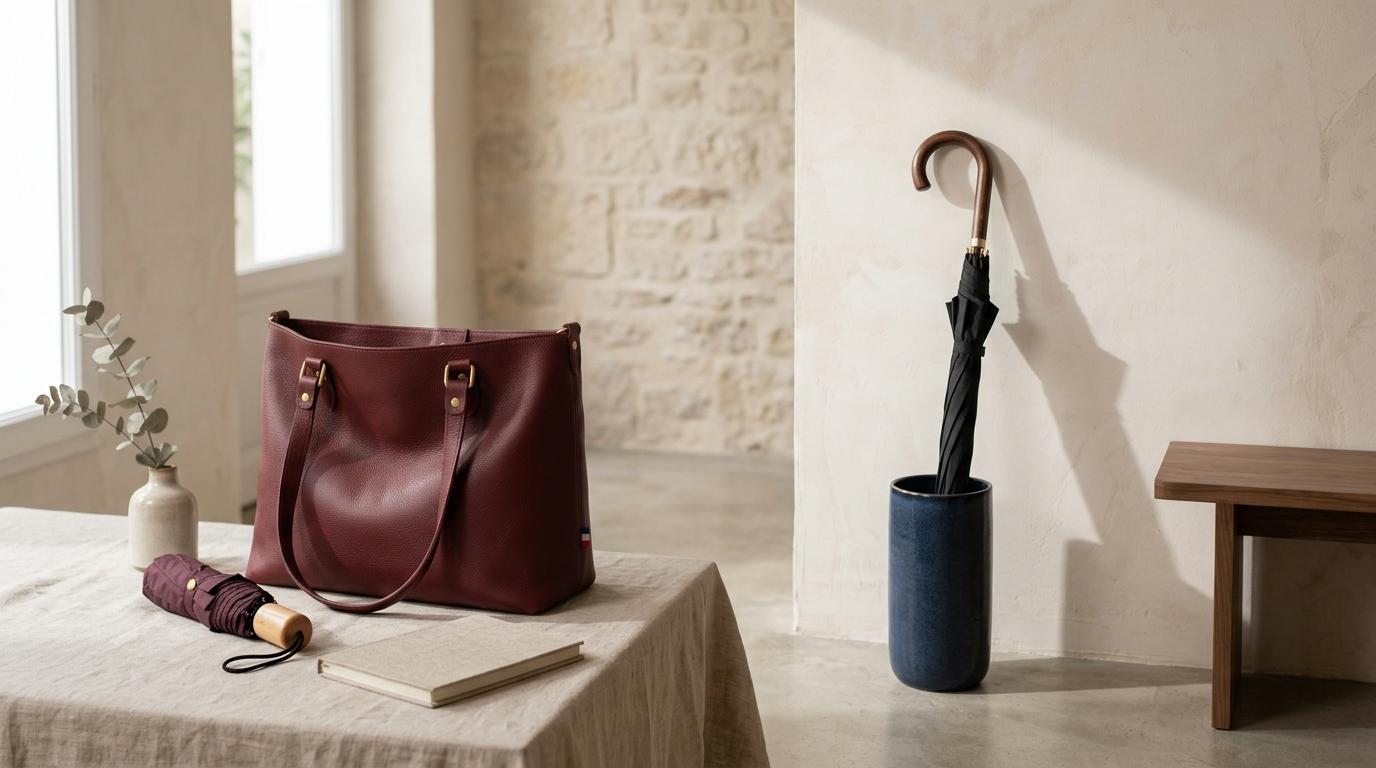
Choose a folding umbrella if...
- you really want to keep your umbrella in a bag or backpack;
- you frequently switch between walking, subway, train, or bus;
- you regularly travel with little space in your luggage;
- the length of the umbrella when closed is a determining factor;
- you prefer to always have an umbrella with you rather than deciding each morning whether to take one;
- you need to easily store your umbrella at the office or in a small space;
For me, the best reason to choose a folding umbrella is this: it can be there when unexpected rain arrives. An excellent umbrella left at home because it was too bulky doesn't offer much protection.
Opt for a cane umbrella if...
- you don't need to store your umbrella in a bag;
- you regularly walk for long periods in the rain;
- you can leave your umbrella in an entryway, office, or car;
- you appreciate a structure that doesn't need to fold into multiple segments;
- you seek large coverage and have fewer space constraints;
- you prefer to keep your umbrella in hand rather than folding and storing it multiple times a day.
The cane is particularly suitable when its main drawback — its length — simply isn't an issue in your daily life.
Common mistakes that often skew the comparison
- Choosing solely based on format: folding and cane describe a structure, not a quality level.
- Comparing only the closed size: it informs about transport, not about coverage in the rain.
- Assuming a cane is inherently sturdier: the quality of materials and assembly remains crucial.
- Assuming a folding umbrella is inherently lightweight: check the actual weight of the model.
- Choosing the largest diameter without thinking: more coverage also means more surface exposed to the wind.
- Counting the ribs to determine the best: their number alone doesn't inform about their design, materials, or joints.
My method for choosing between the two
If you're still unsure, I would proceed in this order.
Decide where the umbrella will be stored when it's not raining. In a small bag, a folding umbrella almost chooses itself. In a car or entryway, a cane becomes perfectly feasible.
Then look at the actual dimensions. Closed length for space, open diameter for coverage.
Compare the weight in the context of your use. A model carried all day deserves more attention on this point.
Examine the structure. Ribs, joints, shaft, and assembly are more informative than the label "folding" or "cane" taken alone.
Finish with comfort and mechanism. Handle, manual or automatic opening, and ease of closing can differentiate two models suited to the same use.

This method mainly avoids asking the format to answer all the questions. It serves to make an initial selection. Then, it's the model's features that matter.
If you're also unsure about the diameter, mechanism, number of ribs, weight, or other features, I've detailed these criteria in our guide how to choose an umbrella.
FAQ: folding umbrella or cane umbrella
Is a cane umbrella sturdier than a folding umbrella?
Not automatically. The cane generally has a less segmented structure, while a folding umbrella uses more sections and joints to become compact. But sturdiness also depends on materials, ribs, shaft, assembly, and build quality.
Which umbrella to choose when it's windy?
Don't choose based solely on format. Wind resistance depends on the entire frame, its flexibility, materials, joints, fabric, and its diameter. A large canopy can also catch more wind.
Does a folding umbrella offer less rain protection?
No. Compactness when closed doesn't directly determine the canopy diameter when open. To compare the protection offered, check the open dimensions of the models you're interested in.
Which format to choose for travel?
The folding umbrella is generally easier to fit into luggage due to its reduced closed length. However, compare its weight and open diameter: saving a few centimeters in a suitcase isn't necessarily beneficial if the model no longer meets your needs once opened.
Which umbrella is most convenient for commuting?
The folding umbrella has a clear advantage when you need to store the umbrella between different parts of the journey. However, consider managing a wet umbrella: being able to fold it doesn't necessarily mean you'll want to immediately put it in your bag.
Is a cane umbrella necessarily heavier?
No. The weight depends on the size and materials used as well as the design of the frame, handle, and mechanism. Compare the actual weight rather than deducing it from the format.
Can you find a large folding umbrella?
Yes. Foldable format and open diameter are two different characteristics. Some folding umbrellas can offer generous coverage. Simply check the open and closed dimensions as well as the weight to understand the real compromise of the model.
Ultimately, the best format is the one your daily life doesn't turn into a constraint
Between folding and cane, I would first choose based on how the umbrella will be transported. The folding umbrella better meets the need for storage and mobility; the cane becomes very appealing as soon as this constraint disappears.
Only then would I compare the models themselves. Their diameter, weight, frame, handle, and construction can be different enough to overturn a preference based solely on format.
If you want an umbrella to keep with you at all times, start with our folding umbrellas. If you're open to a long format, compare our cane umbrellas instead. In both cases, I would look at the model's features before drawing a conclusion about its quality.